Bowing Pillars and Rock
Task 3 - Presence vs Absence
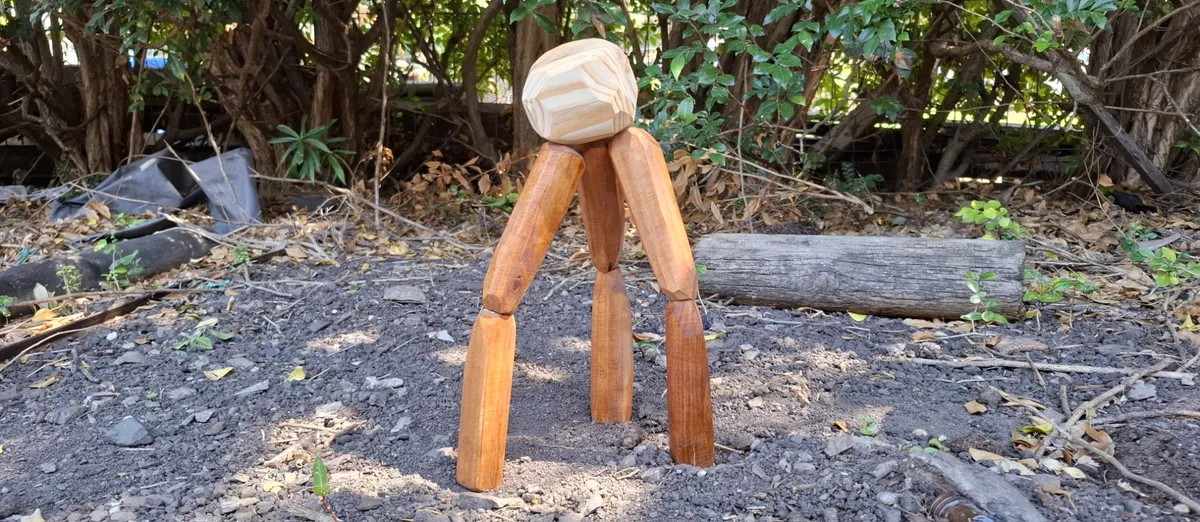
This task's focus was on Presence and Absence within sculptures, and understanding what gives a sculpture presence and how the absence in space additionally affects us.
PRESENCE
Studying acting this term gets used it a lot: what presence a character brings to the space, how an actor gains presence, and when an actor is present. Being in the moment. So hearing this in visual art made me curious: what gives artwork presence? Simply put, what captures the viewer's attention, where do the eyes go first, what holds the space vs. what doesn't. It also touches on how your physical presence engages with the work.
ABSENCE
Simply put, what is missing from the space: the empty space in the artwork, the void of space. When there is something, there is also nothing. Absence specifically explores what's not present. Often, these empty spaces can evoke more feeling and can convey more than the present space.
A couple of weeks before this class, I experienced the Olafur Eliasson: Presence exhibition at the Gallery of Modern Art (GOMA). Coming from this gave me an idea of what presence is like in the work. Certain artworks took up the space, capturing everyone's attention, such as;
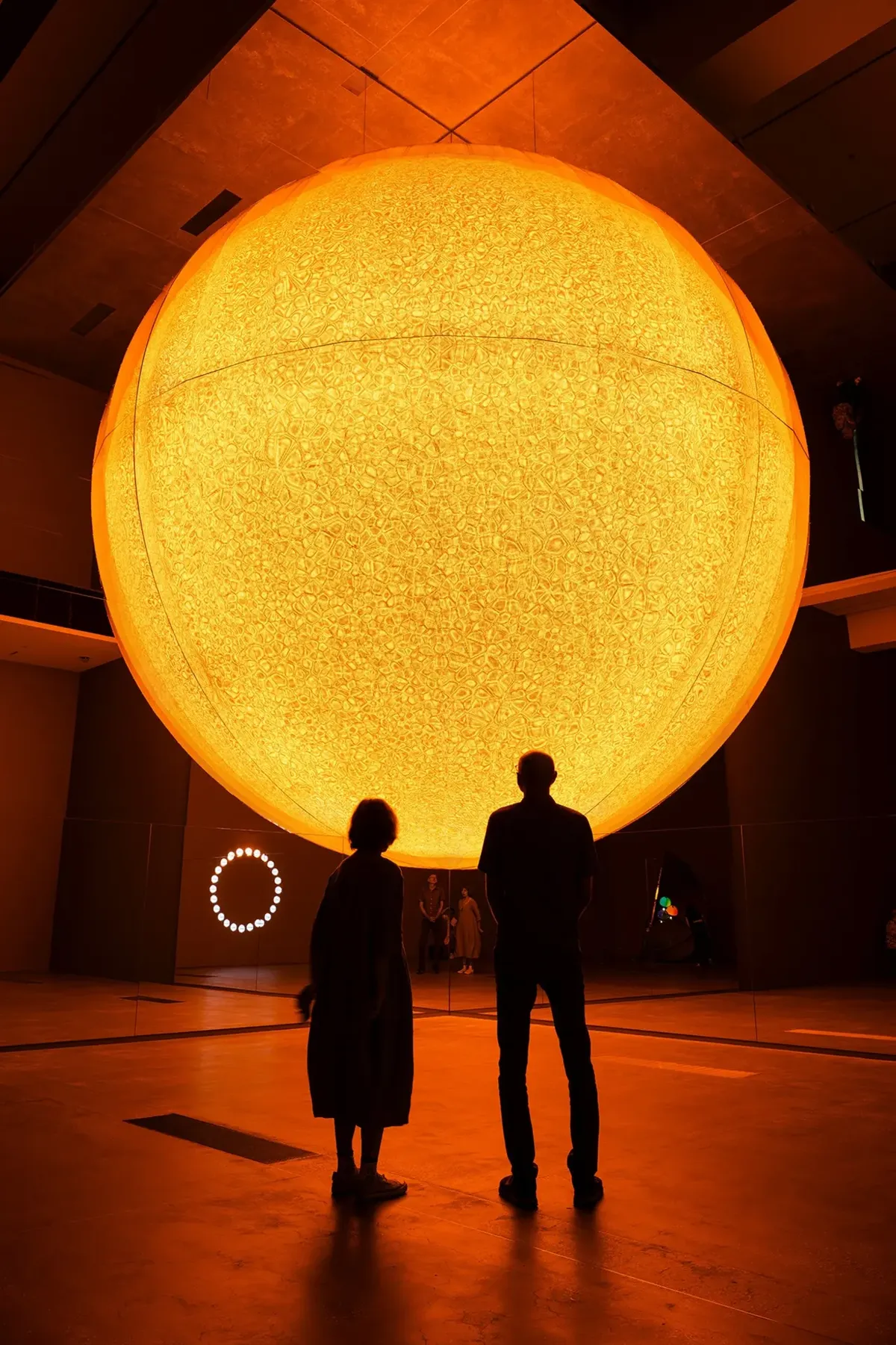 Olafur Eliasson - Presence - 2025
Presence itself is the epitome of presence; the huge sun-like orb holds the space like no other. For one, its sheer scale has viewers fixed; though only 1/8th of a full sphere, the mirrors create an image of a full orb. The sheer perceived scale of this piece is a wonder. But this scale can only be compared to the absence of the empty space that surrounds it in the room, leaving it alone, floating in this field. The glowing orb emits a light that affects everything in the room; people appear monochromatic, with the lack of white light to give people their colour. Commenting on the need for the sun's presence for our lives, this absence of colour everywhere else questions what life there would be without the sun. Being so crucial to life on Earth.
However, throughout the whole exhibition, I was more fascinated by the pieces that did not assert presence, but rather asked for the viewer's presence. The work invited the viewer to sit and watch it change over time. Forever changing and only witnessed by you in that moment in time.
Olafur Eliasson - Pluriverse assembly - 2021
Pluriverse assembly (2021) captured my attention and held it. It demanded me to be present with the work. Created from an assembly of light mechanisms, reflecting and refracting light through water, mist or ice. A galaxy of light is formed that continuously weaves around itself, forming new shapes and cycles. The black empty space beyond the light gives Pluriverse assembly this impression of a distant galaxy. These lights become stars and planets circling in the void of the universe. Light's presence draws our gaze. Light's absence creates darkness.
CREATIVE DEVELOPMENT
In this task, we were given the materials of 2x4 wood planks and dowels to create our work. Following this week's theme, we additionally had to consider the elements that made up the work and the interrelationship between the objects/materials. We were tasked with exploring the use of balance, rhythm, scale/perfortion and axis/spine. We could explore as many as we liked or just focus on one. I was really interested in exploring balance- the relationship between objects- and axis/spine- the dominant lines that comprise the artwork and provide a linear sense of movement.
This idea of working with a sense of movement within a sculpture really fascinated me. How could I make this solid work feel like it's moving, and how could I explore that with balance?
Creation begun
I was really excited to work with wood; I've used it as a material many times before, from carving to using a lathe. I knew my way around the material. I knew I wanted to work with the rule of thirds. Grabbing three blocks, I sat at my table pondering. I thought to make this triangular shape with an orb suspended in the middle. The presence of the orb and the empty space that surrounds it.
The first thing was to create the shape. I cut my 2x4 blocks in half and formed the triangle. I wanted to get an understanding of how I would put these pieces together.
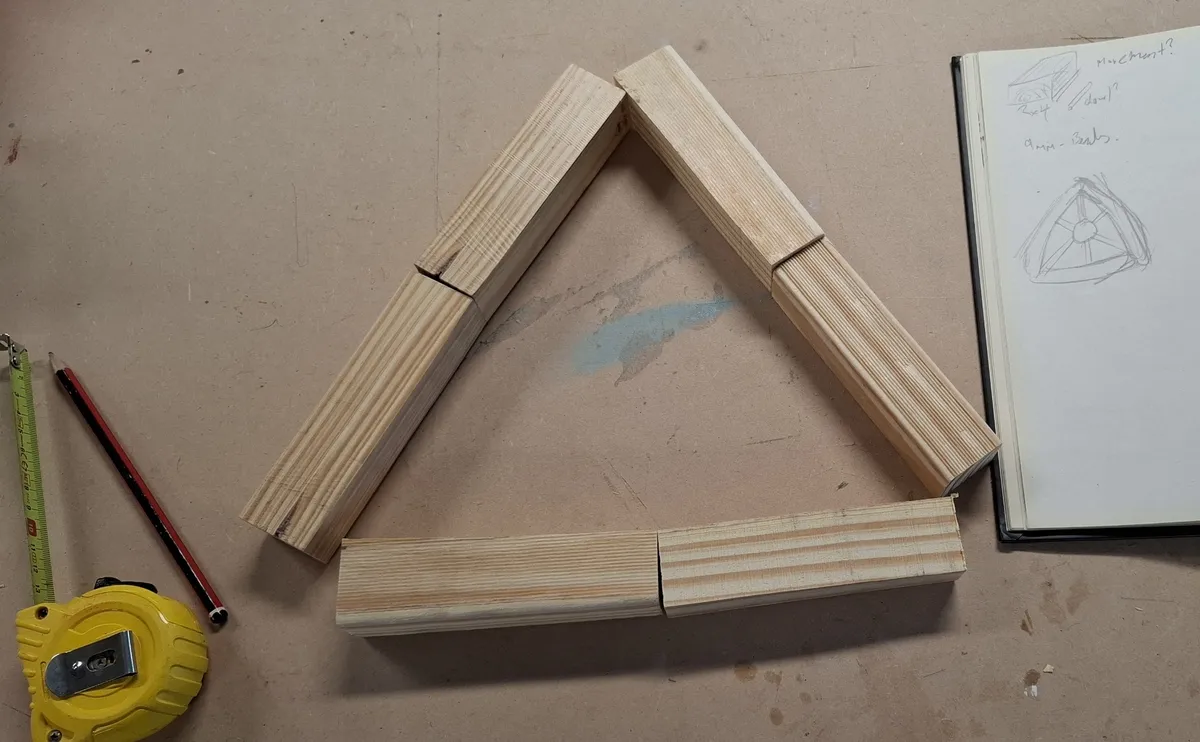
But I didn't want a straight triangle; the piece needed movement, so I wanted them to curve in at an angle. To do this, I marked up the sides and sanded them back to ensure they would link up together. Carved the angle and drilled straight down into the block, and then straight down into the other. I put a dowel in one and connected the other piece. That was where I found my first roadblock. By drilling straight down, the Angle I carved amounted to nothing; both pieces lined up perfectly in a straight line, and there was no angle. I discovered that I could leave one straight and would then have to drill down at an angle to ensure the other piece would then come in at that angle.
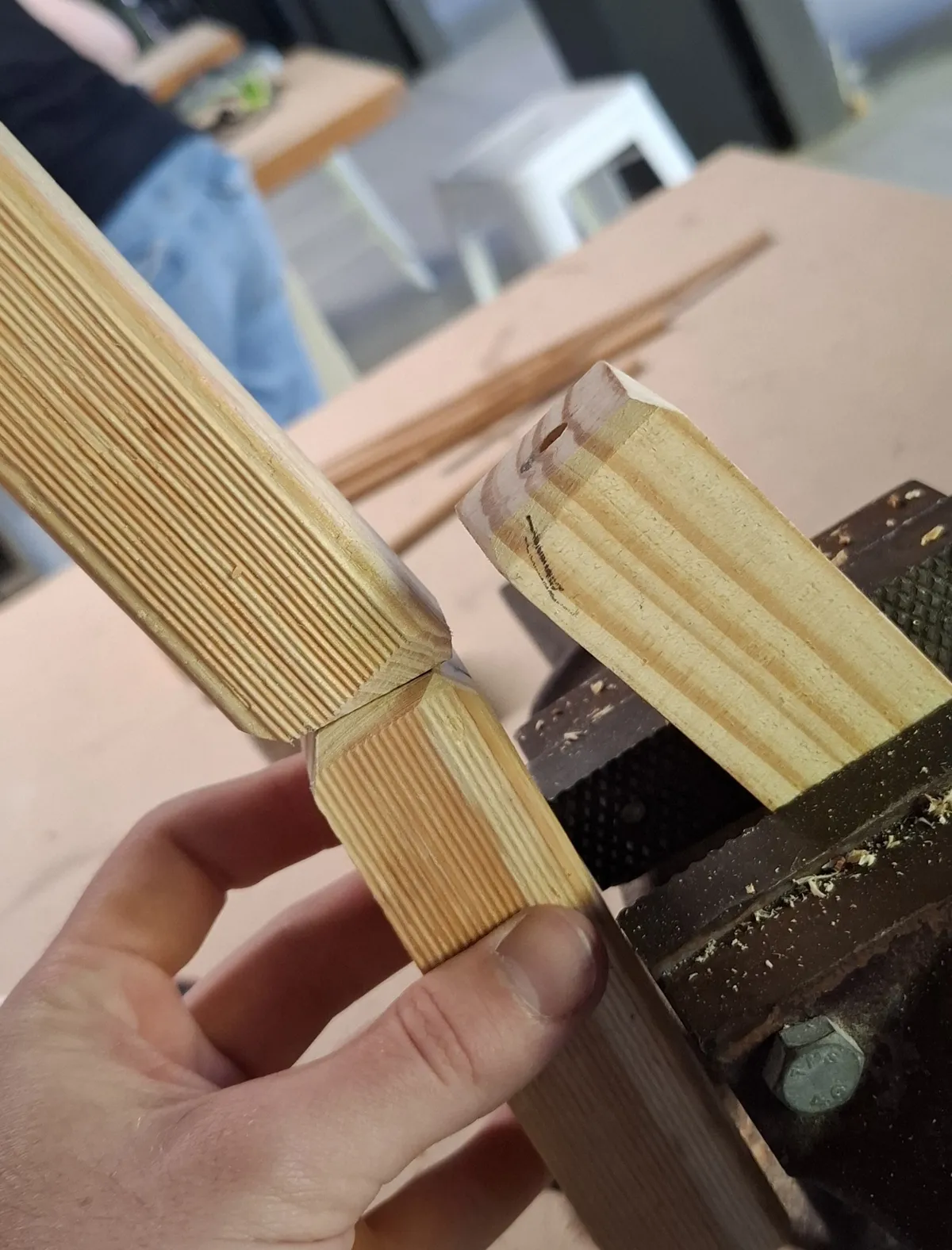
I then had to make sure both blocks had the same angled surface so they would connect seamlessly with each other. This took much trial and error, often returning to the sander to even it out. However, I didn't like how flat to the ground the pieces were.
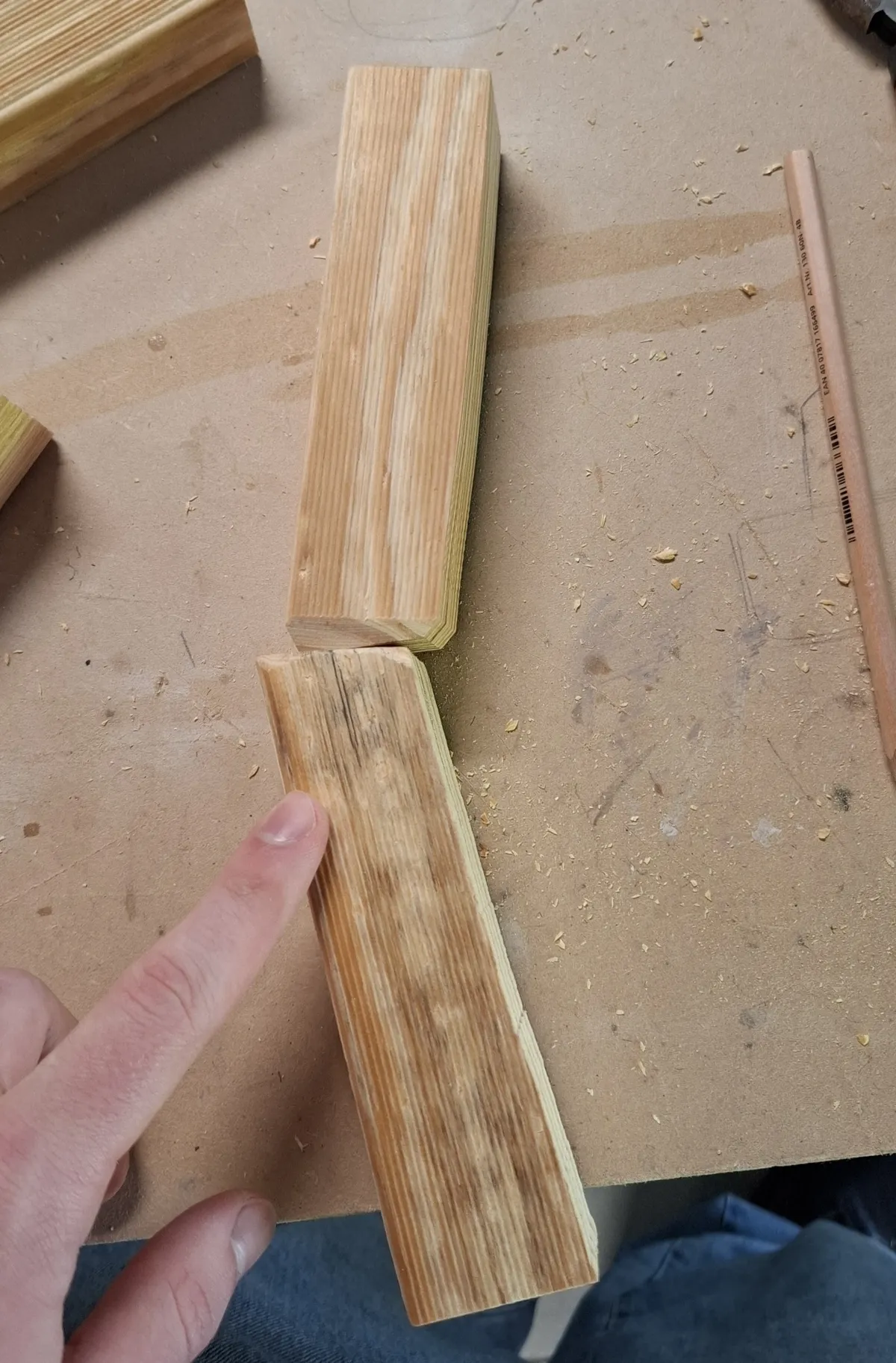
I rotated one and found that when the two angled faces came together, it would give some height to the piece. I didn't want it to be boring and flat; I wanted to give it life and motion, playing with the spinal axis of each individual block.
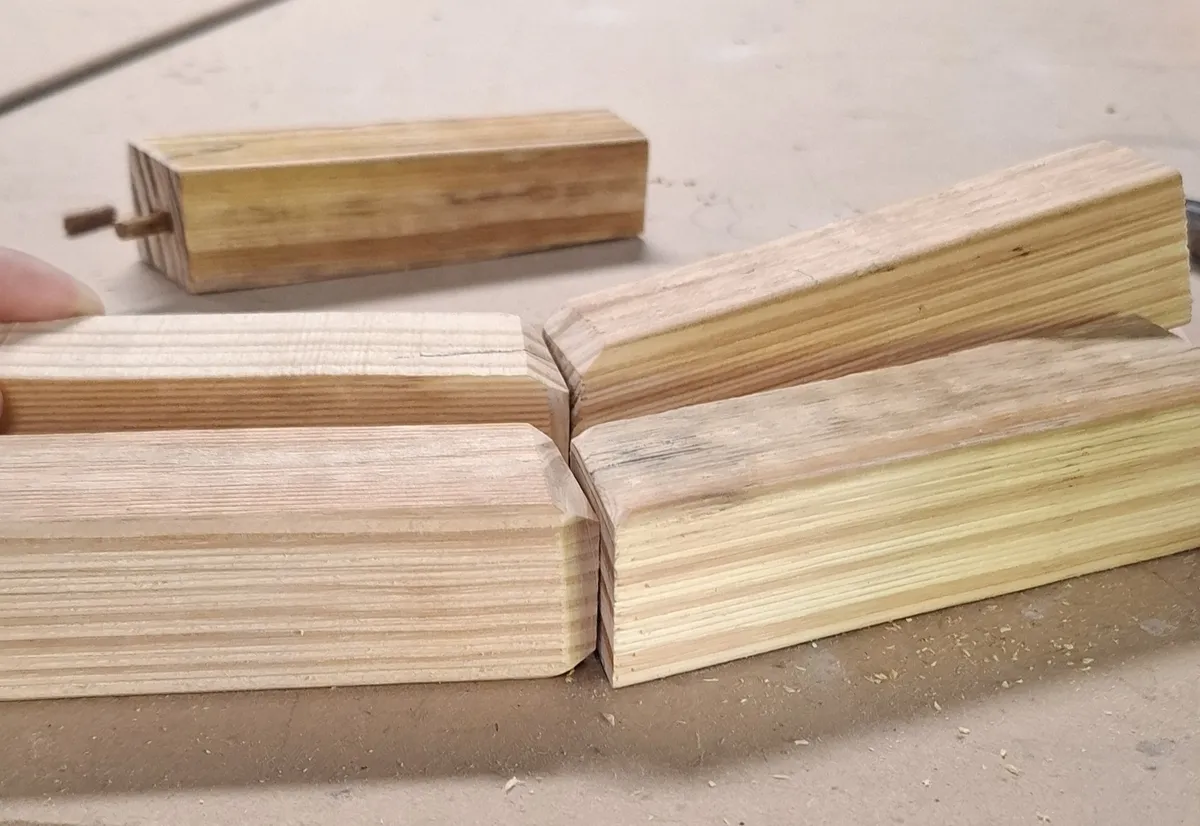
This meant that the angle I had drilled for was incorrect and needed adjustment; if I rotated the piece, they would no longer be flush. As I tried to pull the dowel out to correct the drill hole, the dowel got stuck and snapped.
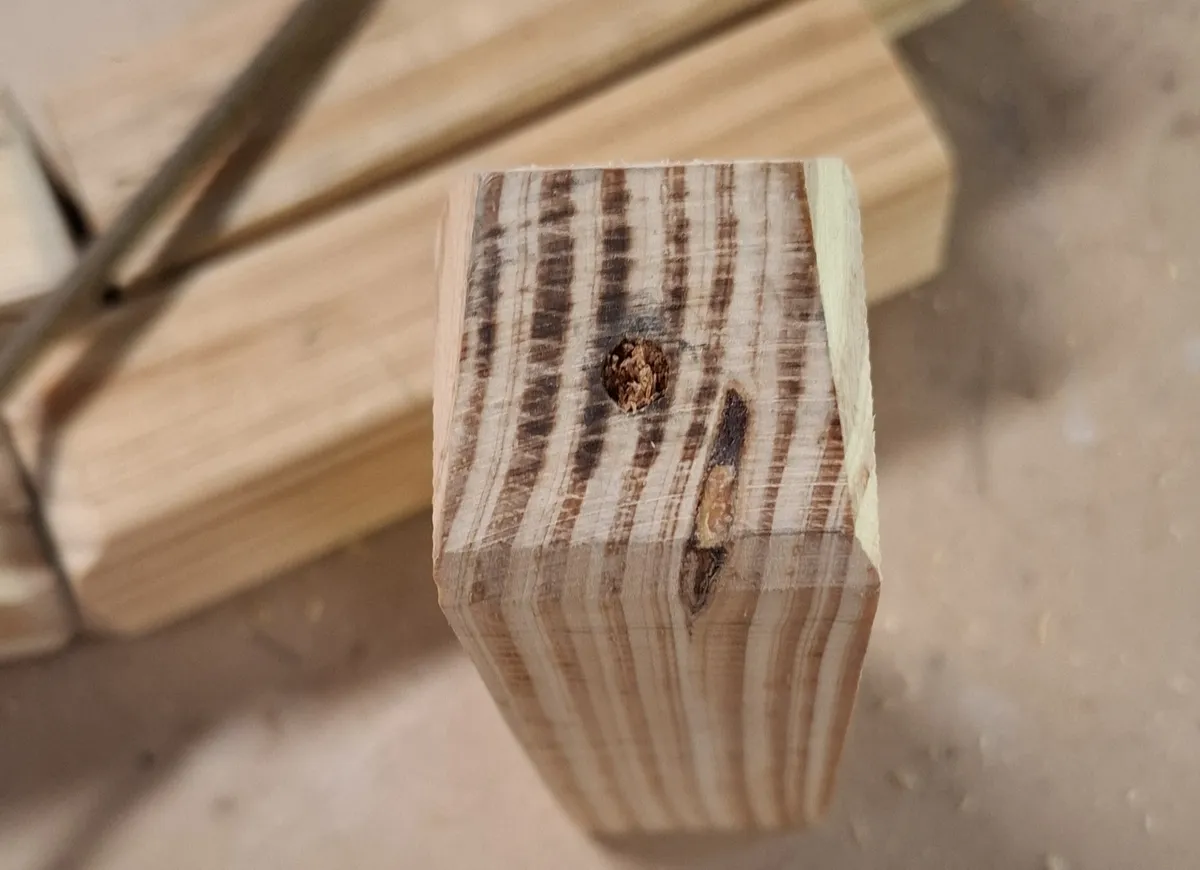
Annoyed at first, I learned that this would plug up the previous mark, which would mean fewer random holes and make the dowel sit tighter in the next hole. I then used this same method as patchwork when I accidentally drilled too far down on an angle and came out the other side of the block. Because of the previous mistake, I adapted and used it to my advantage. After hammering the dowel in and sanding it back, it now looks like part of the plank. As part of this sanding process, I wanted to remove the classic 2x4 jagged face the blocks have, and wanted to make it all smooth and appear more cylindrical. I wanted to remove the idea that it was made from a 2x4 plank but rather any piece of wood; yet still wanted to keep this block-like shape, so while sanding, I chunked off parts of the block, rotating and sanding straight into it again, making my way round and coming in at different angles. This created this lovely minimalistic ergonomic design to the blocks that really showcased their grain. Additionally, with some of the pieces slightly out of line, I was inspired to sand inwards at the edges, making them connect at a point and stretch back out again.
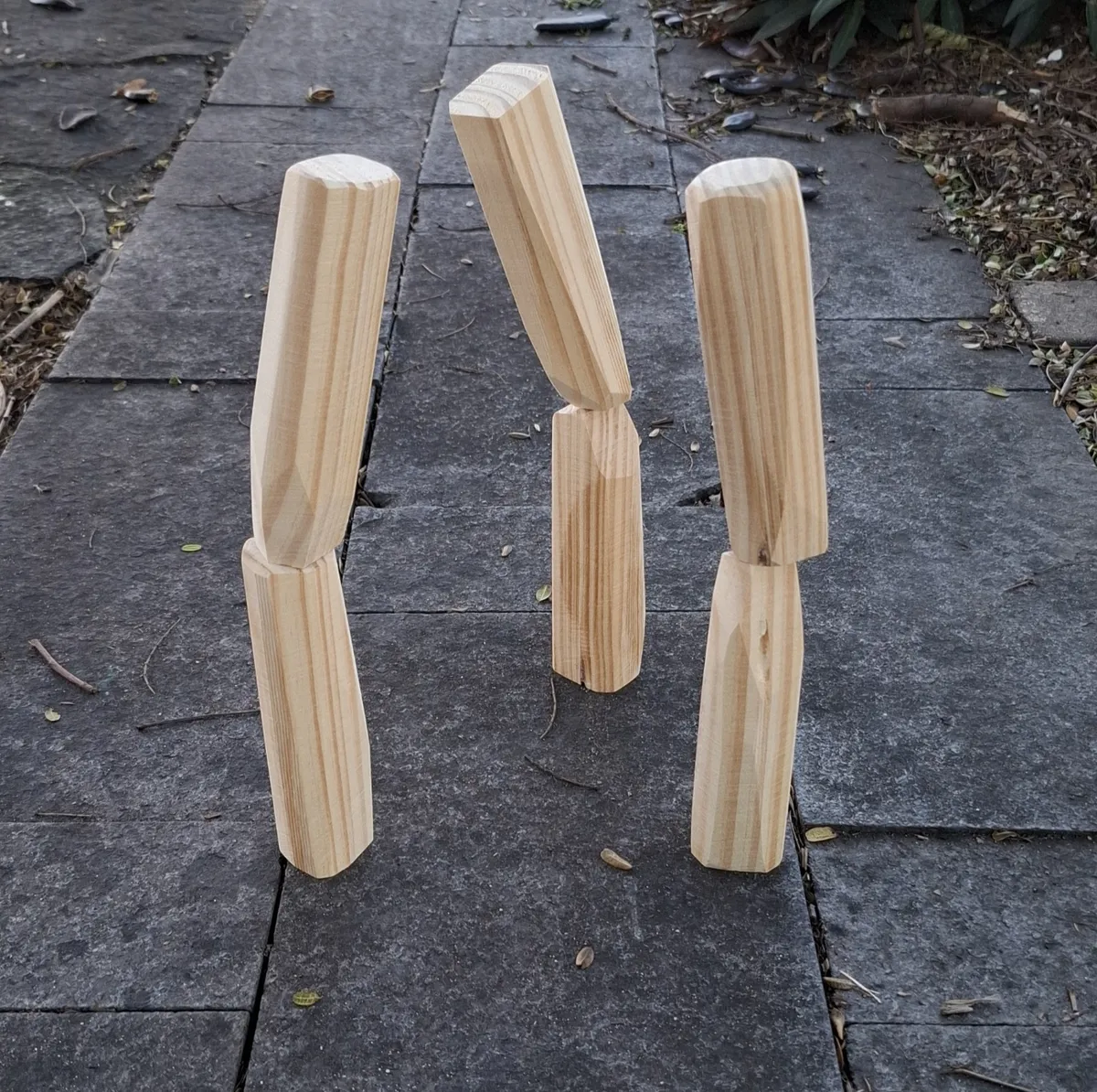
However, due to the amount of time spent ensuring the pieces would connect at an angle, I ended up running extremely low on time and was not able to connect all the pieces together. Then, when confronted with presenting my unfinished artwork to the class, I discovered that they could all stand individually. This angle I had worked so hard to achieve allowed the pieces to slightly lean toward each other. Magically, the pieces could just balance without tipping over, and the pointed edges made me question how the blocks were standing atop each other in the first place. This axis made it look like it could fall at any moment; suddenly, there was both movement and balance that my initial concept lacked.
The pillars held the presence, leaving room for the empty space in between them. This bowing quality the pieces had gave the notion that these blocks were rather 3 separate individuals, unique in their own way. Day 1 over
Coming into day 2, I knew I wanted to continue with this idea of the pillars. I loved their balance and presence; their simplistic and minimalistic design created such power and presence within the work. From this, though, I wanted to see what it would be like to include the ball from my original idea. I never had time to make it, and now that the idea had changed, I questioned how it would interact with this work. Because there were these large, lengthy pillars, how would a small orb juxtapose with this image? I wondered if I could place the orb atop these pillars and have them perfectly balance together to keep the orb up.
Creating the orb/rock was pretty straightforward. I cut a block in half, marked 3 holes to line up where I would drill, and hammered the dowels in; only 2 lined up properly, took one out and hammered both blocks together.
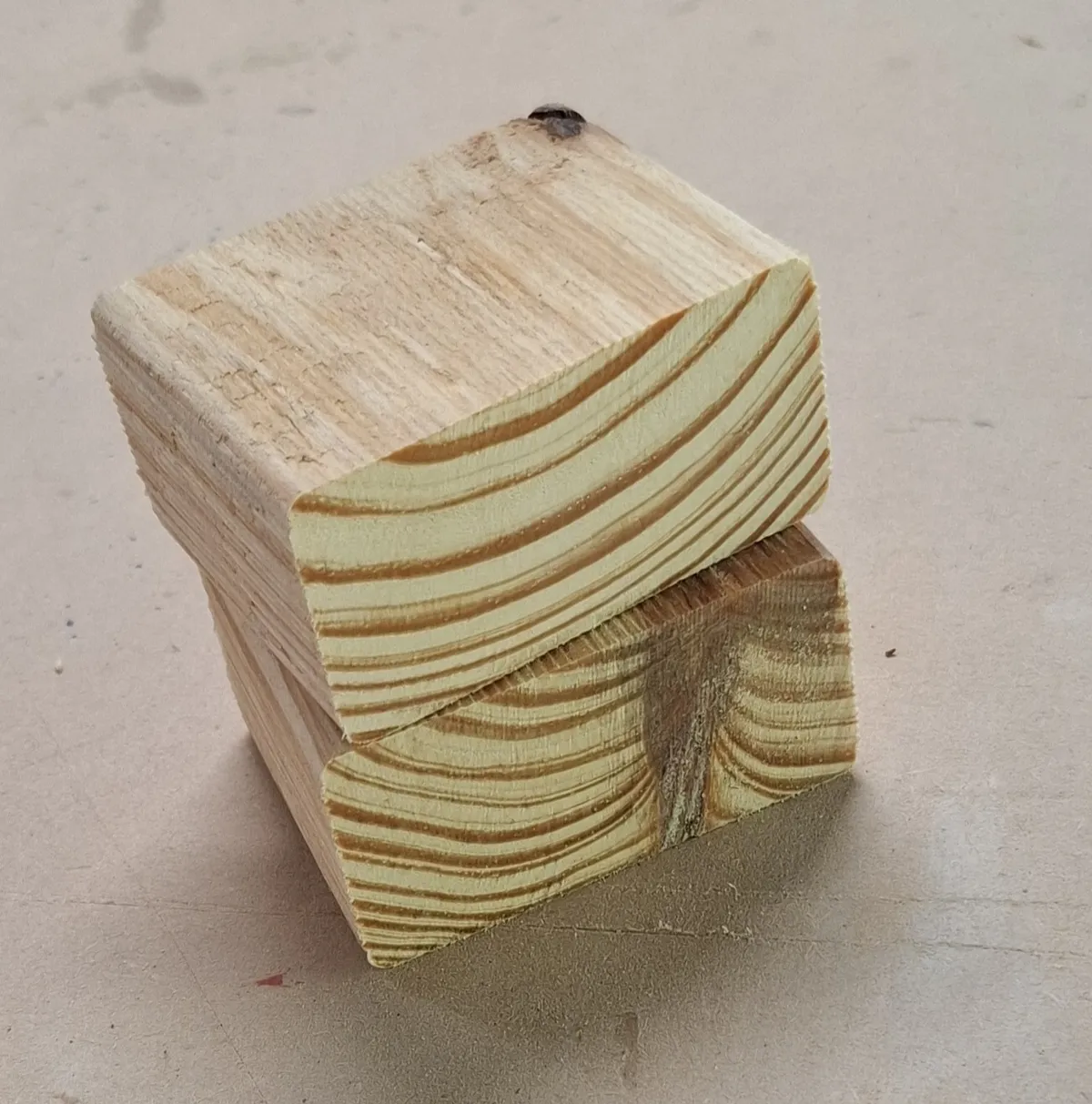
I then slowly sanded around the blocks to eventually create this rock-like orb.
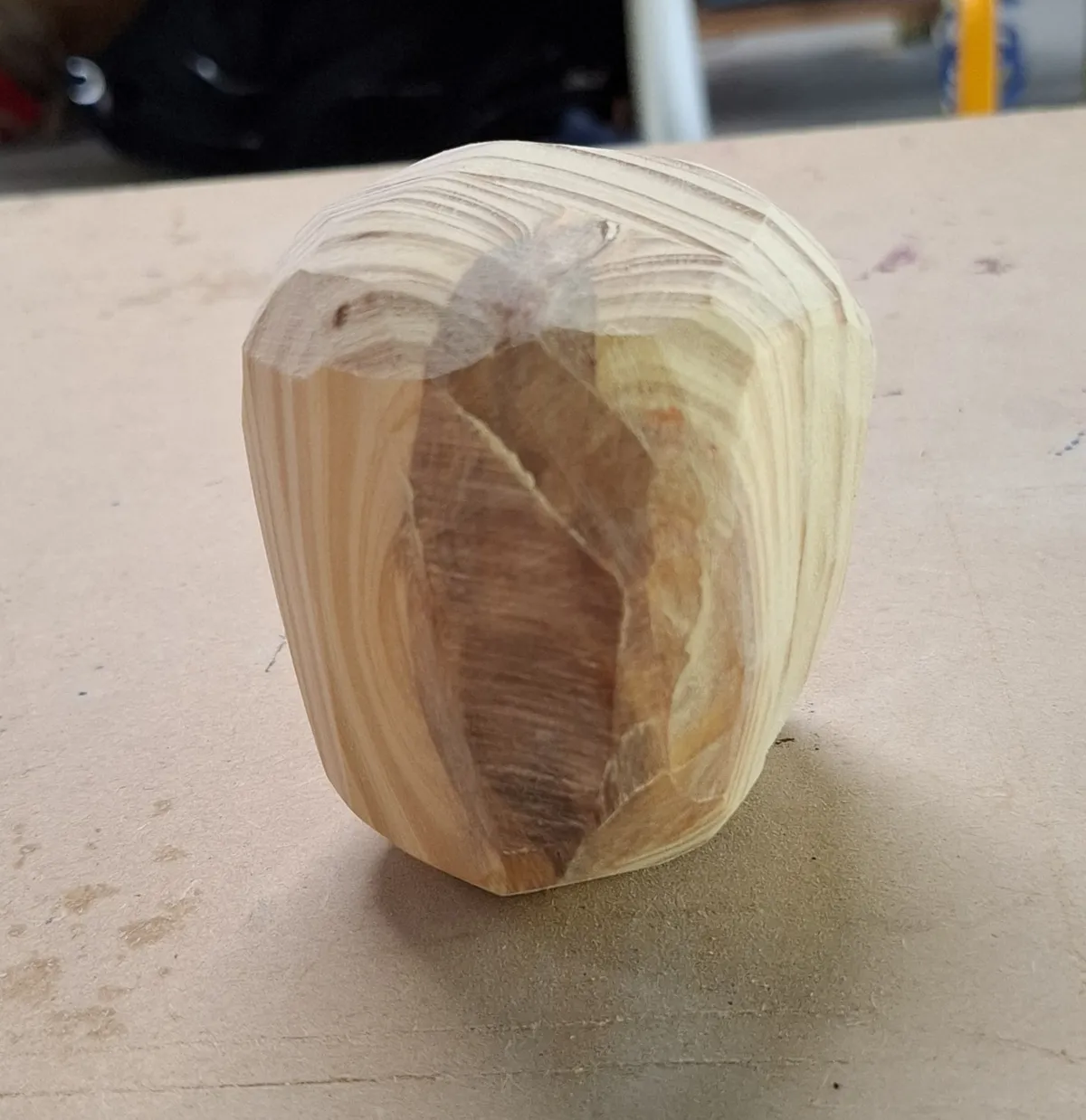
During this sanding process, I also wanted to refine the design on the pillars, being more intentional with the connecting point coming into each other and having each individual block head be completely unique from each other; one was flatter, the other more rounded and smooth, and the other this jagged polygon shape.
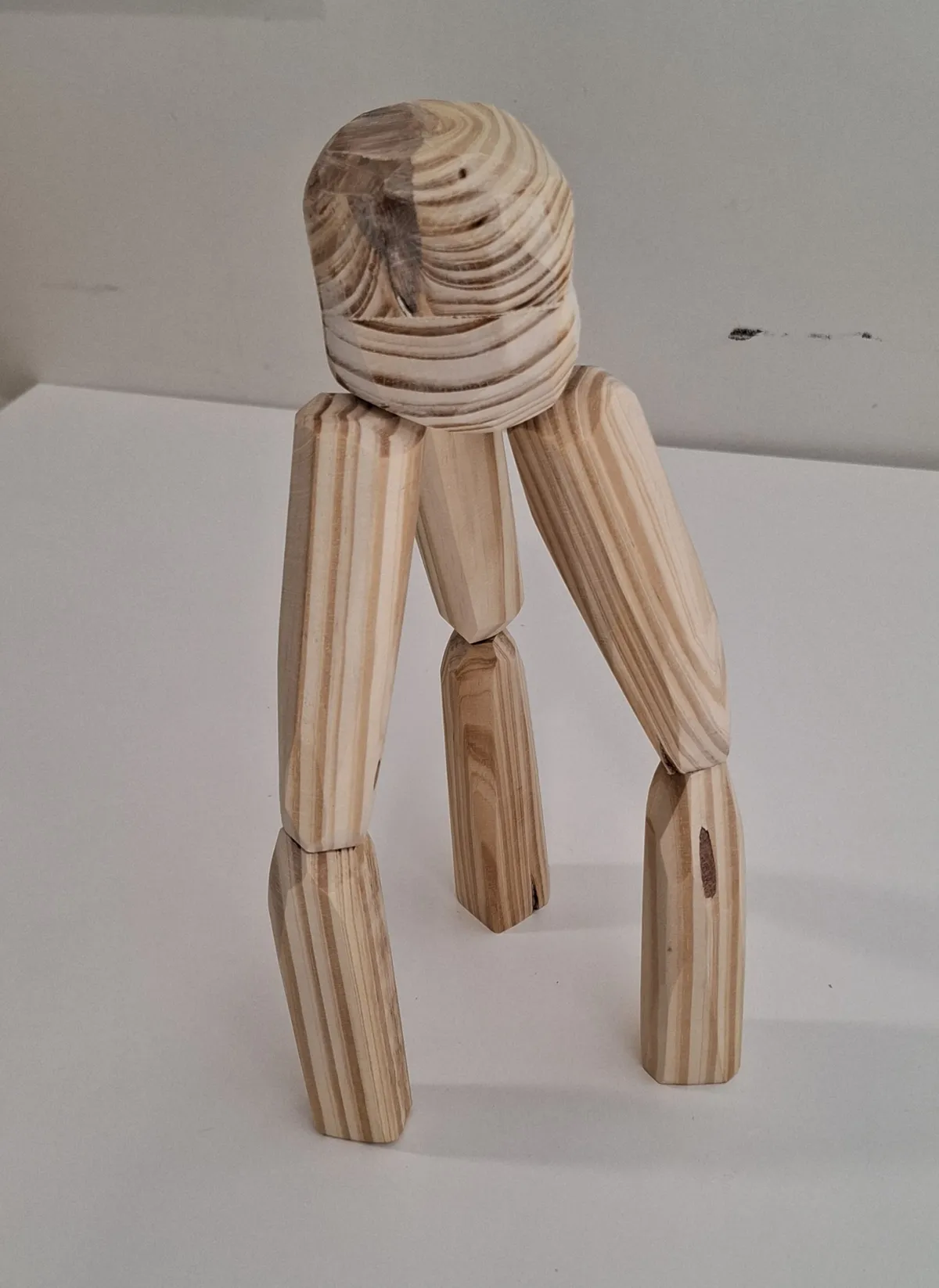
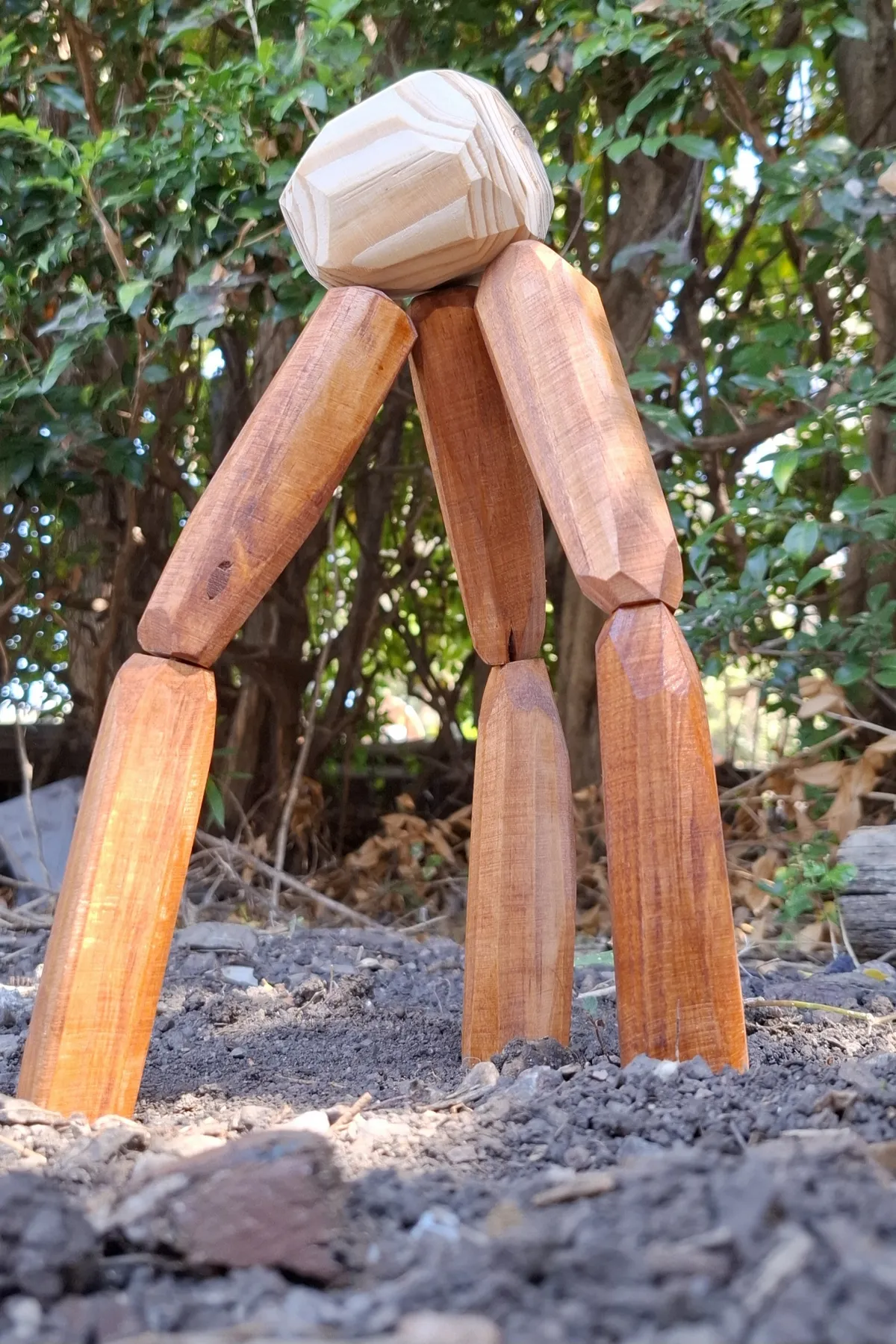
Balancing the block on the pillar was very much a challenge, though it did work; however, when connecting the piece, it no longer looked like separate entities holding a block, but rather more like the creature Rocky from "Project Hail Mary" This, of course, is not what I wanted, as it distracts from the meaning behind the work: unity, balance, and individuality, and instead reminds viewers of the movie they recently watched.
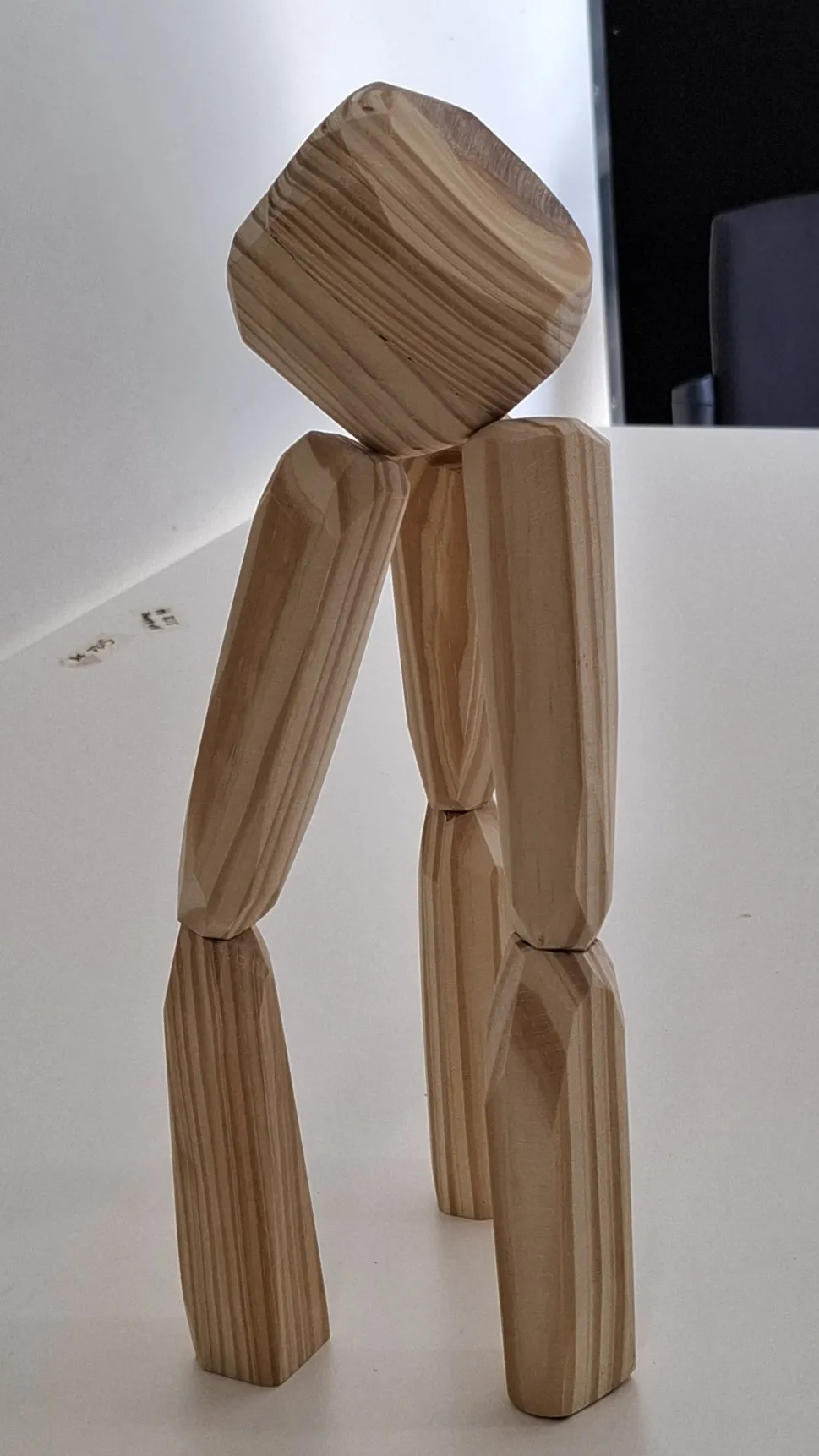
As such, I started to play with how the space between the objects would change the viewing experience. How much negative space could change the work, which way the pillars were bowing, and how far away the rock could be.
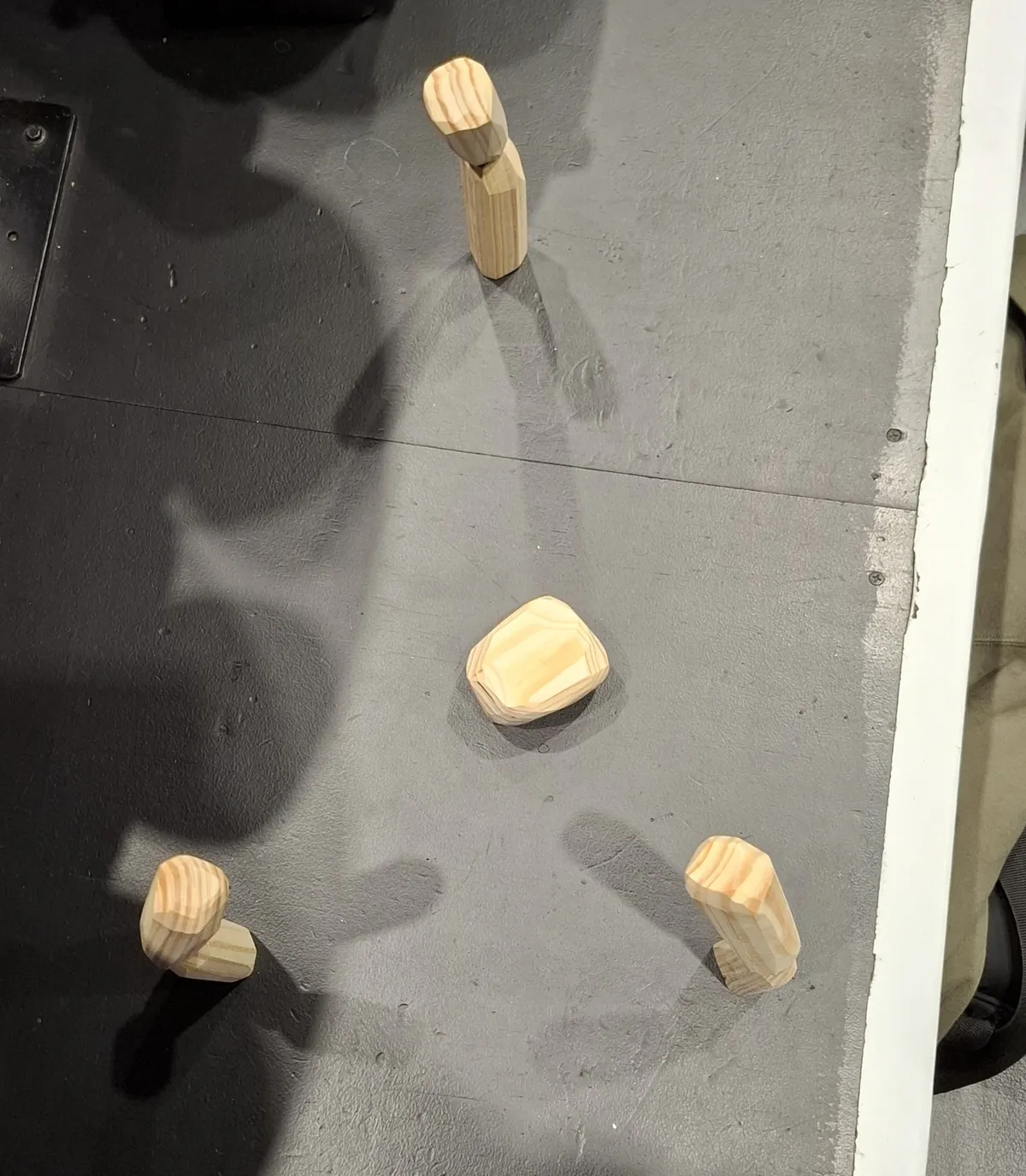 (I especially like the shadows in this photo)
Experimenting with this, I noticed that the outlier—the Rock— would predominantly hold the presence. The best viewing experience was definitely the pillars facing each other in their own community. I loved how this work allowed for different iterations and viewing experiences just by moving a couple of things around. That really fascinated me.
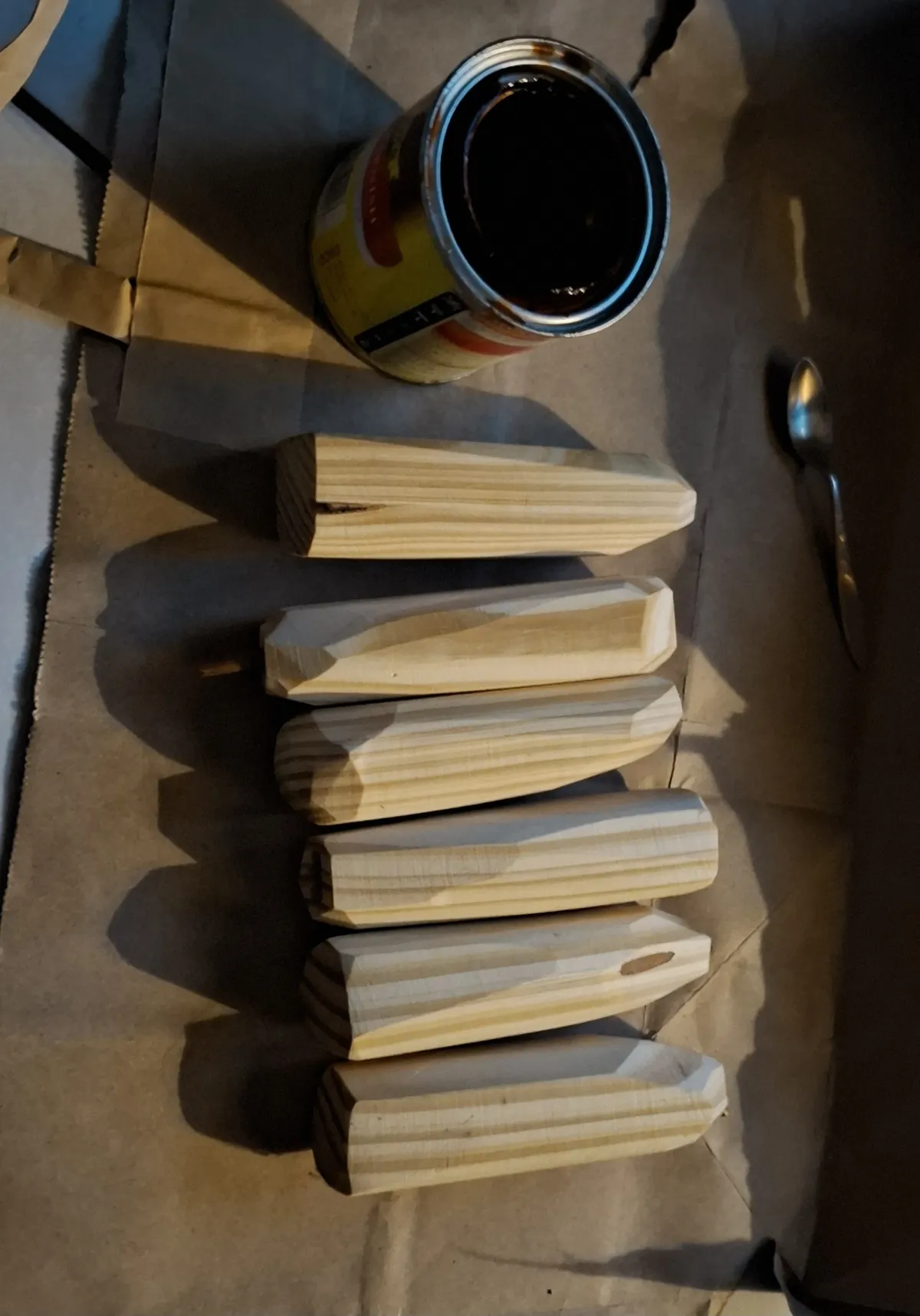
To bring out the grain in the wood, I wanted to apply the same wood lacquer I used for last week's work. I was curious to do the same for the rock/orb, but thought that it needed to remain different. I thought of even scorching the outside of the orb to give it more of a rock/charcoal look; quality would be cool. I decided against it. Still, it's something I would like to explore.
I could never decide how I would like the work oriented, so instead I decided to showcase its possibilities. Through a series of photographs that create this wonderful story of 4 individuals coming together as one.
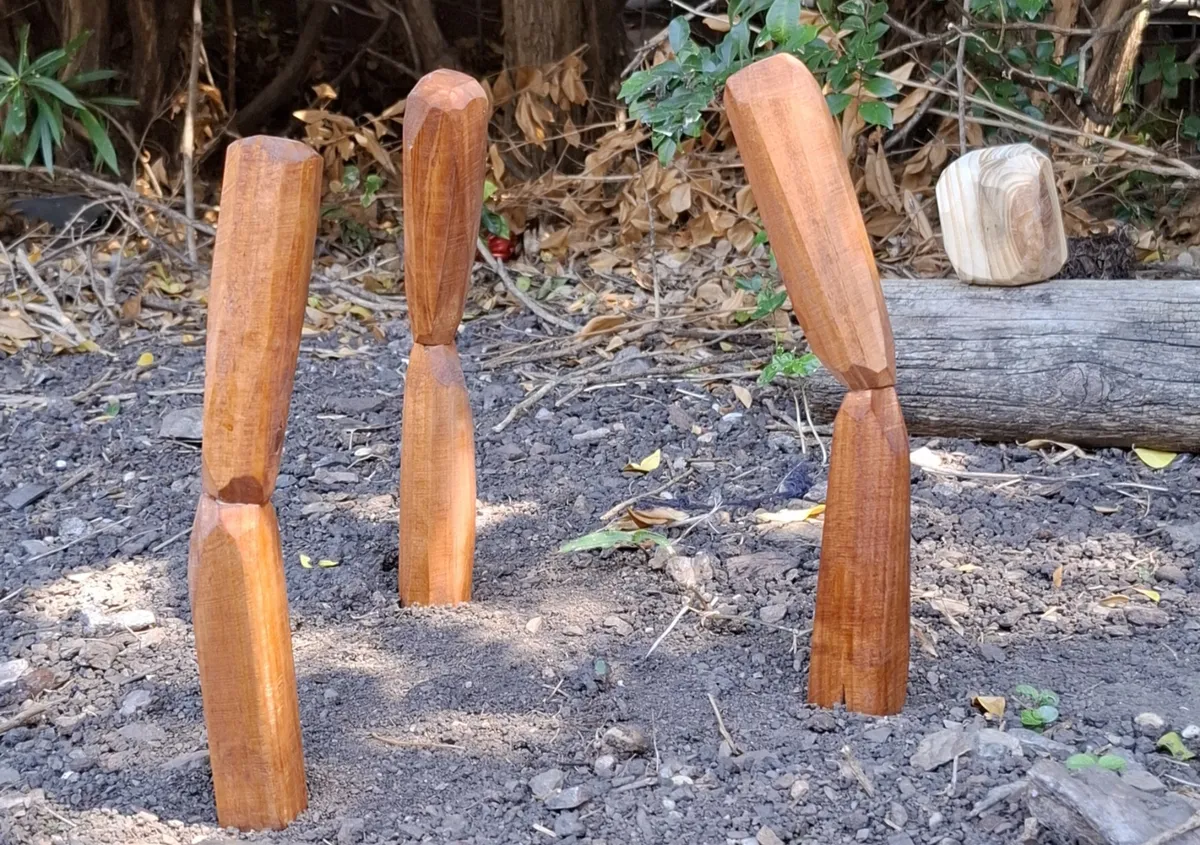
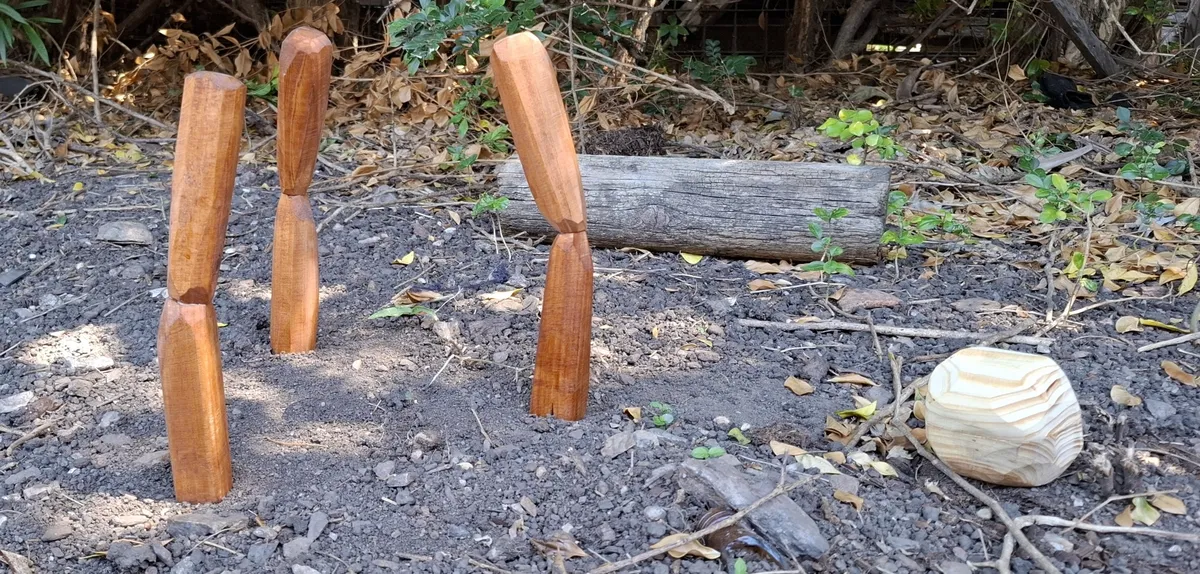
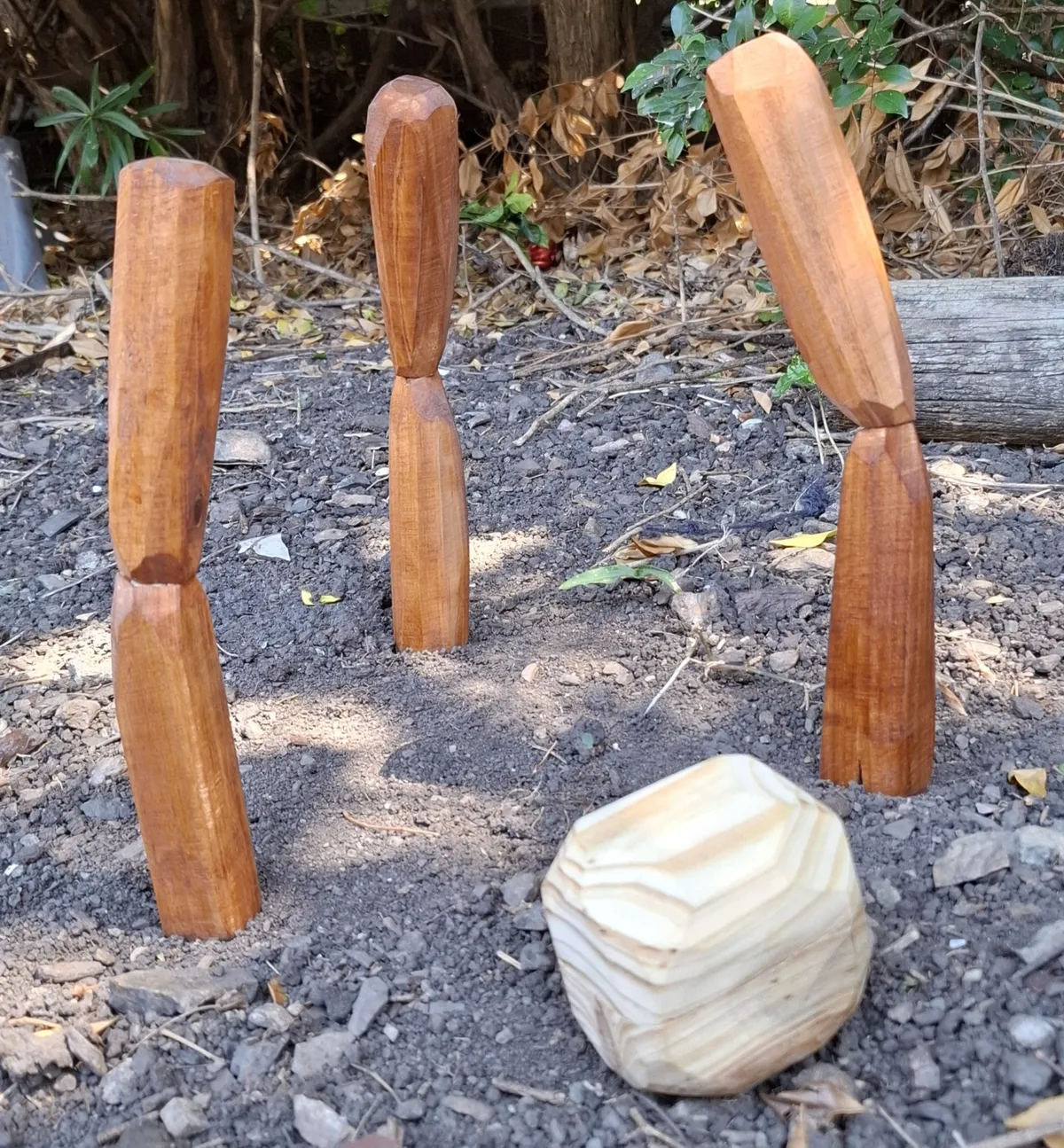
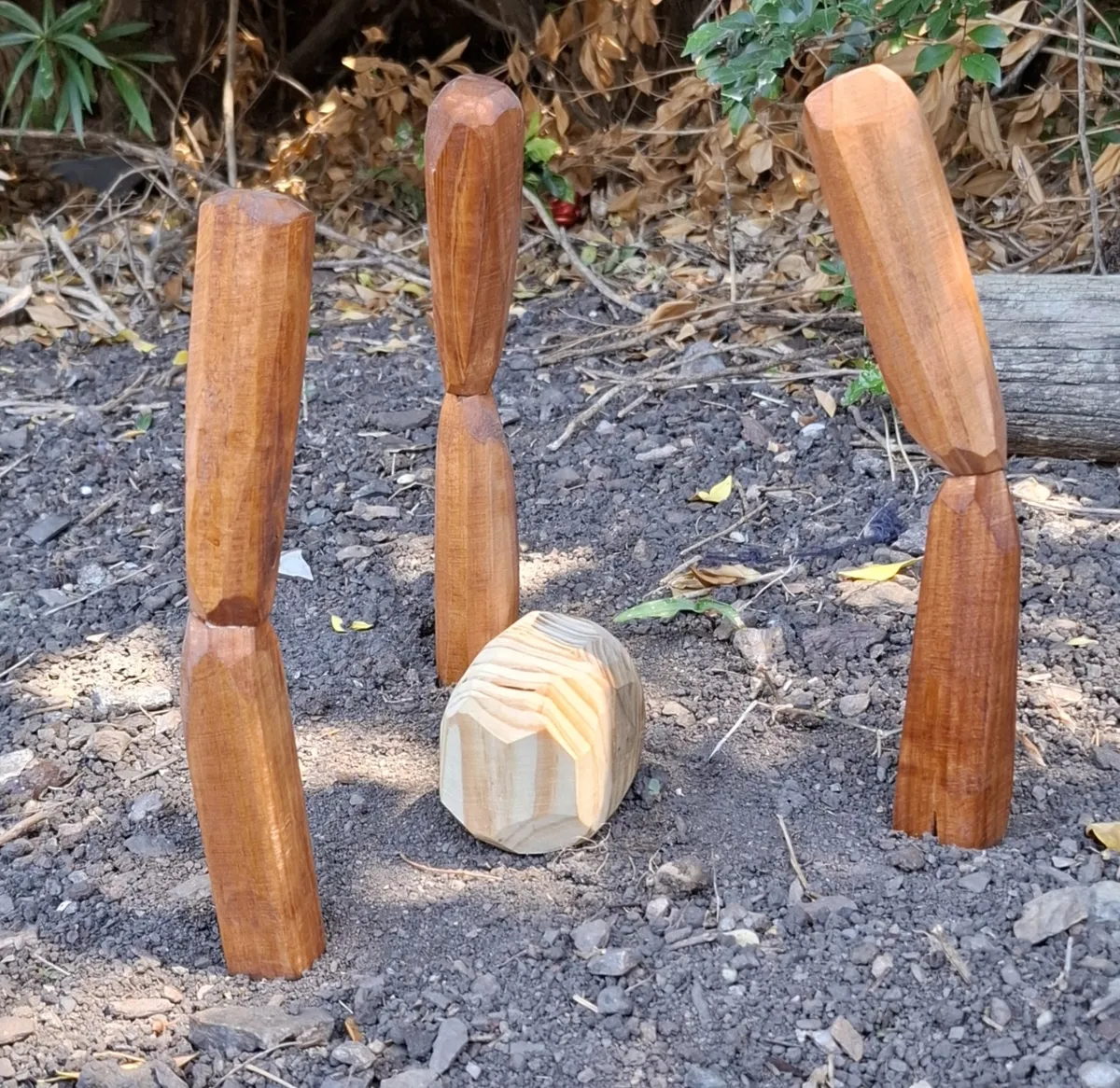
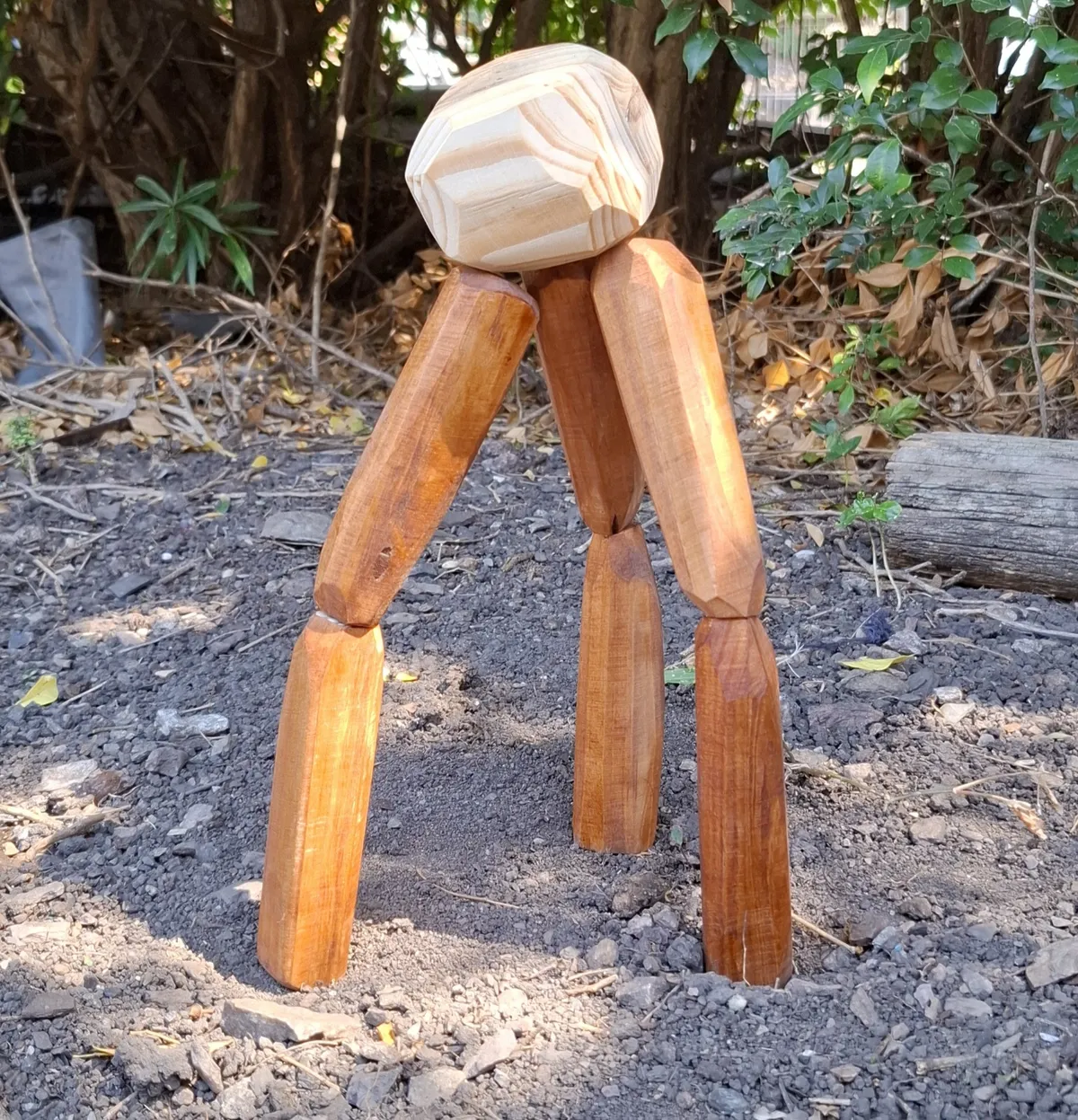
Balancing Pillars comments on individuality, acceptance, and unity, reminding audiences to embrace each other and work together. Lean on friends and loved ones; together we can thrive.
If you would like to continue to next week's artwork Week 4 - Free Prism