Free Prism
Week 4 - Enclosures and Fields
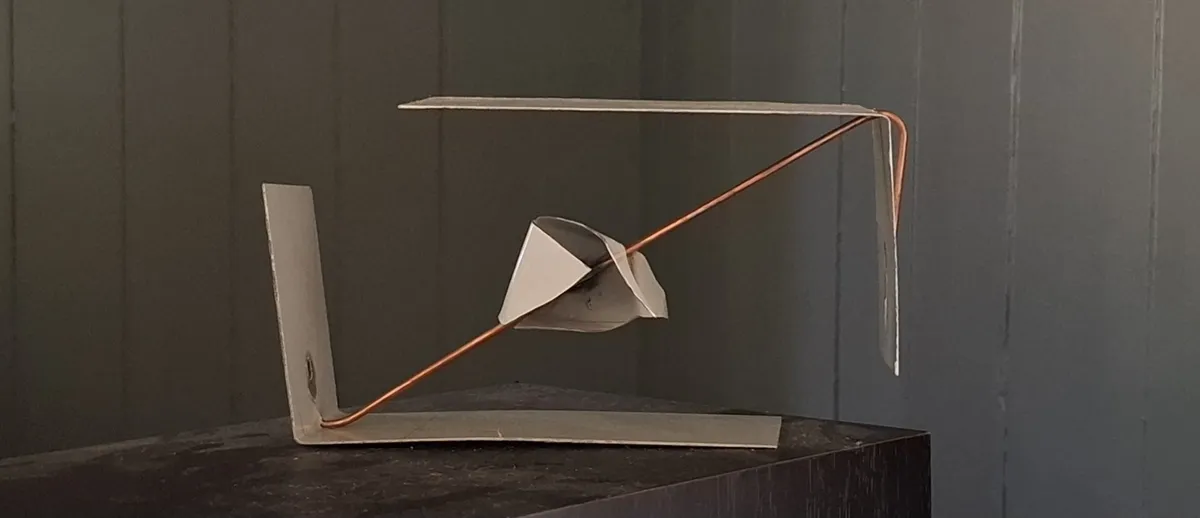
This week we were introduced to the terms Enclosures and Fields. These represent the physical and conceptual boundaries of the artwork and how viewers experience and relate to these concepts.
Within classwork discussion, it was said that an enclosure is like being inside a confined physical space, like a classroom, and the fields would be outside. However, within this classroom in particular are full-length windows that stretch along the side of the wall leading to outside. Making the enclosure feel much more open.
We discussed Michael Heizer's grand-scale sculpture The City 1970 – 2022, taking over 50 years to make; we questioned the purpose and intent behind the work, reworking the landscape into a creation of art that will last a lifetime.
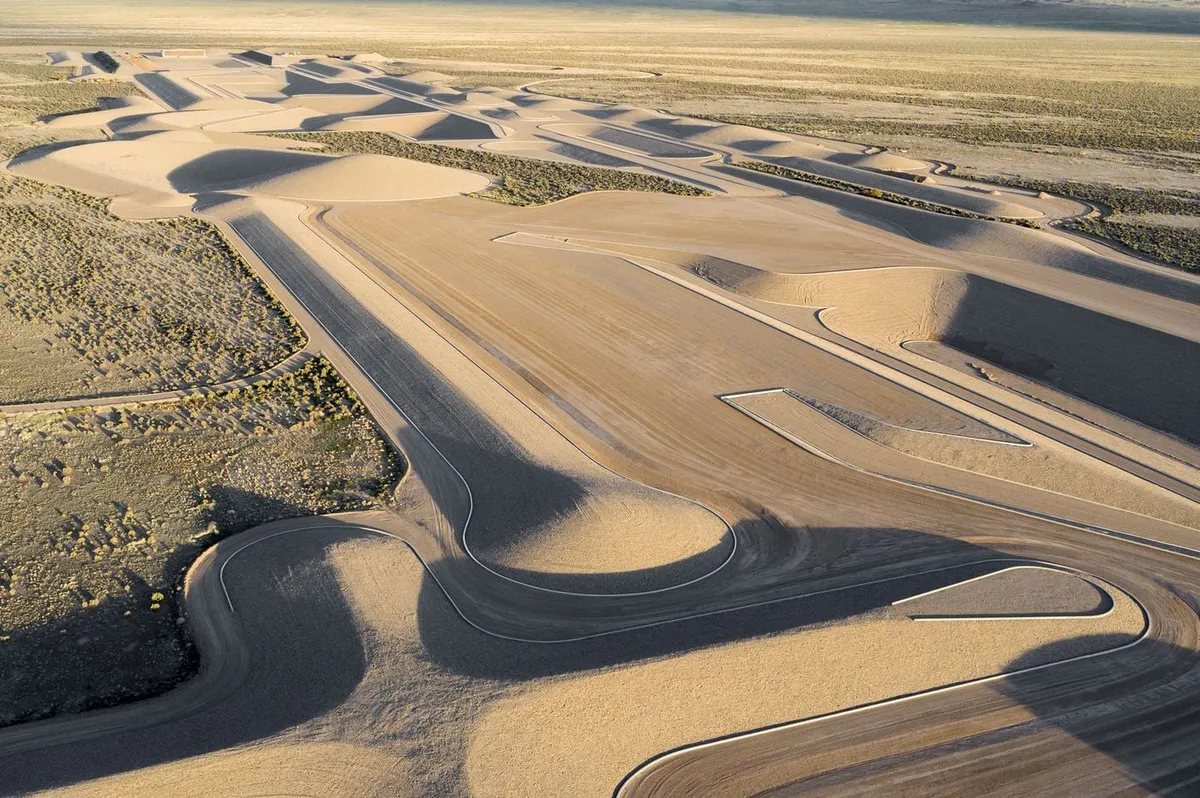 Michael Heizer - The City - 1970 – 2022
Upon first viewing the work, I was starkly confronted with how similar the work looked to a coal mine. Growing up in Muswellbrook, I was very familiar with the negative effects they had on the environment. Of course, this made my opinion of the work quite negative: mass destruction of the land, time, effort and resources that can be used elsewhere. I thought it was ridiculous that the artwork could only be truly noticed from the sky; seriously, what was the point? You had to travel to the middle of nowhere to stand and look at a bunch of mounds. Curious, I wanted to see this first-person perspective, and my opinion changed. Located in the desert valley 3 hours north of Las Vegas, this shuffling around of dirt really doesn't affect the environment negatively. Additionally, the experience is meant to be in first person, walking around this larger-than-life field, and becoming a lost speck in the environment. This barren landscape is meant to confront you with its scale; discovering new structures as you make your perilous journey reminds the viewer of how little we are in this universe.
Though with a much smaller sculpture, 1973 Sun Tunnels by Nancy Holt. Showcases Utah's beautiful desert; the circular cement tunnels create mini enclosures inside themselves; at the right view and time, the circles hold t
the other inside, where, in the centre of the two, the sunset perfectly aligns. Alone in this open field, it stands. Reminding us of how much of a gift our environment is.
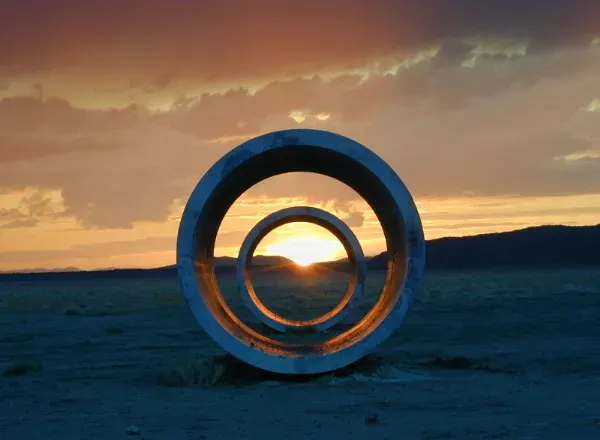
Nancy Holt - Sun Tunnels - 1993
Creative Development
We were tasked with working with sheet metal, and I had absolutely no idea what to do; how was I going to create an enclosure and field? These works I had seen before related to the environment, and now I have this tiny piece of sheet metal to do the same. I was inspired by the idea of the windows, how it opens up the space; additionally, with Nancy Holt's work, though still quite large, the piece takes its effect with the right perspective with the environment. I wanted to work with this
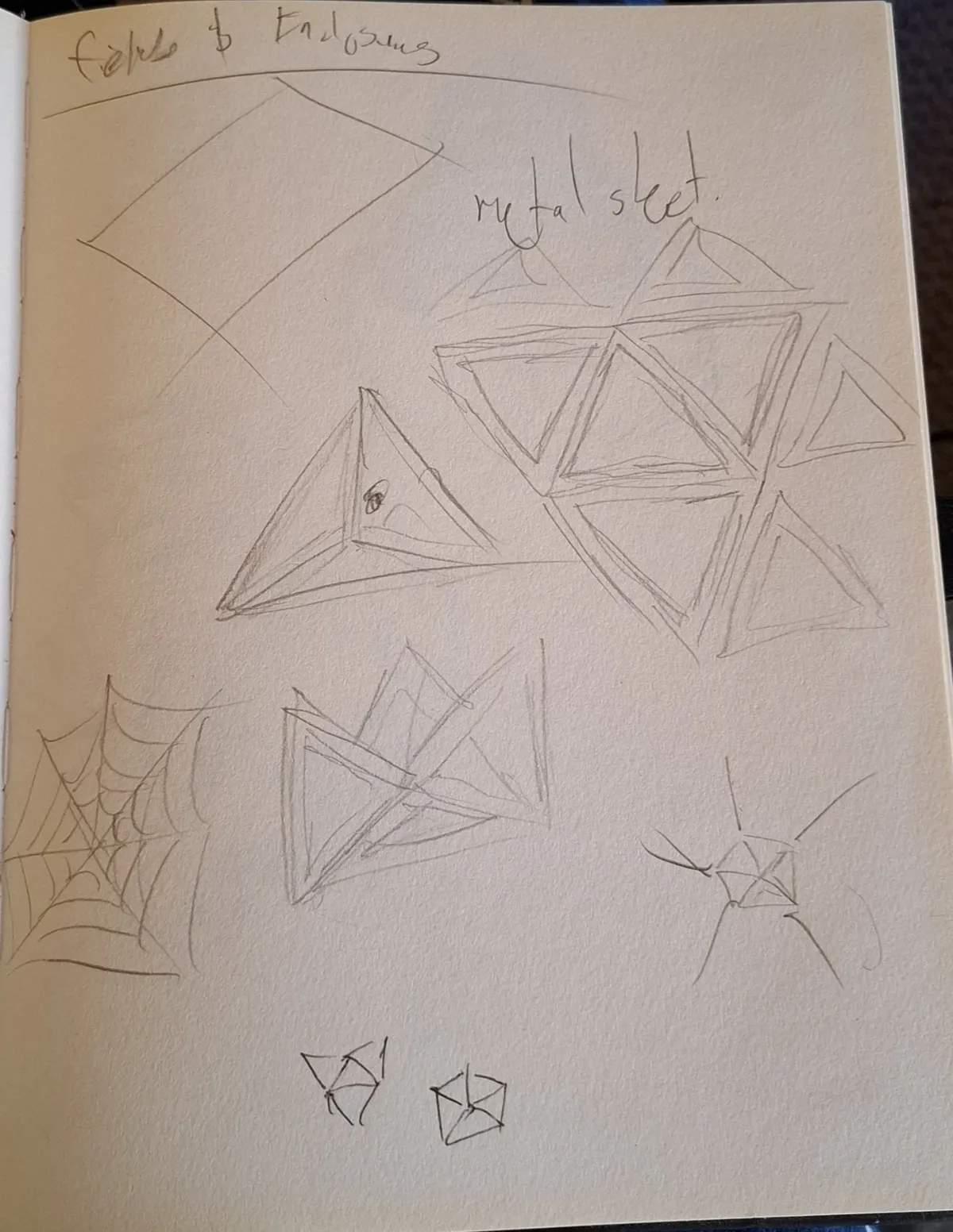
I thought I could continue with the idea from last week: the plane that never made it, this triangle with some kind of floating object inside. The walls would be open, and it could be seen through, yet the object remains trapped inside. I knew it seemed ambitious, and I didn't know how this was going to be achieved, but I went for it.
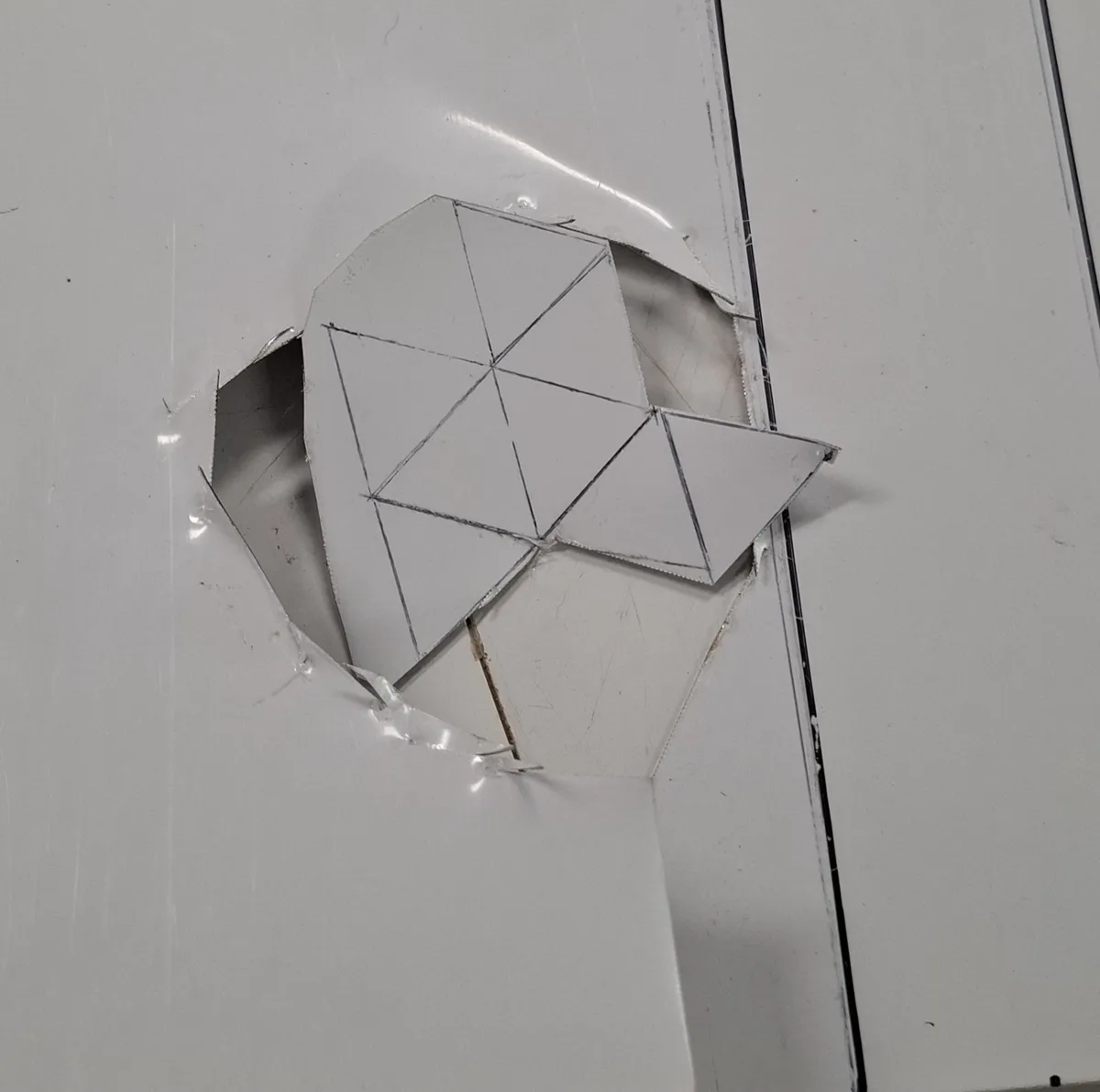
First, I wanted to start with making what was going to be my orb; the nature of sheet metal meant that I would have to make it some sort of hexagonal shape. Still wanting to play with the triangles, I did my best to free-draw a shape that I thought would fold and bend together. Cutting along the lines and tried my best to fold them in. This proved quite a challenge, as when folding it 90 degrees, the next side would eventually mean the sides got in the way. Plus, it was also insanely sharp; I filled the edges and decided to go with brute force.
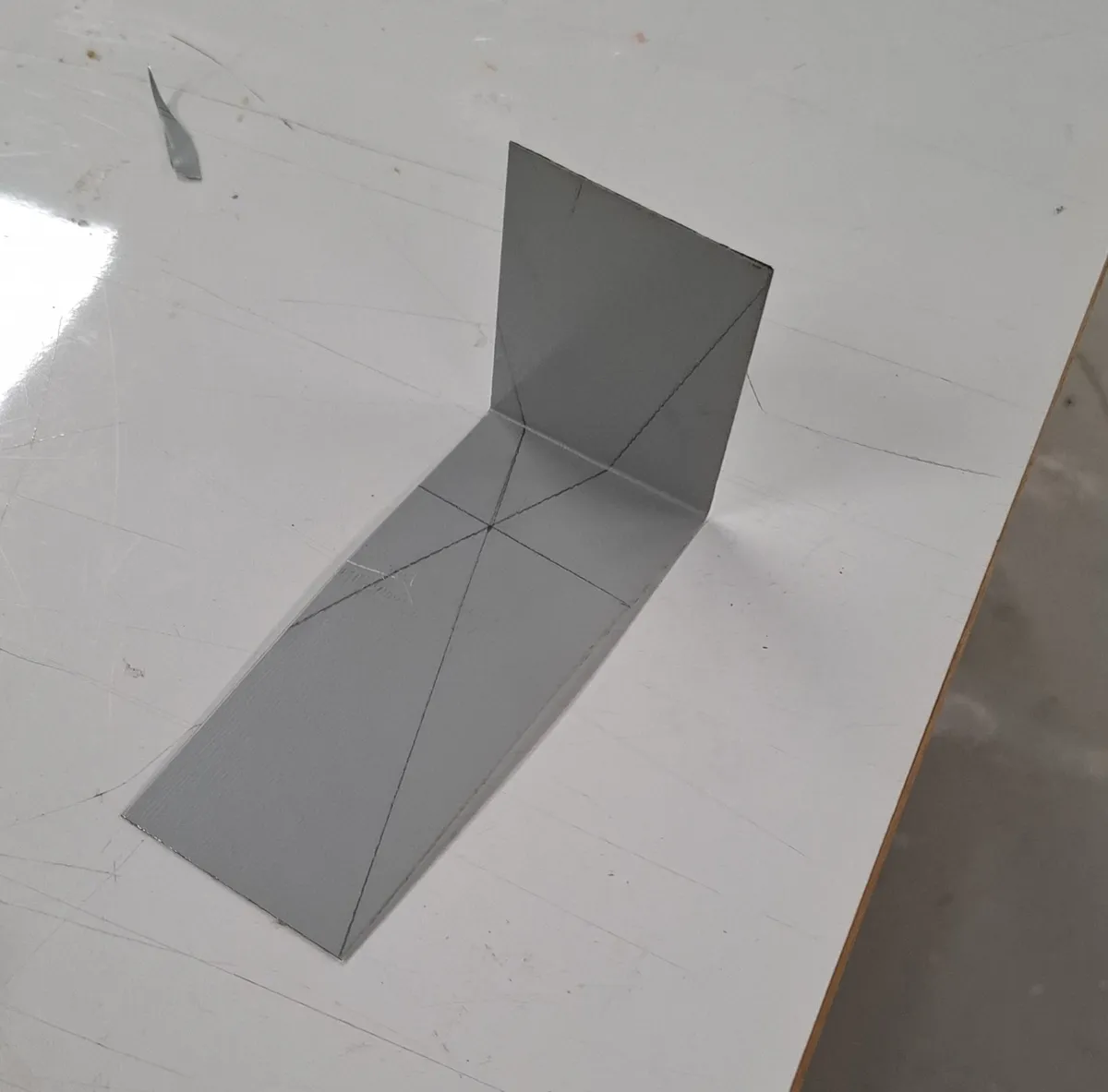
Then came the walls. I thought that my previous idea was going to be too difficult; I couldn't wrap my head around how I was going to achieve each step logically. Not wanting to throw away my scrap, I had some leftover material that I thought could be my walls, creating an L-like shape and placing the orb in the middle.
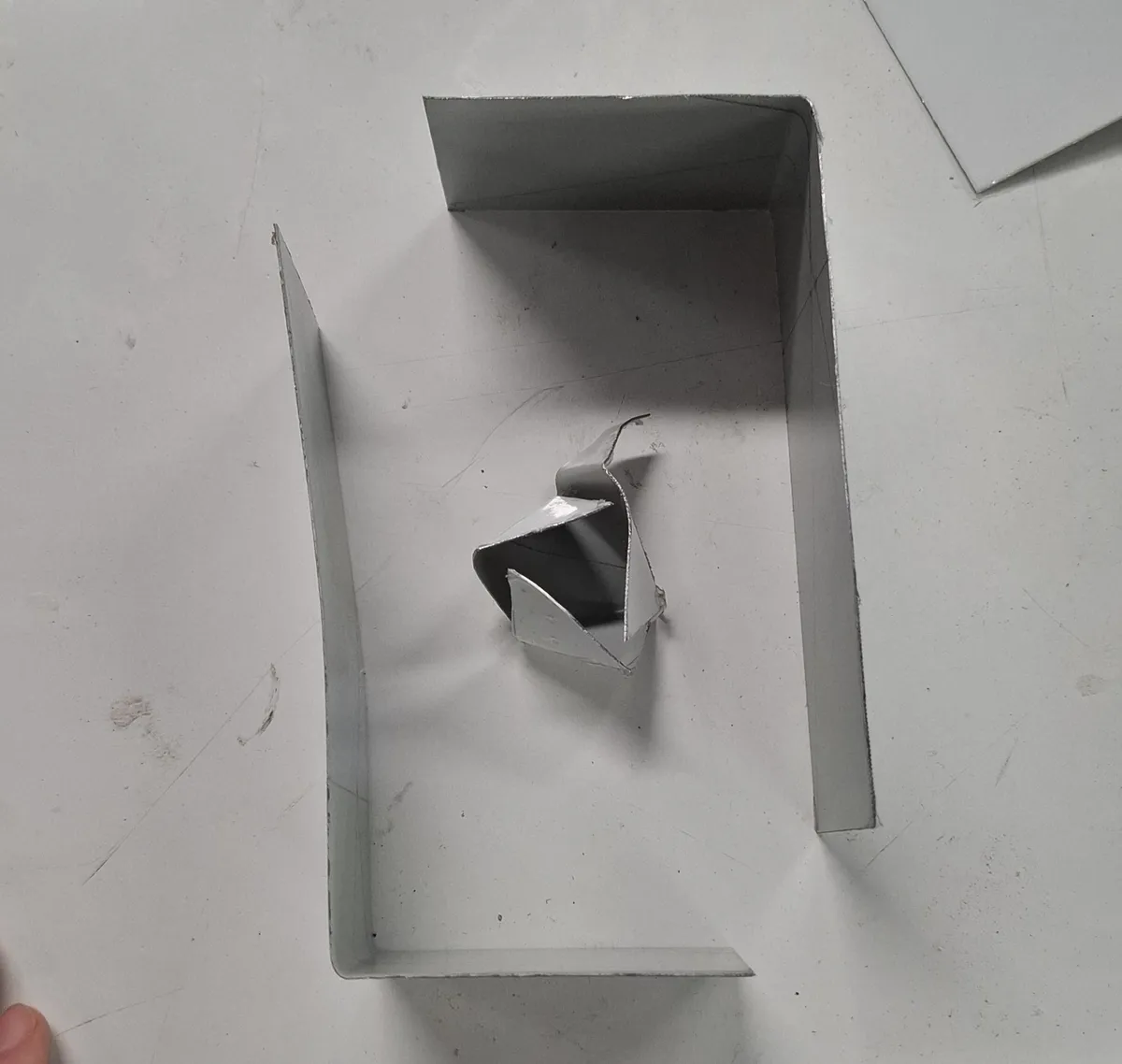
As you can see, the orb did not come together quite as I had hoped; the triangle that was needed to fill the gap was on the wrong side. I ended up really liking how this looks; it creates a little enclosure inside of it that the viewer can just peek through the triangle. Looking at this shape, with the walls and ball floating, I thought it looked great. The open corners freed up the enclosure to become part of the field. The orb didn't seem trapped. Though I pondered how could I efectivly make both the orb and the metal float.
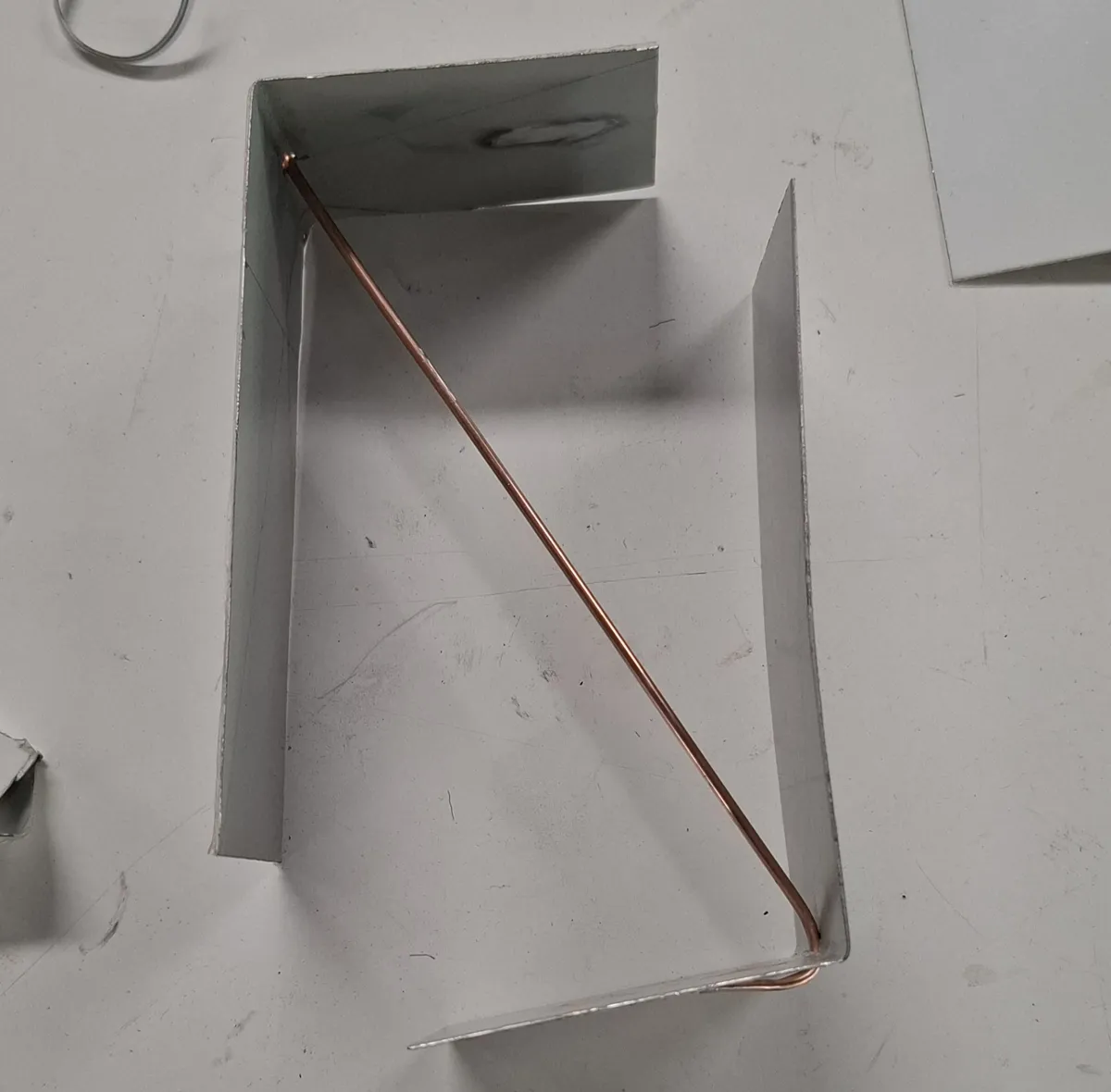
Curious about this idea, I presumed that if I attached a copper wire at an angle, the structural integrity of the metal would hold the piece together, and I could place the ball in the middle simultaneously.
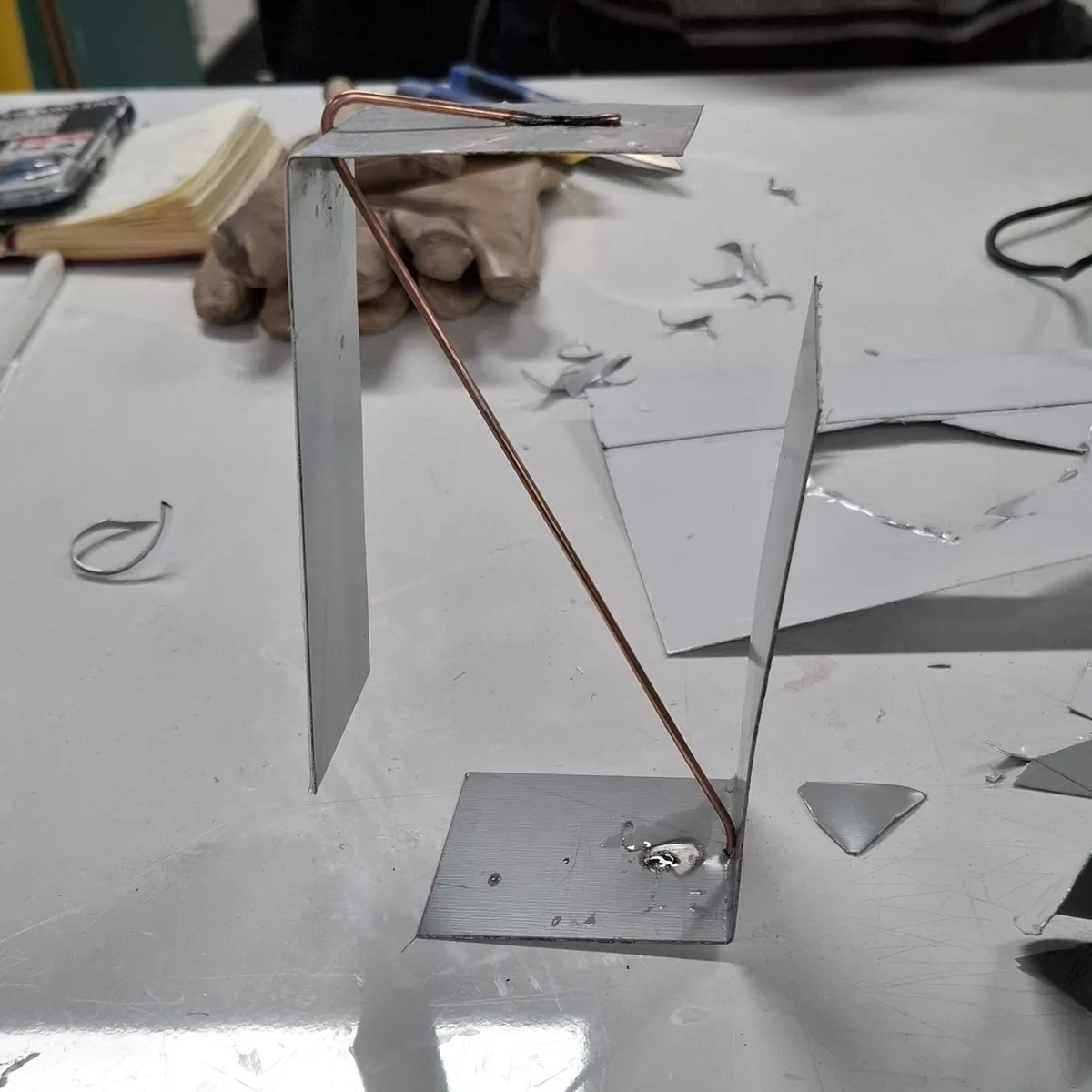
I welded it together, and it stood!!! I was so excited by this; I had to make sure the wire was bent correctly to align with the sheet metal. I figured that just having the wire attached to each corner wouldn't be integral enough; I needed the wire to hold it all together, and the sheets just provided support. Luckily, it worked, and I know I just had to wedge the orb in there. Originally, I had thought to keep the inside clear and just weld the sides of their rods to the orb, yet I feared that would not only make the shape wonky but also not have the right support it needed; as such, I opened the orb up, welded it to the copper and then closed it again.
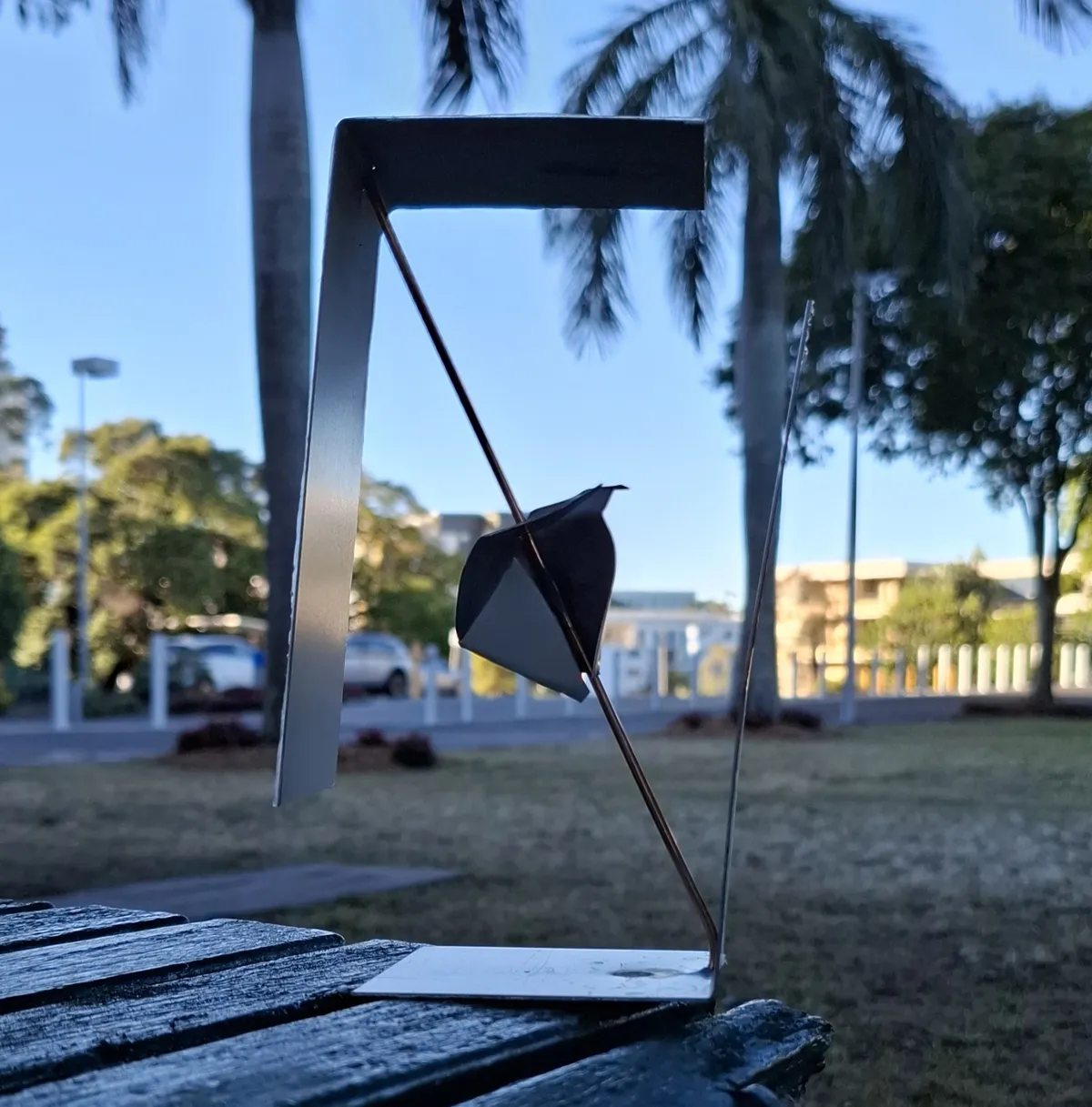 I wanted to see how it would look with the different backgrounds, using the trees as guidelines for the frame and the orb fixed in between.
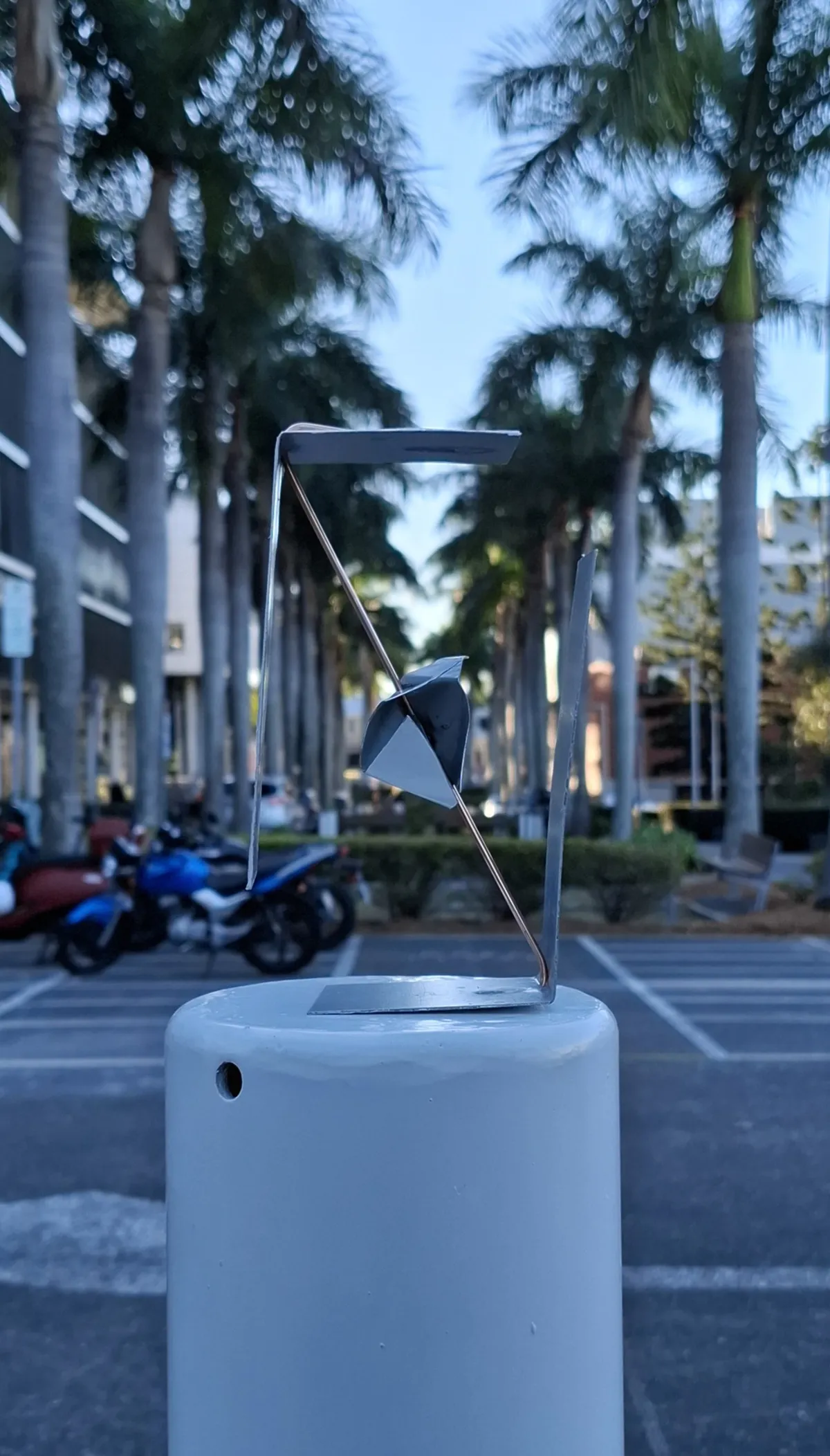 I then saw that a better example would be to line it up with the pine along the driveway next to z9. I never before realised how aligned these trees were. These steel frames pair with the structure of nature, yet other metallic objects, such as cars and motorbikes, though made of the same material, become the visual outlier in the photo, drawing their own attention. I like how, when focusing on the piece, these geometrical patterns start to become really noticeable: the 90-degree walls, the triangular prism orb, and the diagonal copper wire that cuts through it all; they each work with each other, and nothing overly distracts. The orb pulls focus, but everything else unites it.
At home, I wondered what this would look like rotated, and I honestly think I like this more. I think it extends the floating sheet on the top and even provides a bit of movement; the slightly less structural integrity allows the piece to wobble and bounce when interacted with.
I'm not quite sure what this piece truly means to me or what emotions it will invoke in other people. When creating this work, unlike my others, I never had a clear idea of what I wanted it to mean; I was simply creating. I personally think this is visually quite satisfying. Though I've decided to name it Free Prism, a pun and a play on words for "free prison". With the corners not fully coming to a close and the open field of the piece, it feels free; the prism orb enclosure looks like something that was once trapped could have broken out of it. With this in mind, I hope the piece serves as a reminder to not let mental confines trap us in a perceived reality, but rather to break free, push boundaries, and appreciate life. Our own, others', and the life of the environment that surrounds us.
If you would like to continue to next week's artwork Week 5 - The Observer