Final Project Process - Burnt Out.
Devising Creating YOU DON'T NEED TO READ THIS (just yet); I NEED TO EDIT THIS AFTER PUBLISHING
Idea formation I was extremely fascinated by a half-burnt log in my backyard; it was from a fire I had where the log was so large that I placed the middle of the log over the pit and had it burn away. The piece was so large it lasted until there was no more fire to sustain it. This left a very nice detailing on the log, half-burnt through. I then snapped it in half and was surprised to see that, though the entire outside had been completely charred, the inside was still untouched. It created such an interesting shape and colour that I thought it itself could stand alone as its own artwork.
The idea was born
Initial Concept Idea I aim to make a collection of half-burnt materials. It aims to raise awareness of climate change, deforestation, habitat loss, and rapid forest fires. By placing the fire in your home. I aim not only to evoke fear, but also a sense of hope in the work, not just complete destruction. There is potential for change.
I personally love fire, so its benefits should be showcased; it can be used for light and warmth, and even forest fires have their benefits; burning the old allows a chance for new growth.
Yet there is a point when fire becomes too much. Rapid forest fires can cause mass destruction of habitat and can cause many animal deaths. As well as lead our houses to be burnt down and even risking losing our lives as well. Growing up in rural NSW, the 2019-2020 forest fires were quite scary for me; I have a vivid memory of spending time at a holiday camp, hearing fire trucks racing across the street, and the sky beginning to turn black.
The scale across Australia was immense. Nearly 11 million hectares burned; more than 2,000 homes destroyed; 23 lives lost; and an estimated 1 billion-plus animals dead.
As such, I wanted to create an artwork that gave form to that but also began a discussion on climate change.
I questioned where I could place the half-burnt objects to contextualise them in this world. Initially, I thought that placing these objects in a gallery setting would make people stop to appreciate and question these materials. By intentionally choosing when to stop burning these pieces, this work would showcase a frozen capsule of a moment in time, where the piece could have been burnt to incineration.
Other than wood, I wondered what other materials and objects I could use; I wanted a range of found materials to be burnt, from logs, pre-used objects, such as mugs and clothing, as well as trash, such as cardboard and plastics. I additionally wanted to create half-burnt sculptures to add to the work and photographs. Such as metal figures that would appear to be in pain in the fire. This would add to the collection in the gallery.
Then, to make the whole piece resemble the world, I wanted to include all the elements: Water, Earth, Fire, and Air — Fire would be quite prominent through the burn marks, yet I was fascinated by the idea of having an internal flame in a gallery space. For Earth, I thought to add dirt and, as the object on top, similarly, have a log placed on water as well. Then for air, I thought to demonstrate that through a plant; I found these things called air plants, that does not need soil, it grows using the moisture and nutrients from the air, additionally plants coverts CO^2 to oxygen that allows us to breath. The Air plant would be the only object that would not be burnt. This would showcase the hope. Additionally, it would give a reminder of forest regrowth after fires and the chance for change.
A sketch sprung to mind: what if I placed this whole collection in one firepit? It would then serve as one artwork. The story would then take place as you circled the pit; you would find new stories and objects to observe and question. Additionally, the pit would create its own fire, helping bring these half-burnt objects to life. The piece would then also have a metal fire frame that encompassed the piece—a fire that these objects are placed in, yet will not burn anymore. Then, hanging inside the fire, a living plant, floating in the air, with no need for soil, untouched by the flame. This will symbolise how plants will ultimately prevail and survive through climate change, yet we as a species may not if nothing is done. If fire is not monitored, the fire can grow too large; it will ultimately burn the plant above it. Yet, with the plant symbolically creating the oxygen necessary for the fire, the fire will eventually snuff itself out.
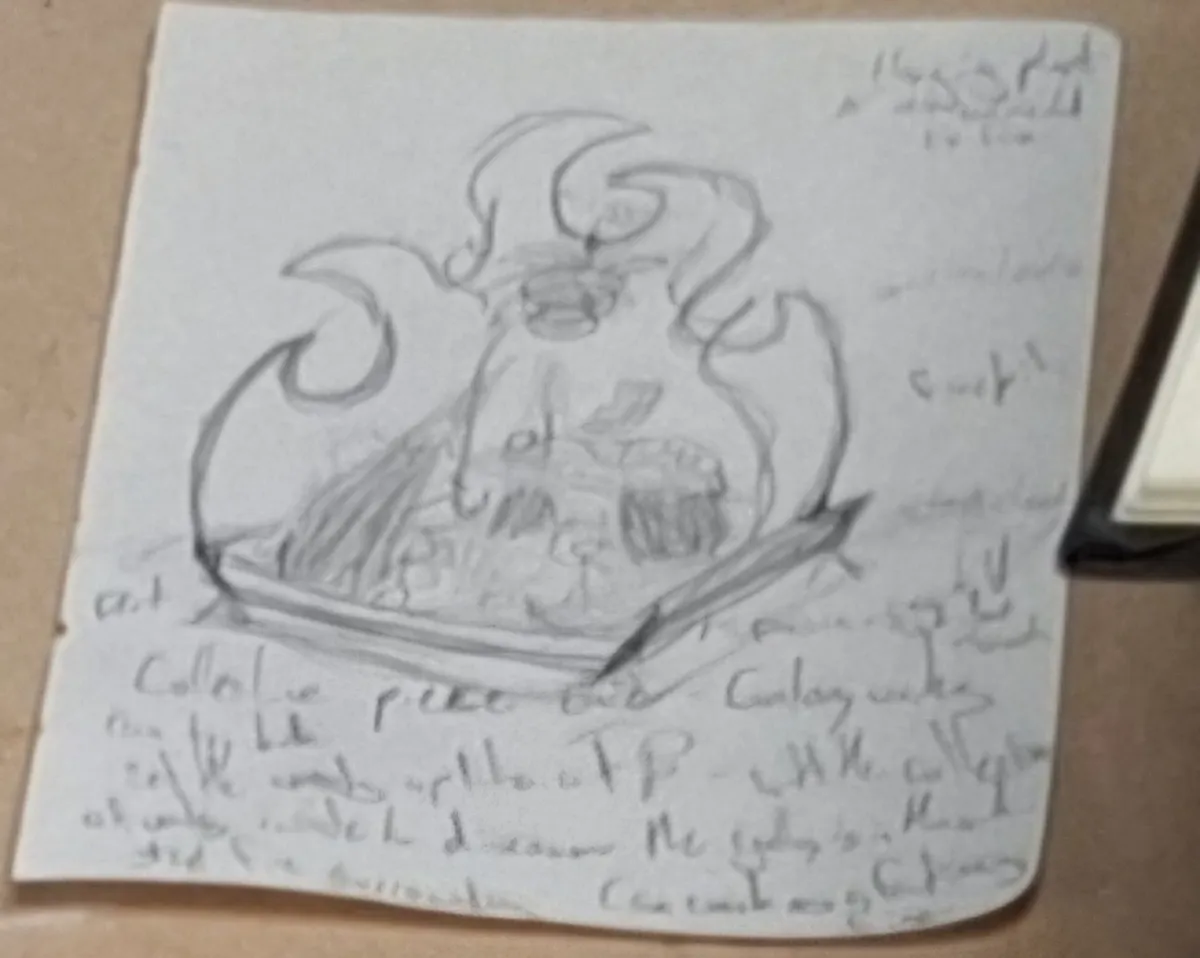 Lost sketch - last photograph
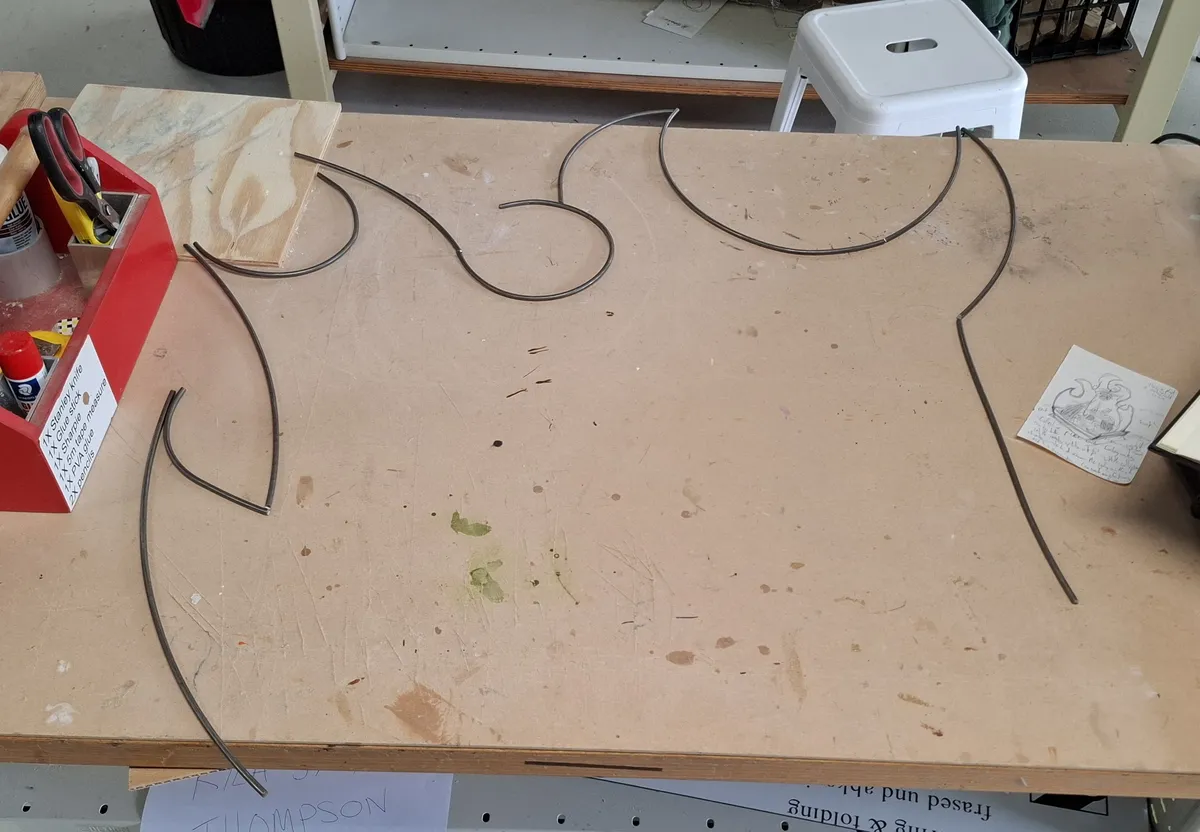 Metal Fire 1
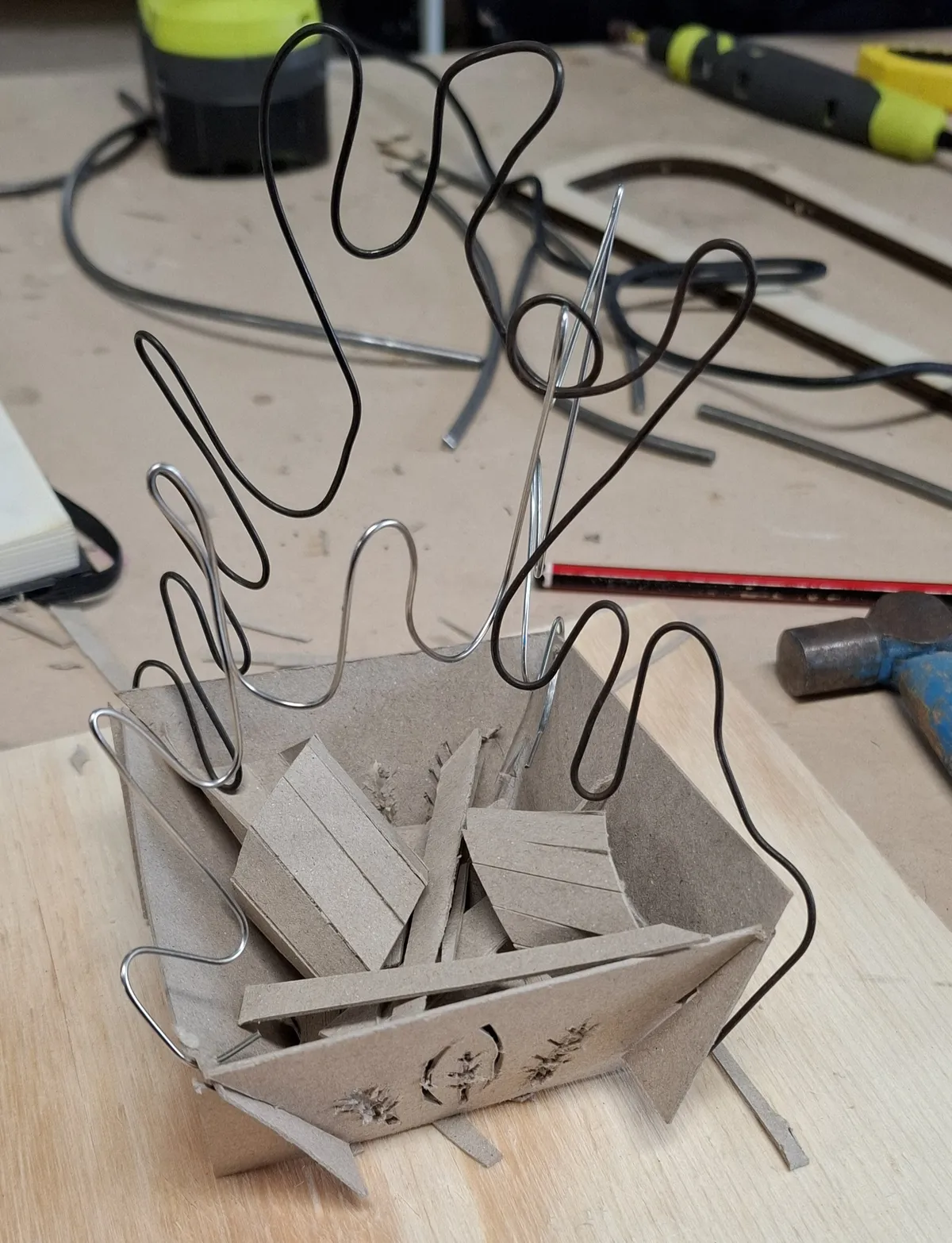 Cardboard and wire prototype
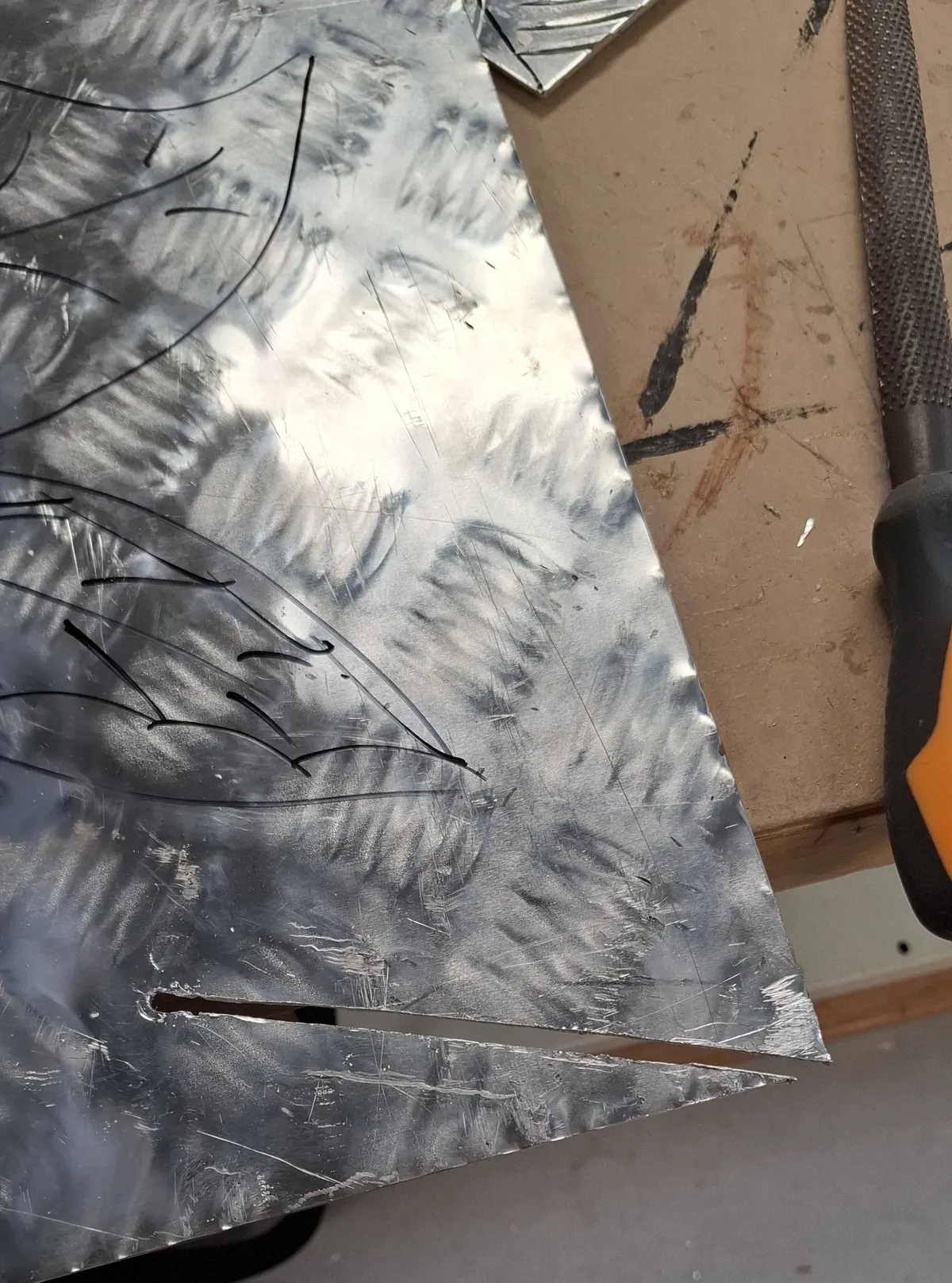 Cutting the slits at the corners
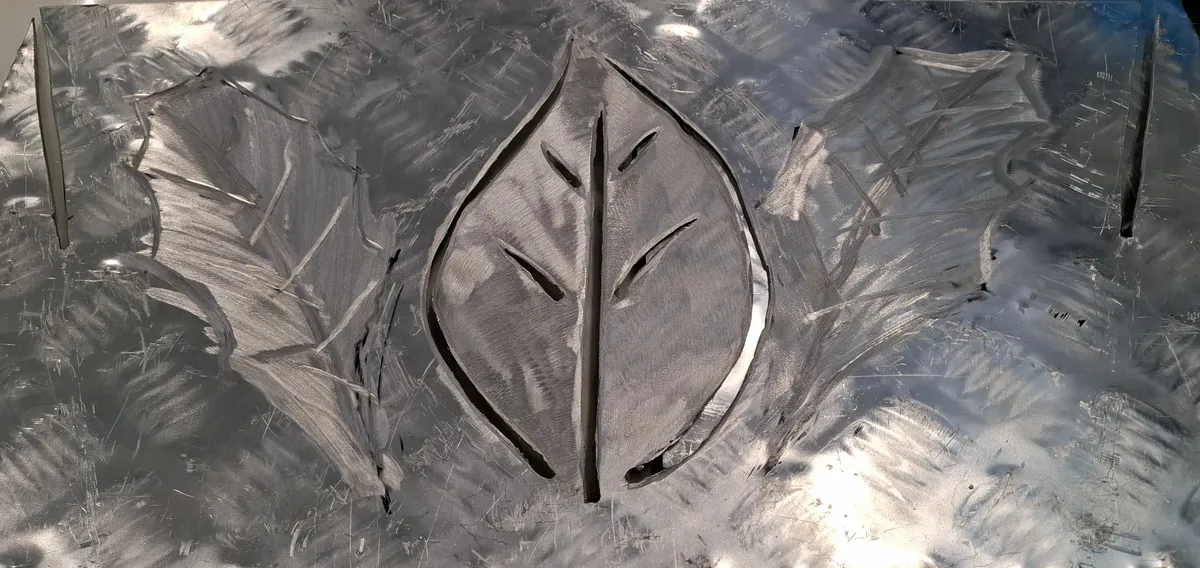 Finished leaf design 1 side
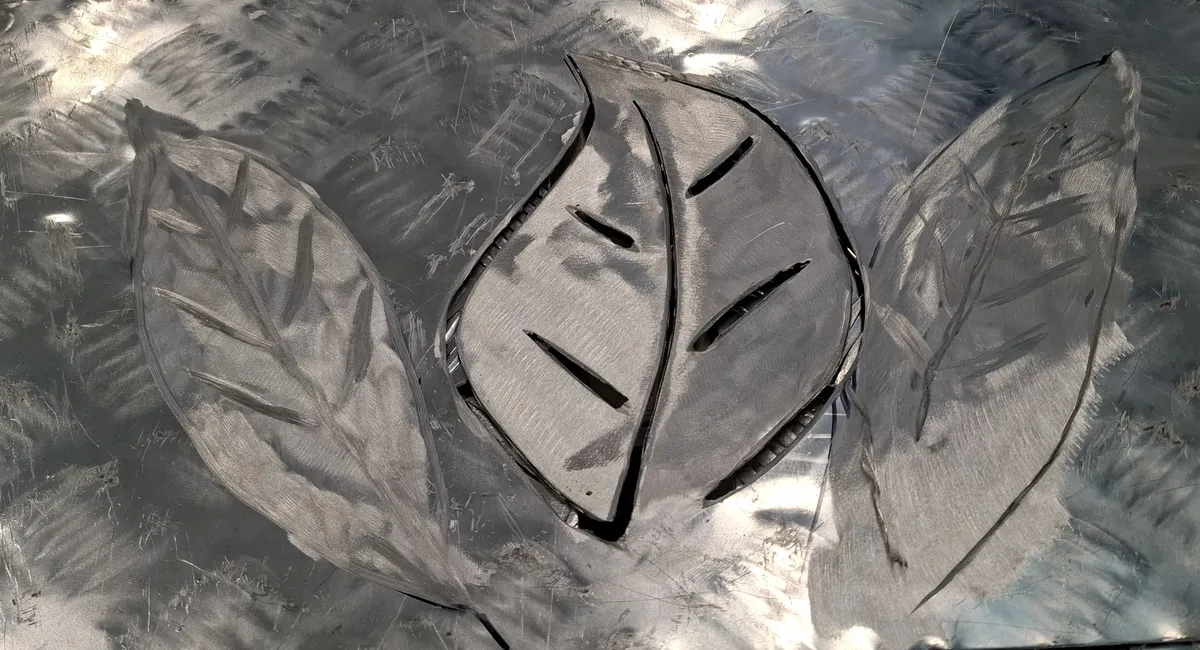 Finished leaf design other side 2
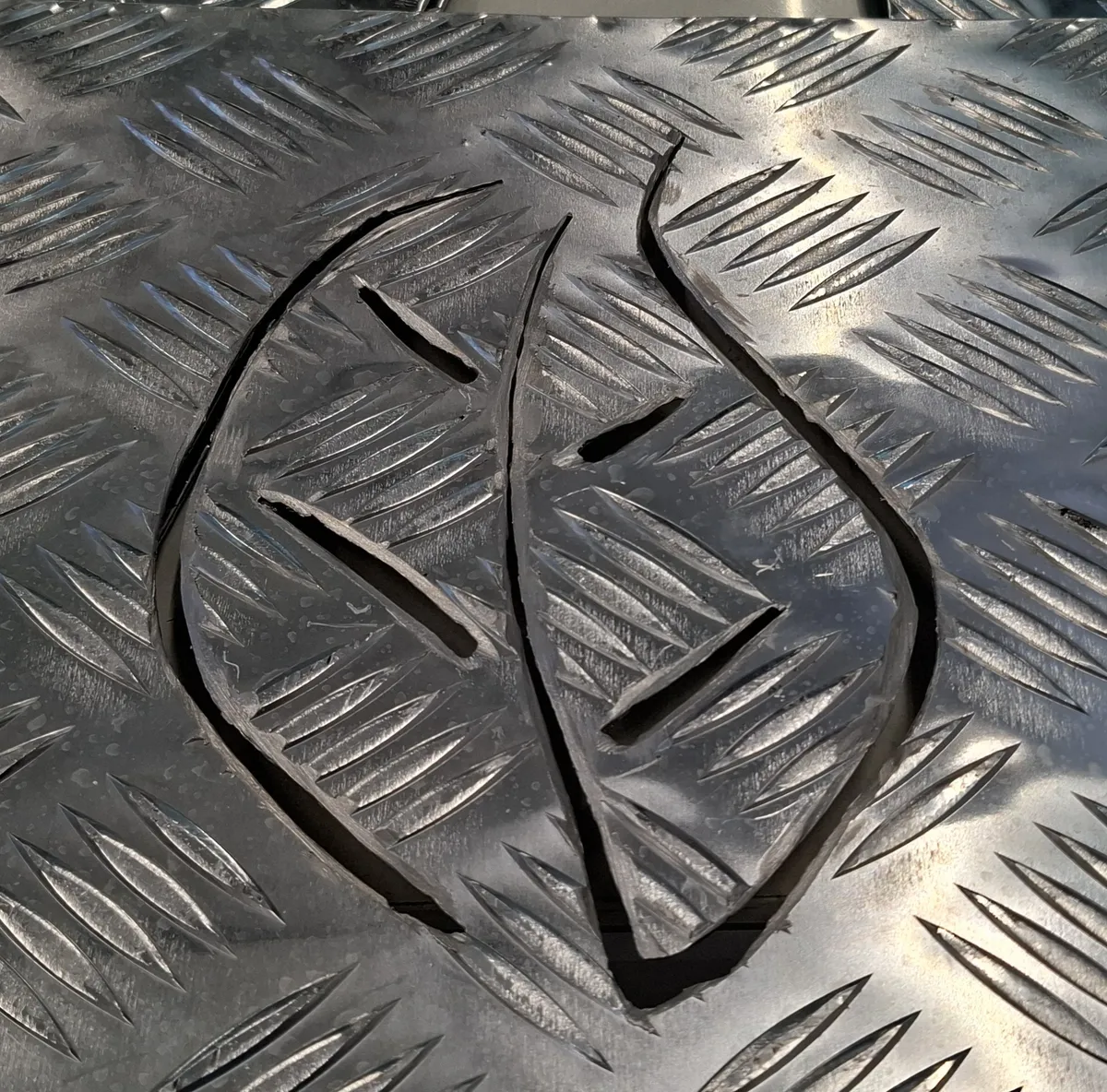 Back of leaf 2 - Notice the grinding inwaard to the gap brings focus to the desine and looks more intentional then just being cut out - Phone died
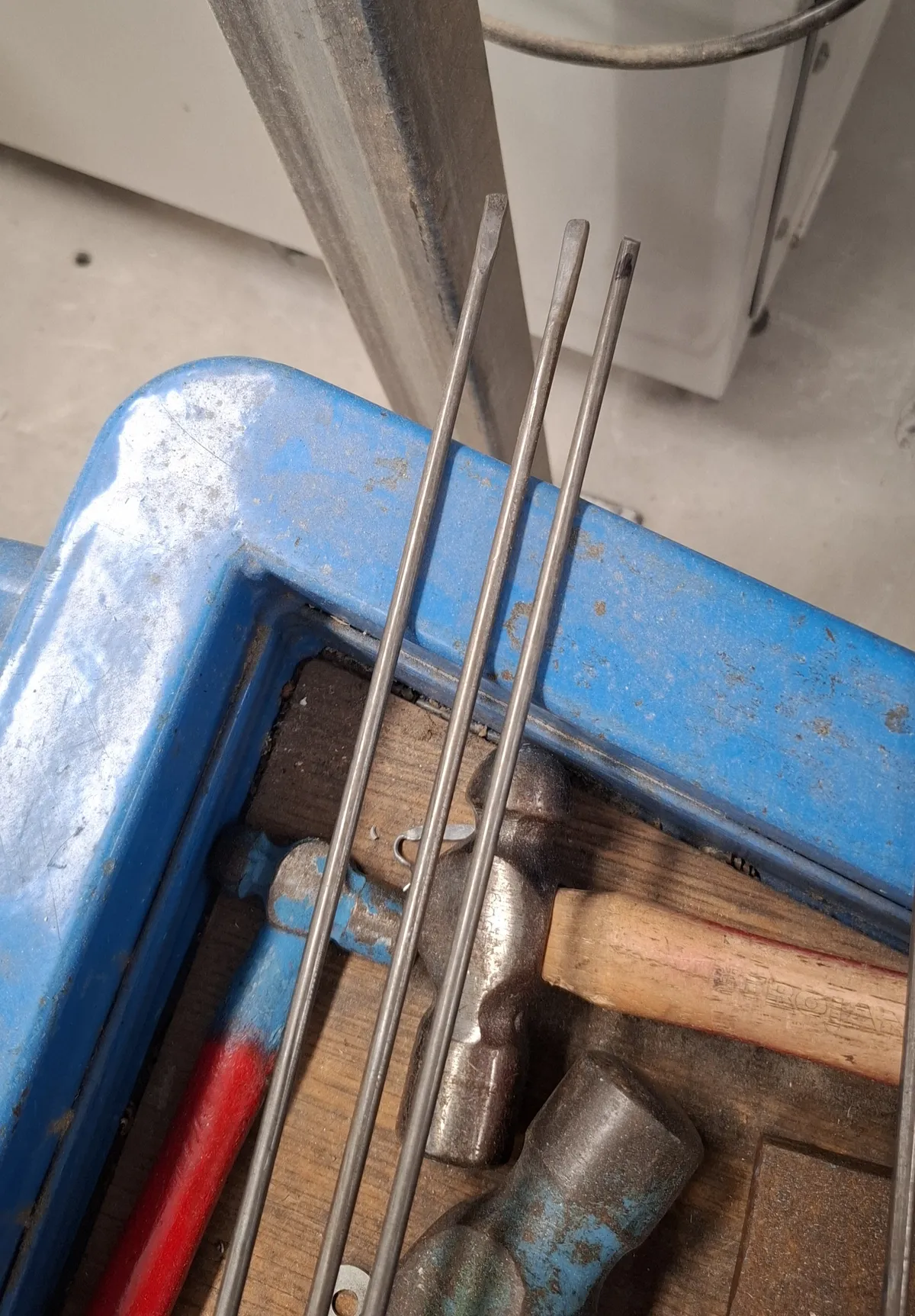 Hammering steel rods flat to make it easier to spot weld
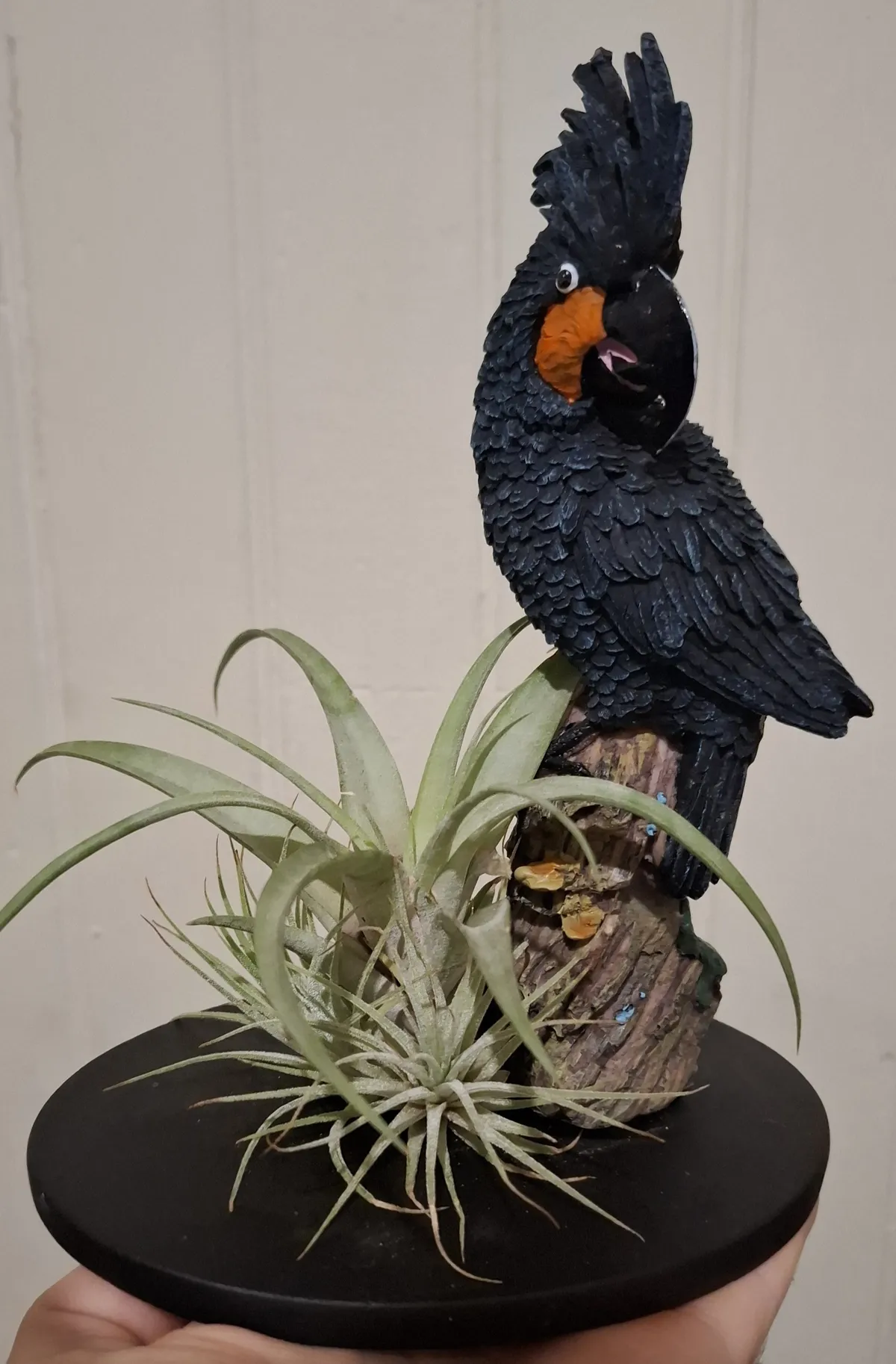 Air Plant and Black Cockatoo - had to purchase these together think im going to burn the cockatoo for the peice as well
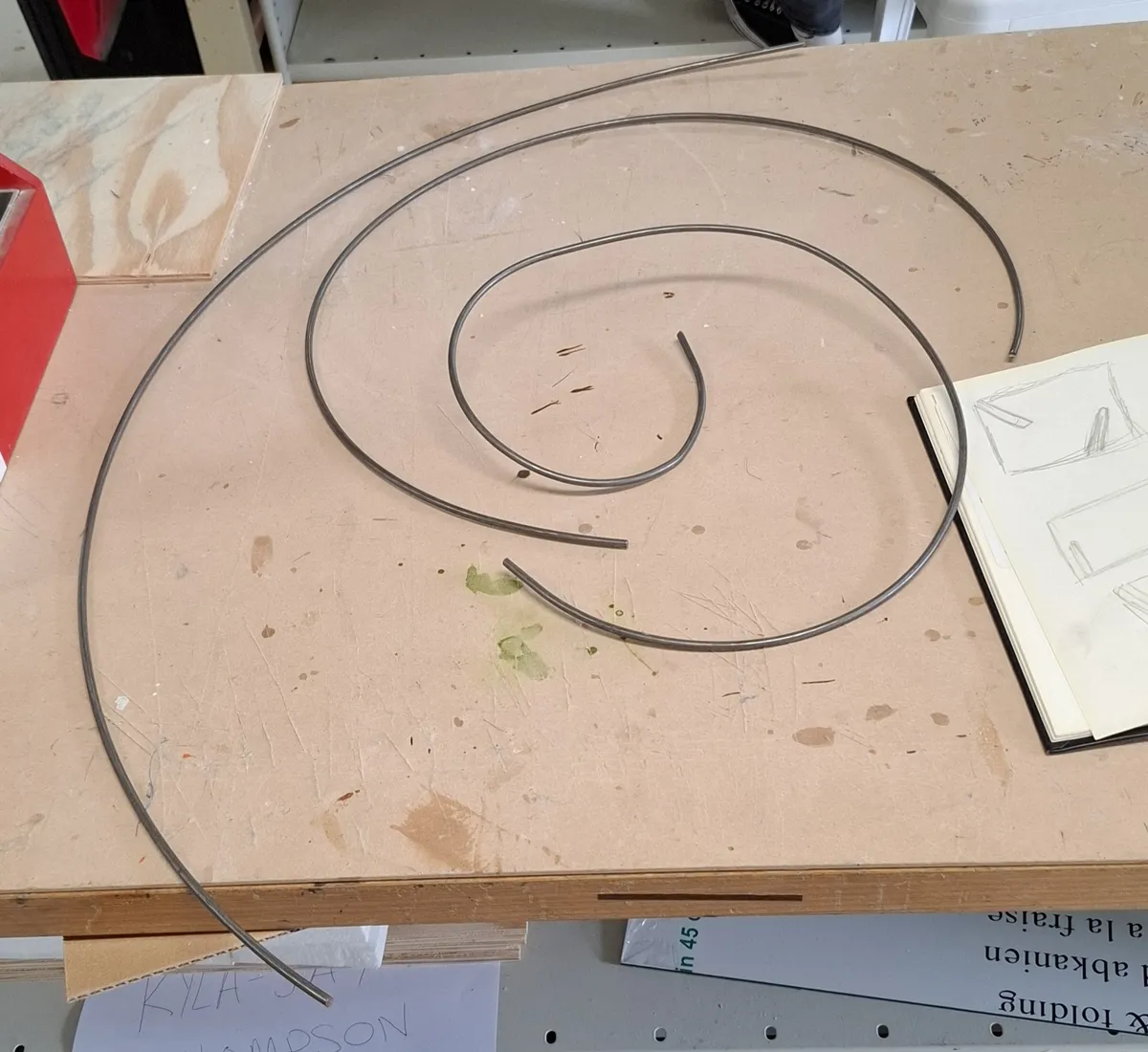 Spirals to create fire. Chopped these up into pieces to then work with
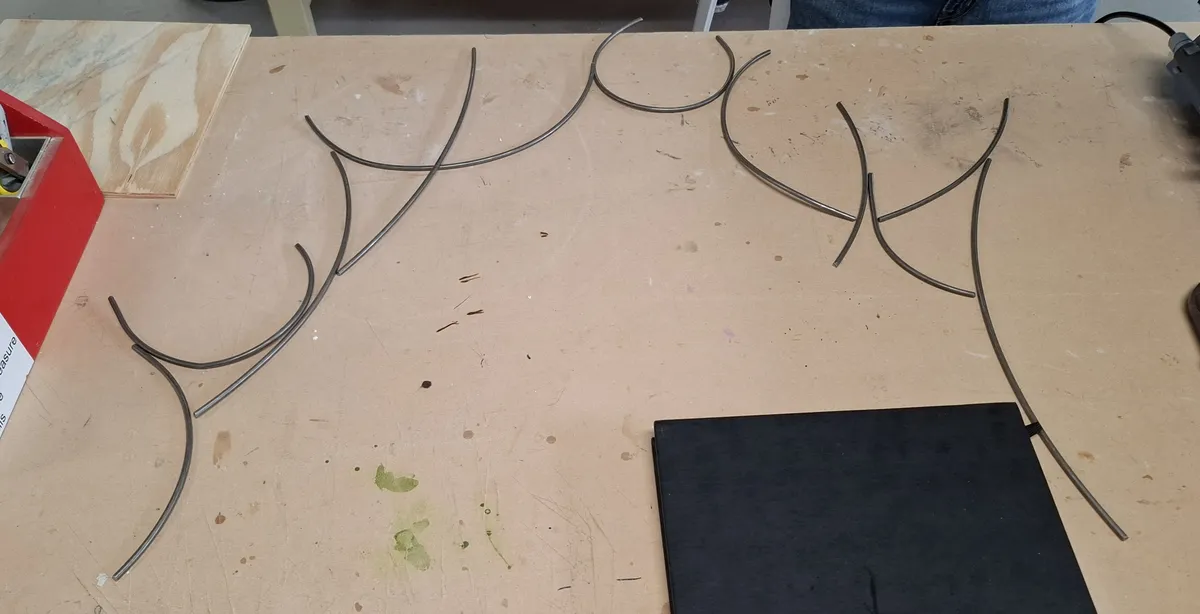 Metal Fire frame 2 - I liked how this looks - using th rods to still create the spikes in a fire but to stick up as well to be little flairs- feels like it has more movement and is much more random
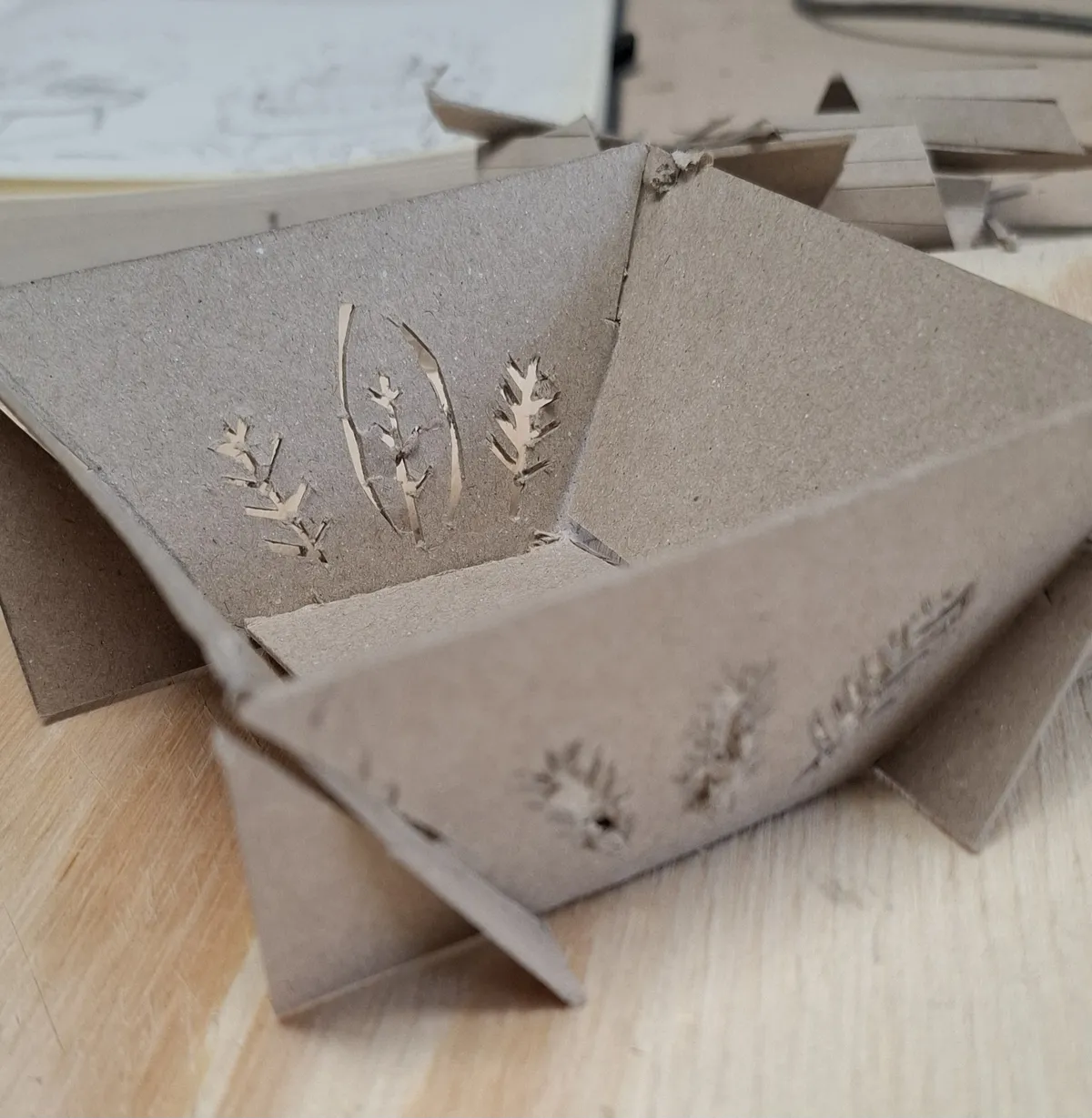 Prototype fire pit - Leaf ventilation - (allows the fire to breathe)
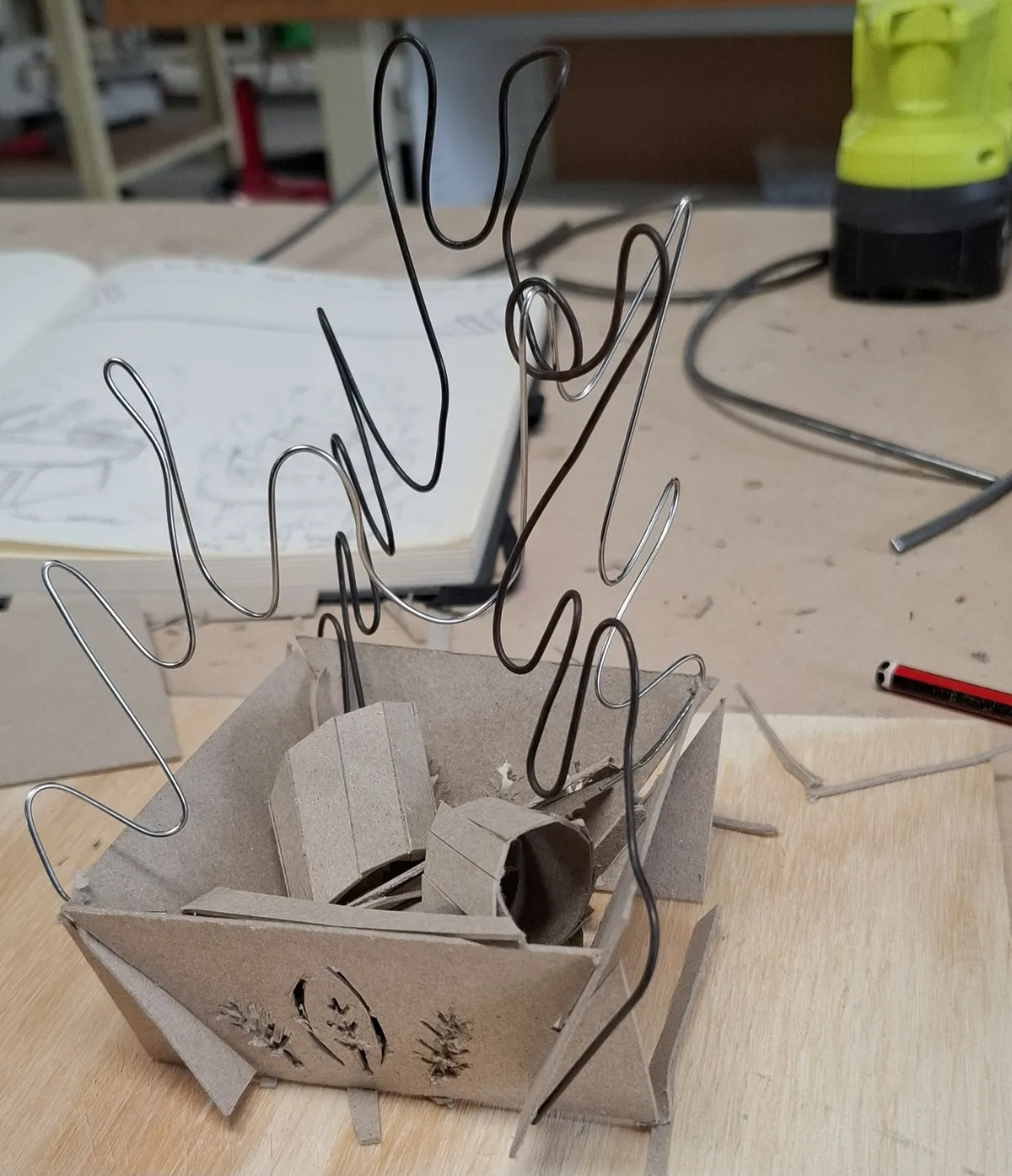 How it would look with wire fire
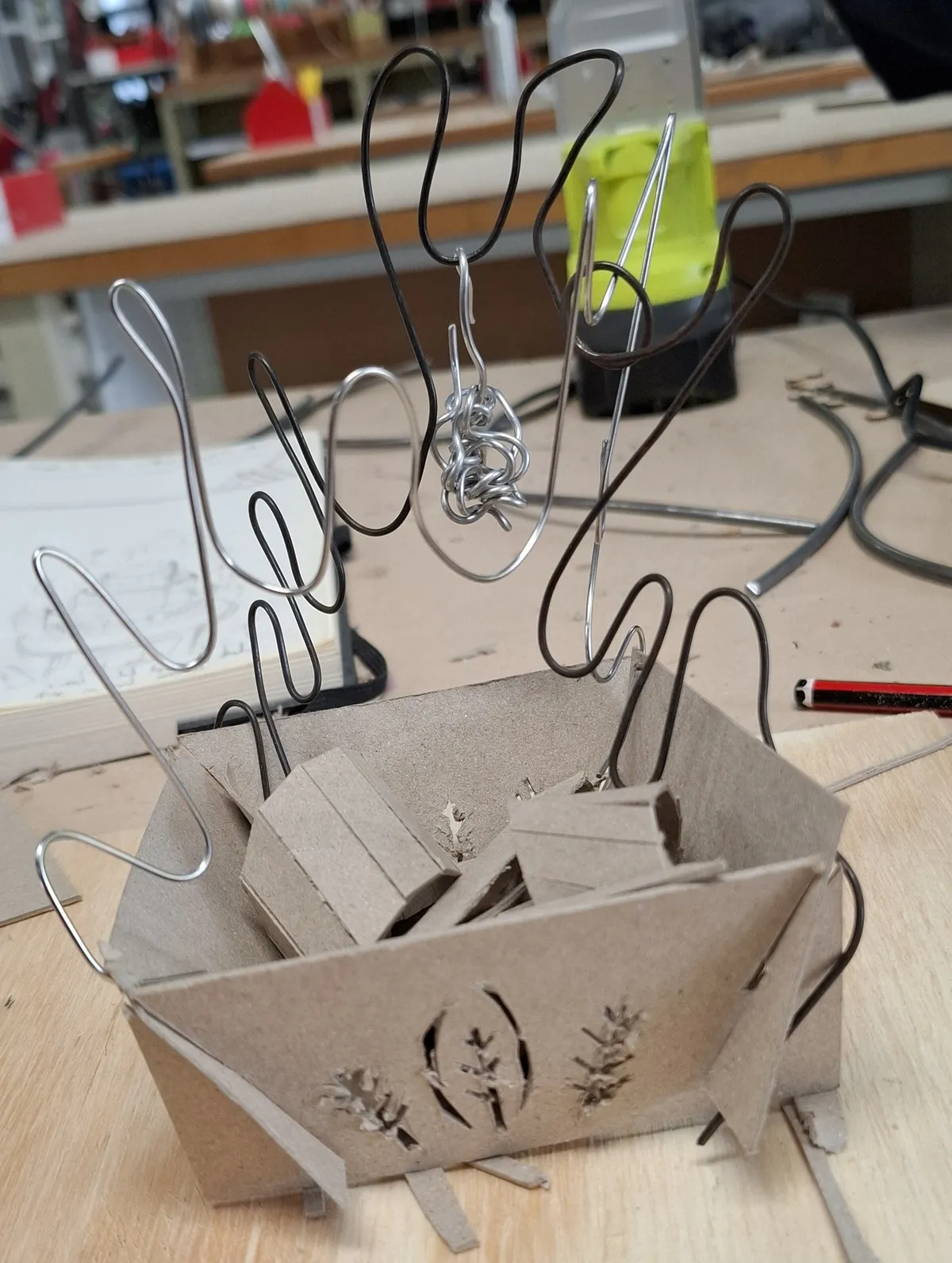 Plant dangling in the fire
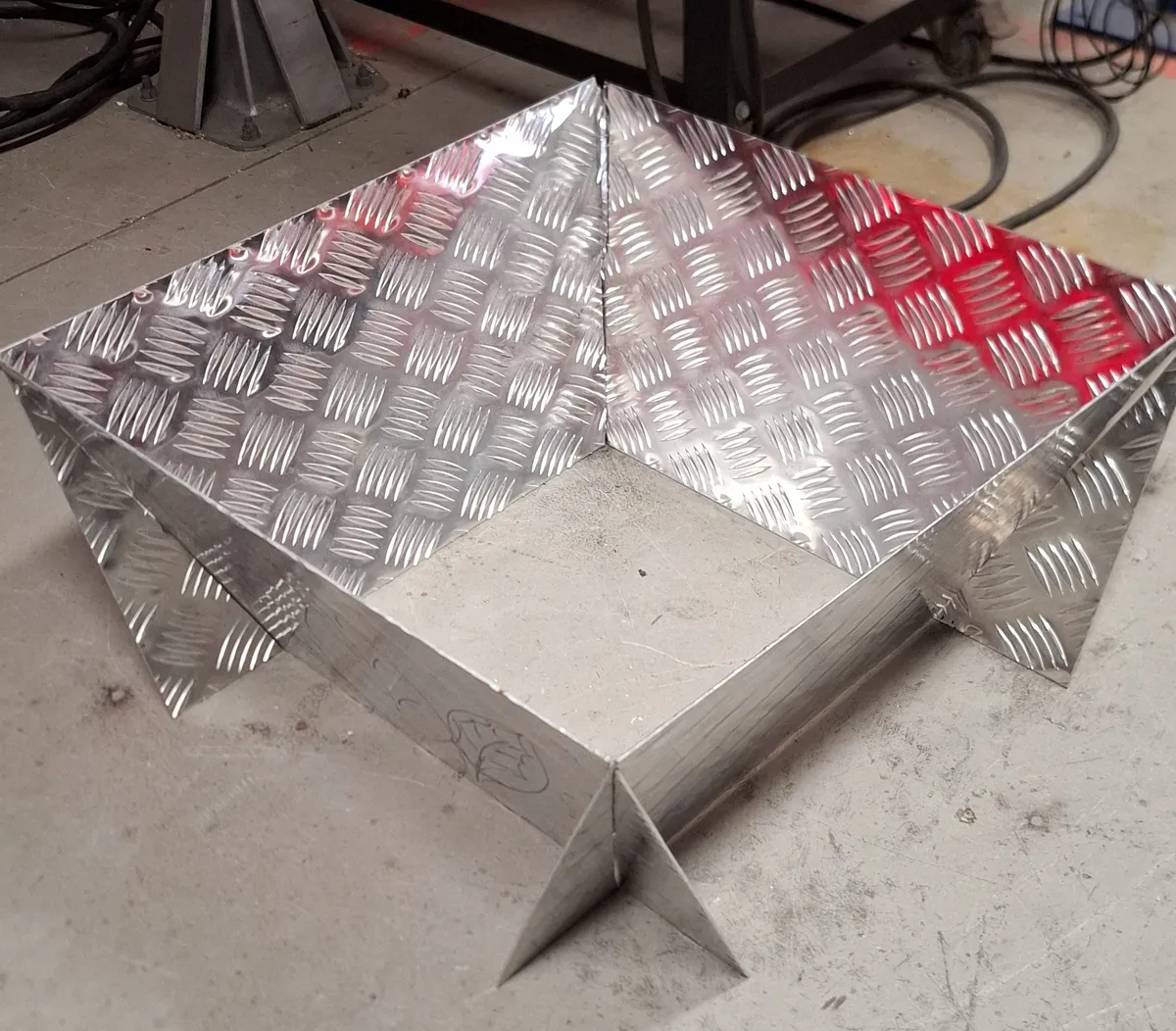 The Metal Pit put together - should I have the grate on the inside or outside - I think it would be interesting to see how the fire interacts with the metal
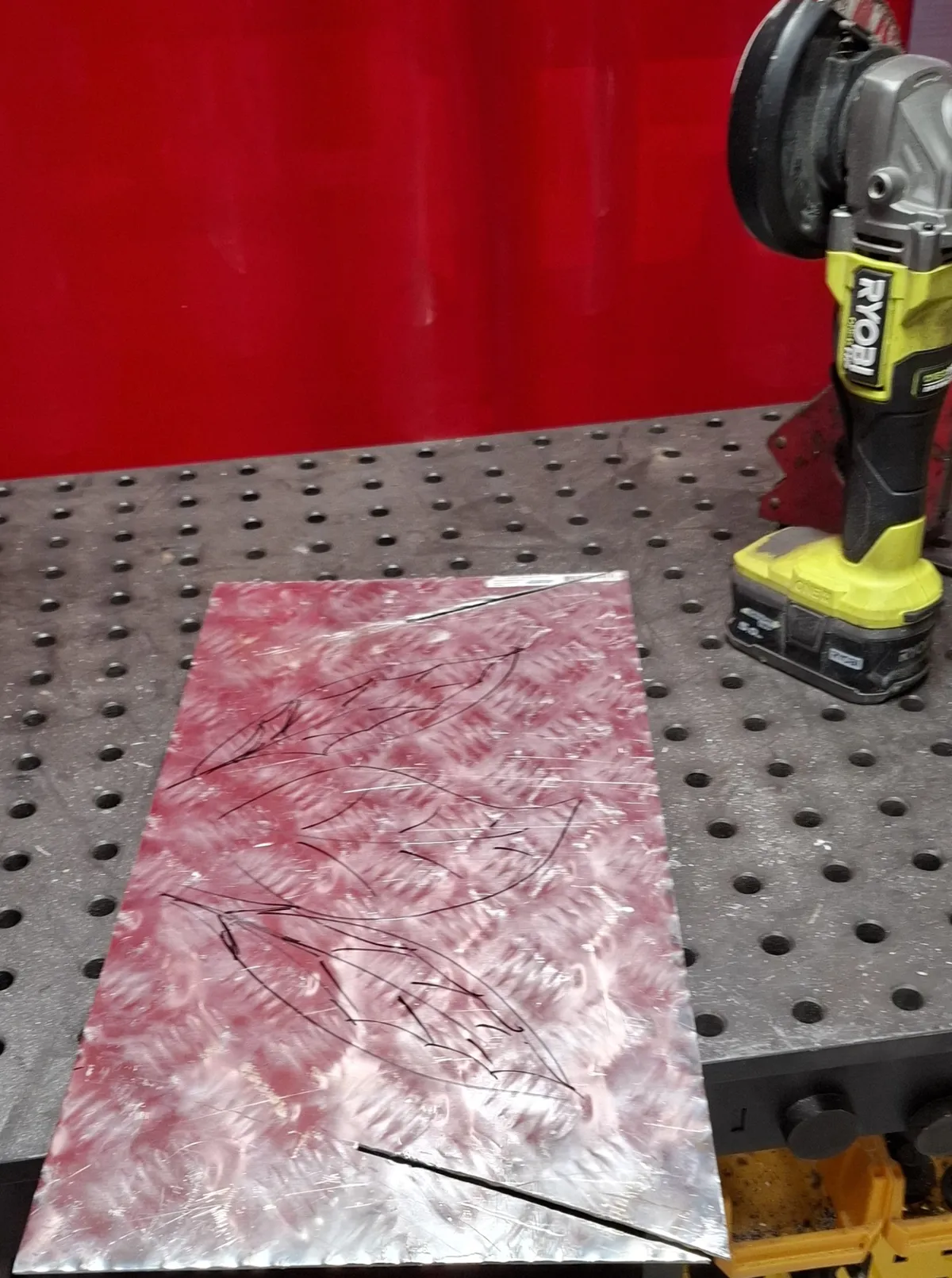 Design of leaf shapes to carve - Used both a jigsaw and an angle grinder
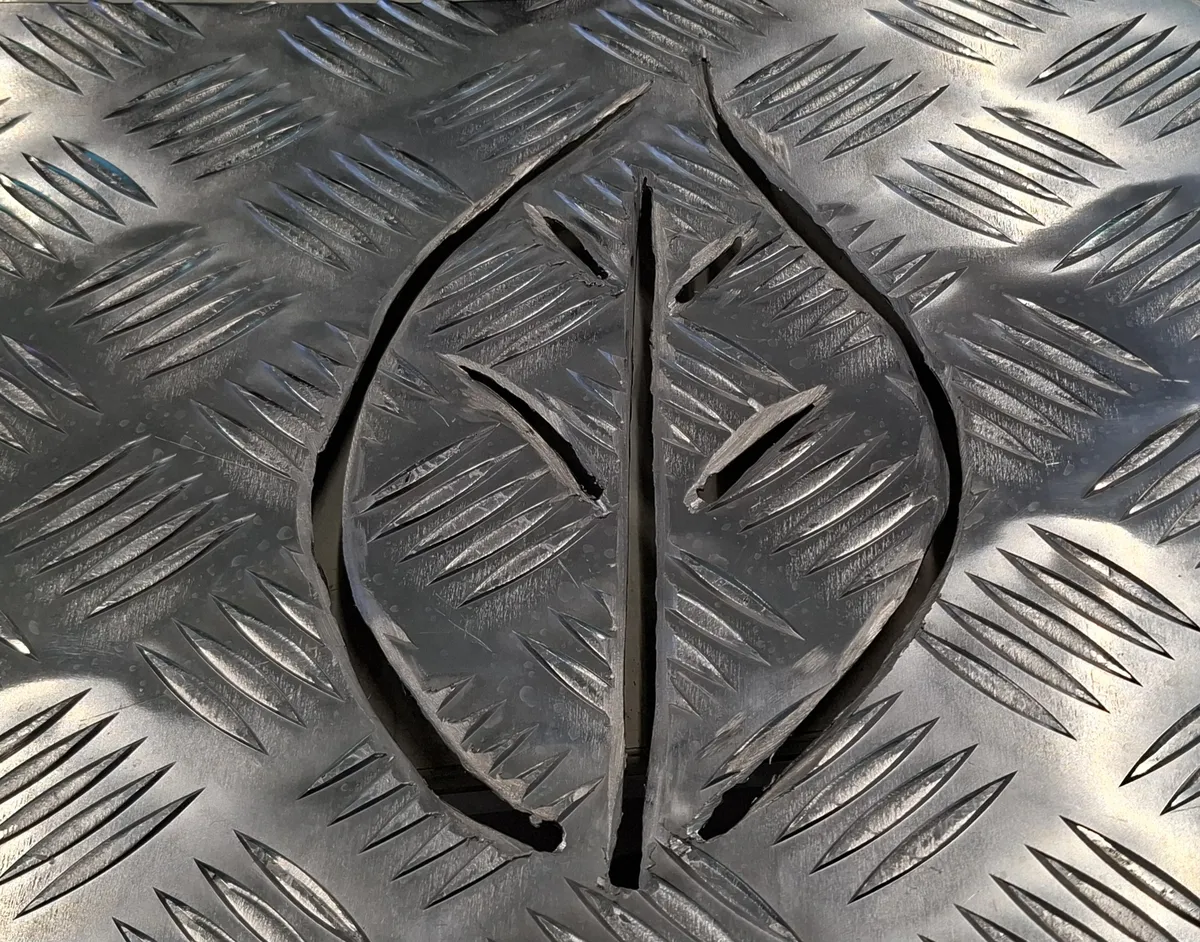 Leaf shape 1 back
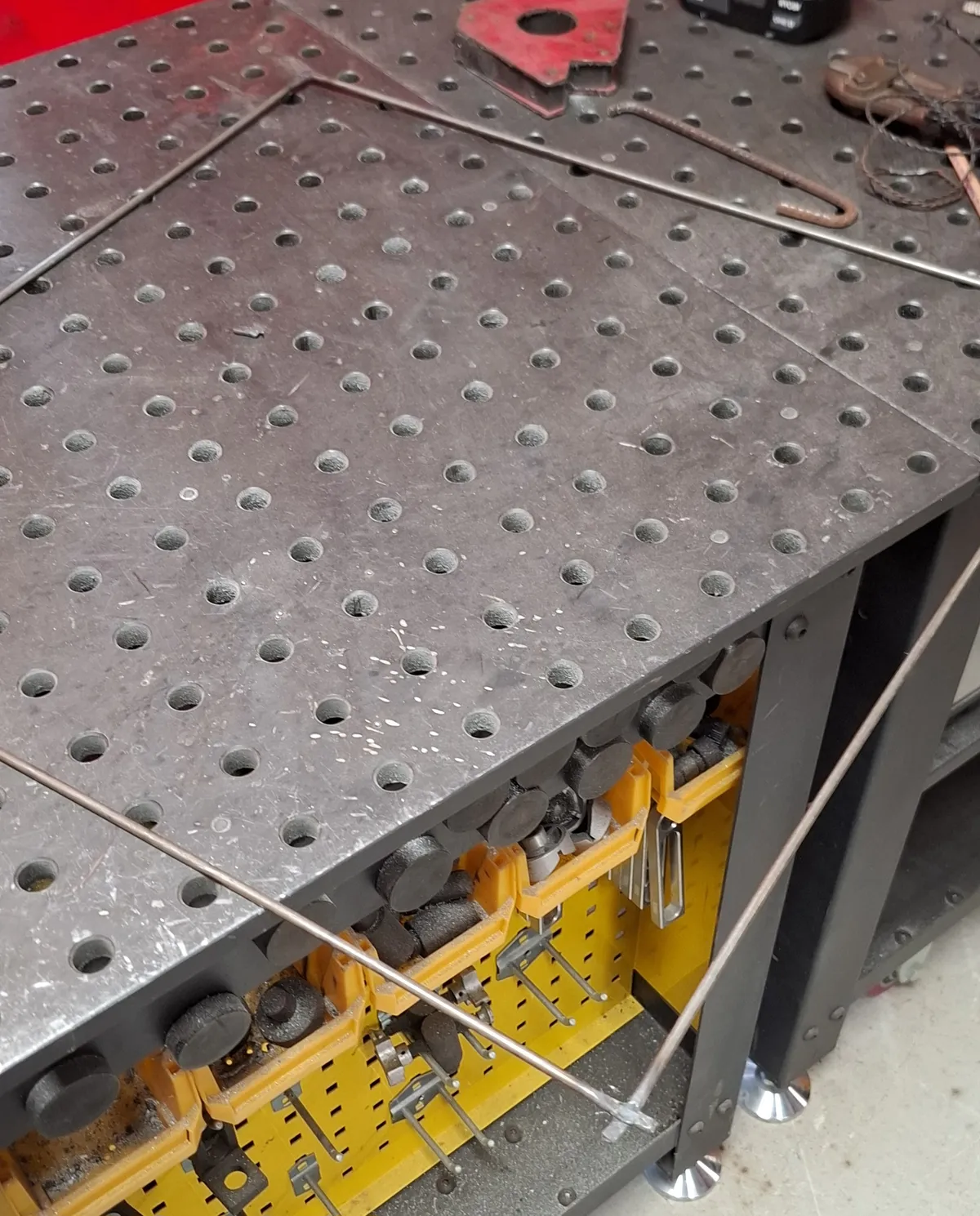 Square base for metal fire — need to cut the edges and round it off so it fits nicer
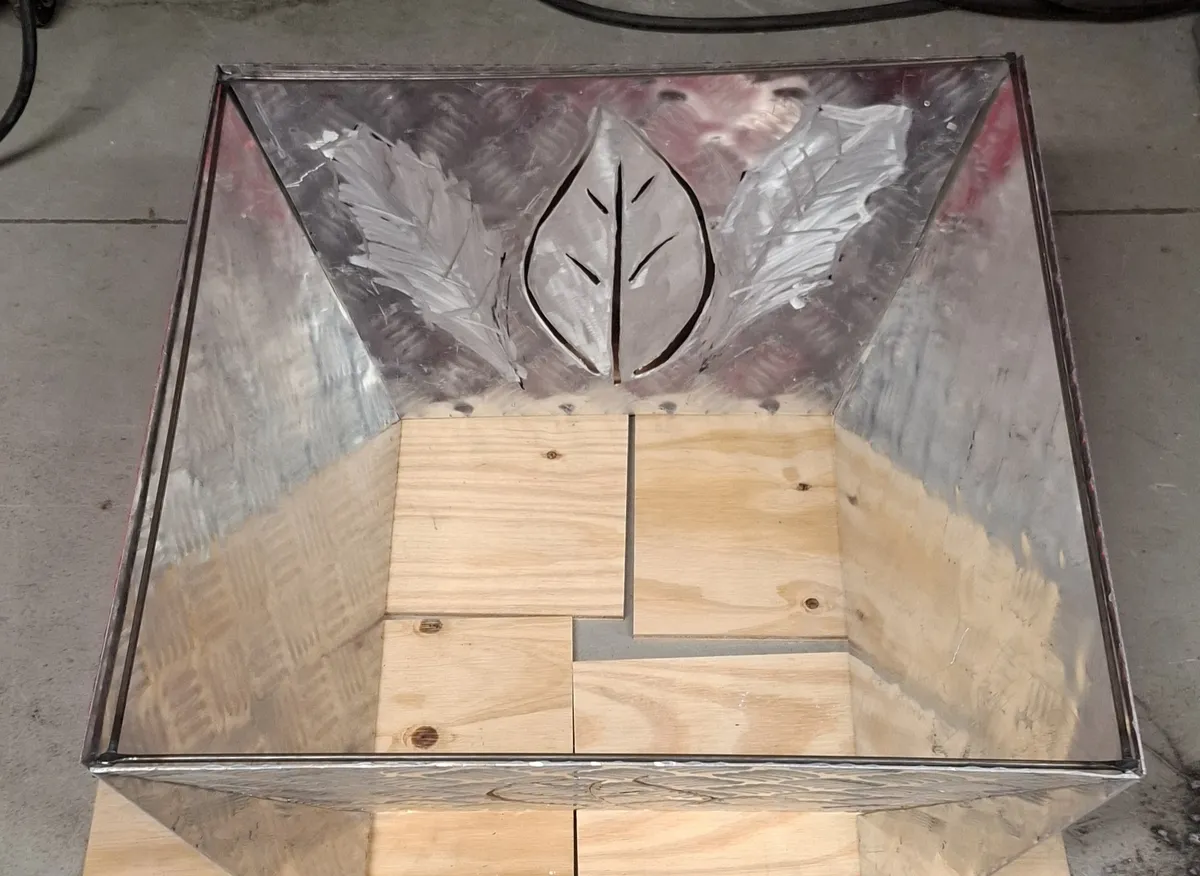 It fits!
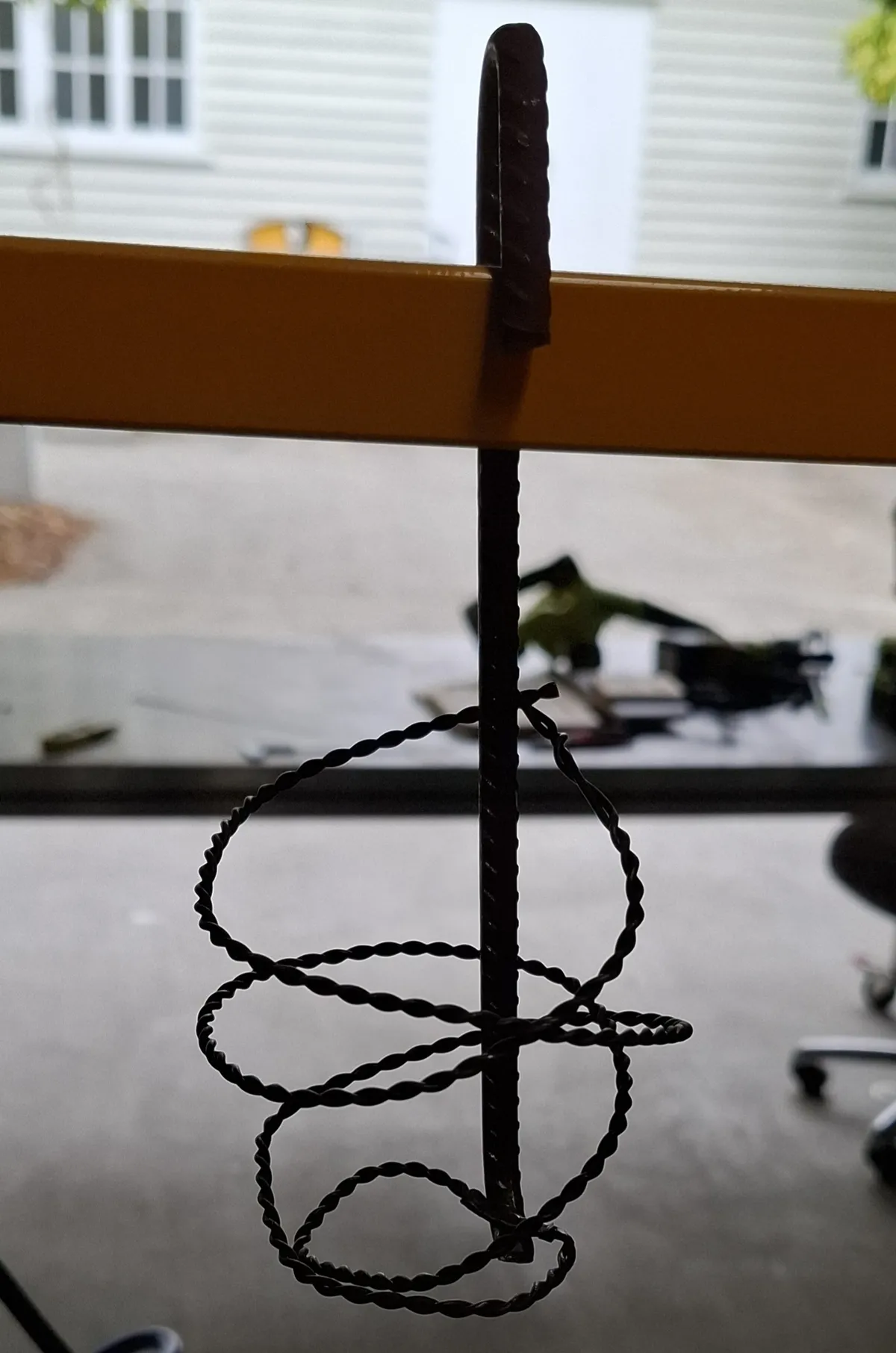 The spiral to hold the plants —I found these steel wires and a metal hook in the miscellaneous metal pile - I welded the two wires together and created a ledge for the hook, I liked how they already had an aged look to them - they were already weathered - I think it makes sense for this to be what's holding the plant. The hook you usually drive into the ground as like a tent peg is now being used to elevate a plant
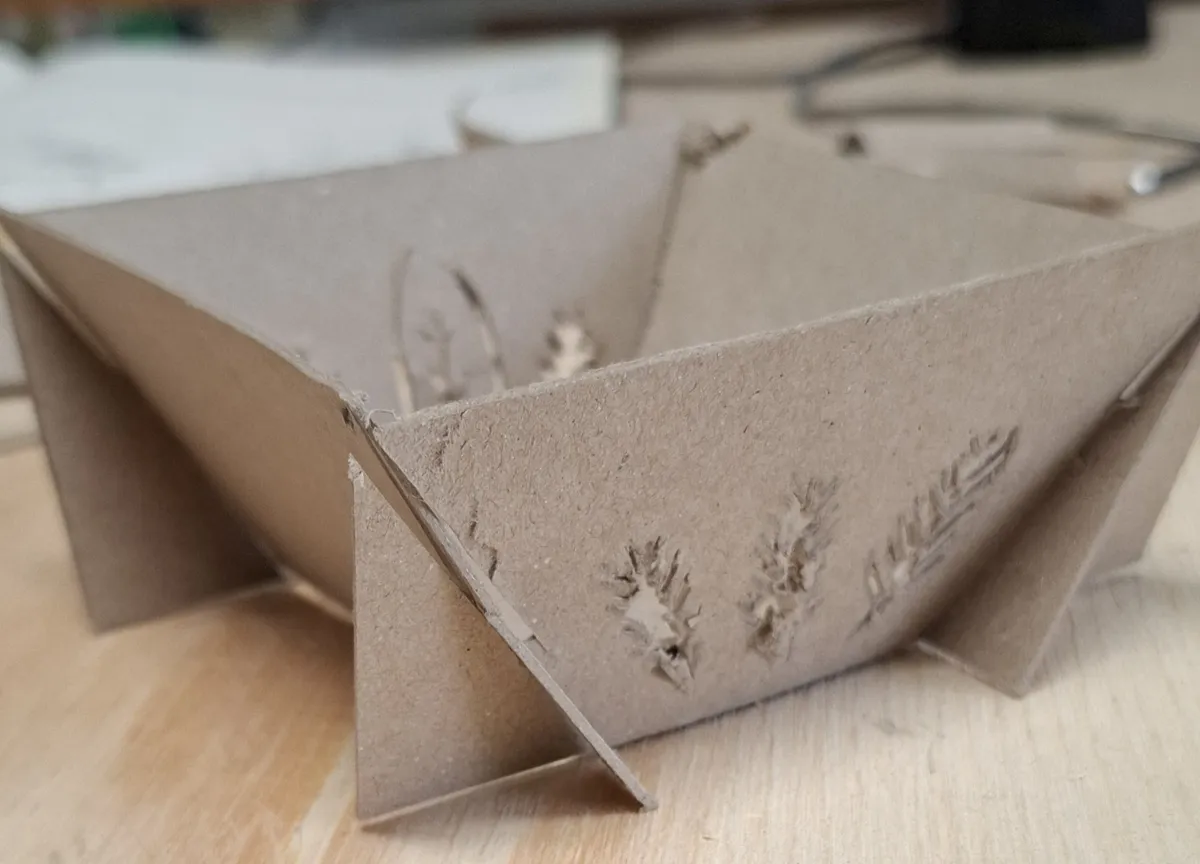 Another angle of the prototype ventilation
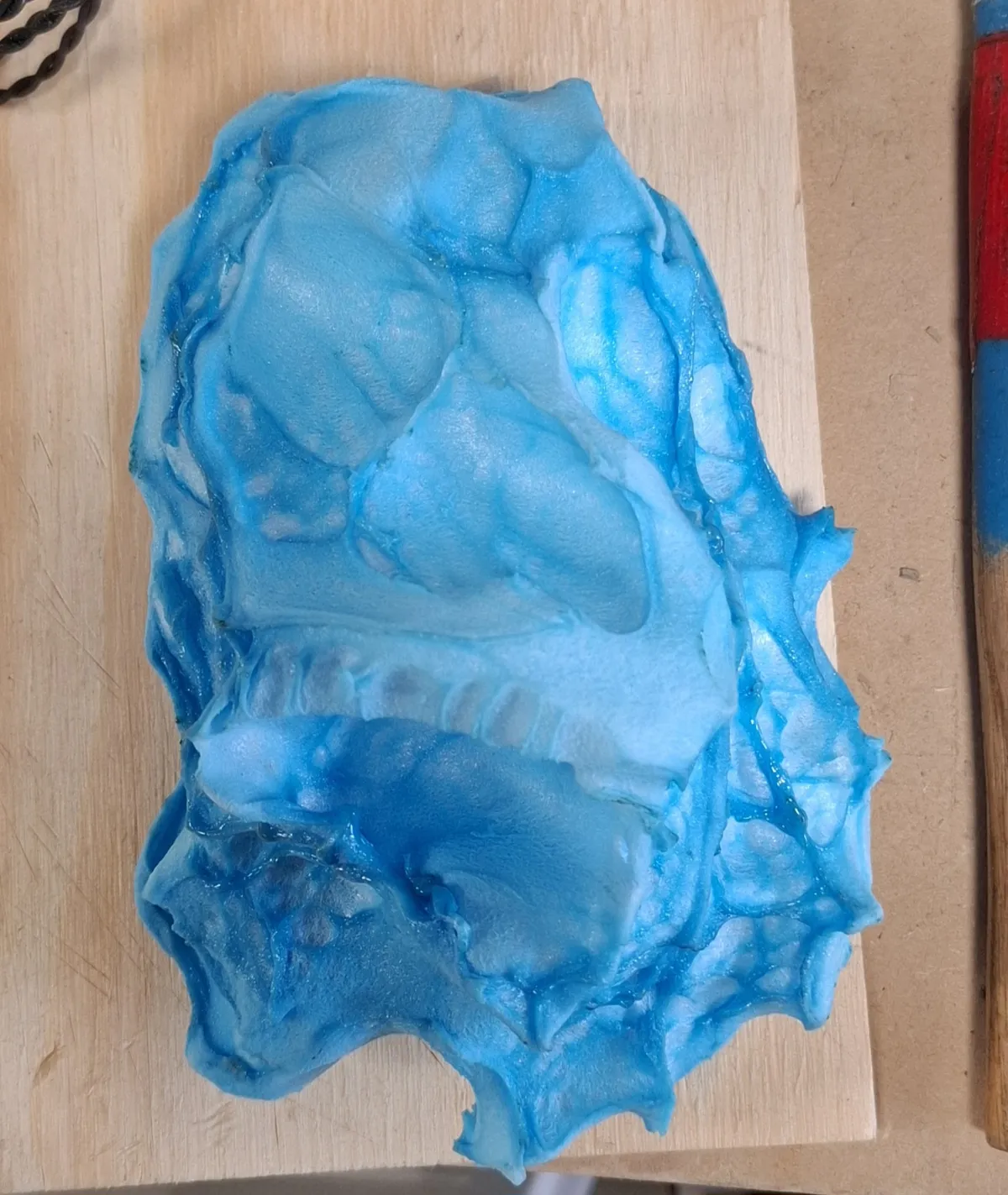 I carved some foam to create a skull-like shape, then used a heat gun to start melting it - carving it was really geometrical — but the heat gun made it feel more organic and plastic-like—a resemblance to both human death and plastic goop
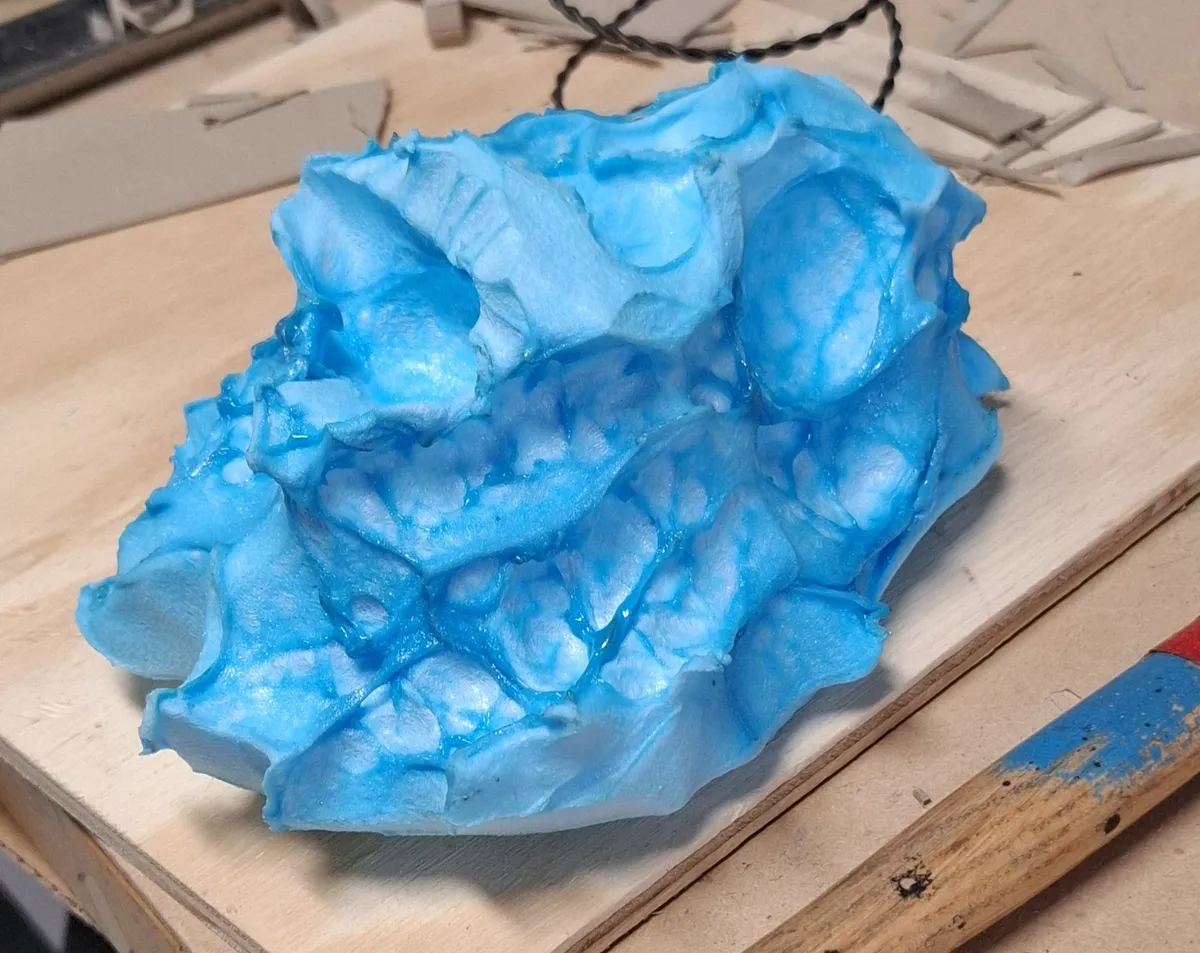 Another angle of skull goop - I really like how the heat gun made these liquefied, melted globs
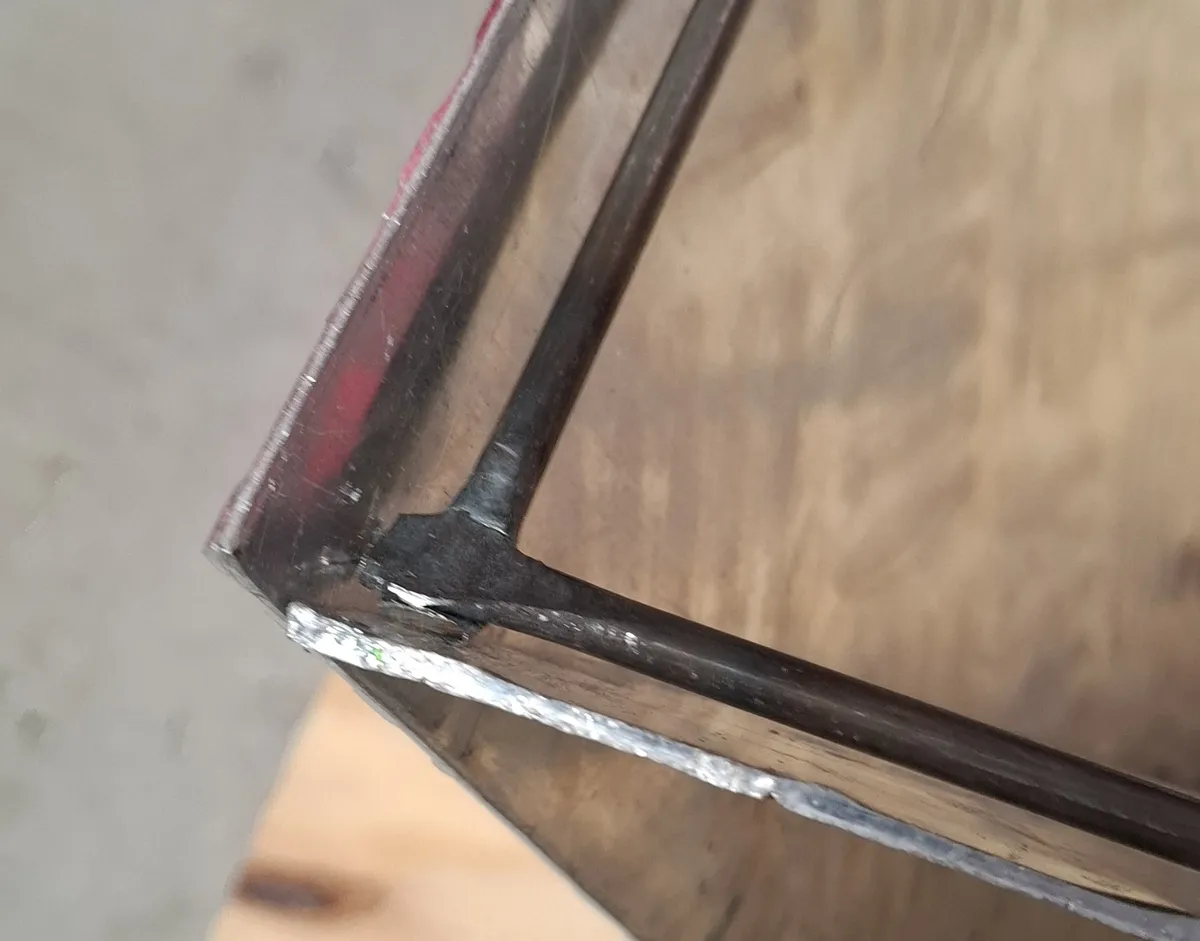 Zoom in on the edges I need to clean up
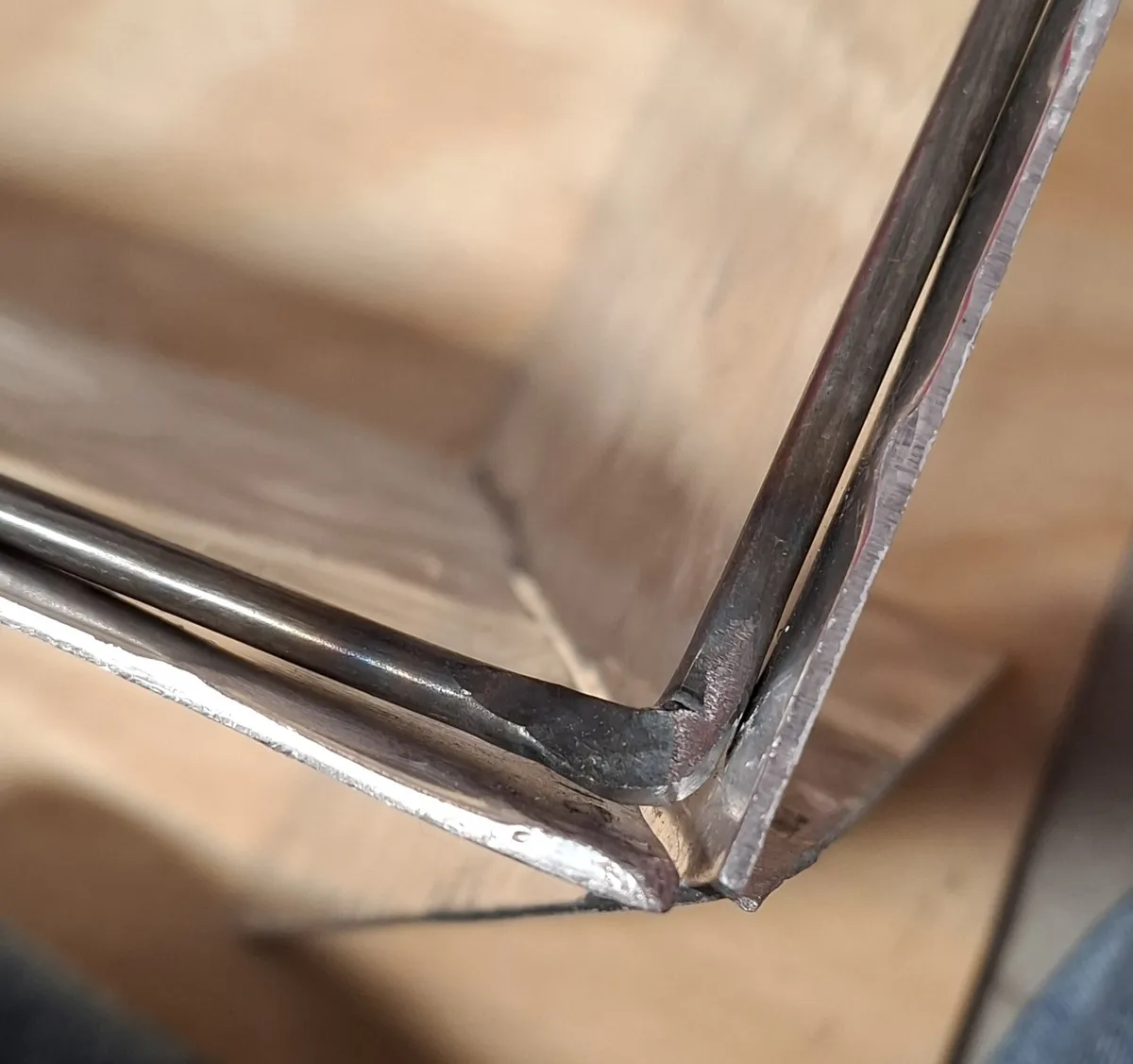 Cleaned Edge
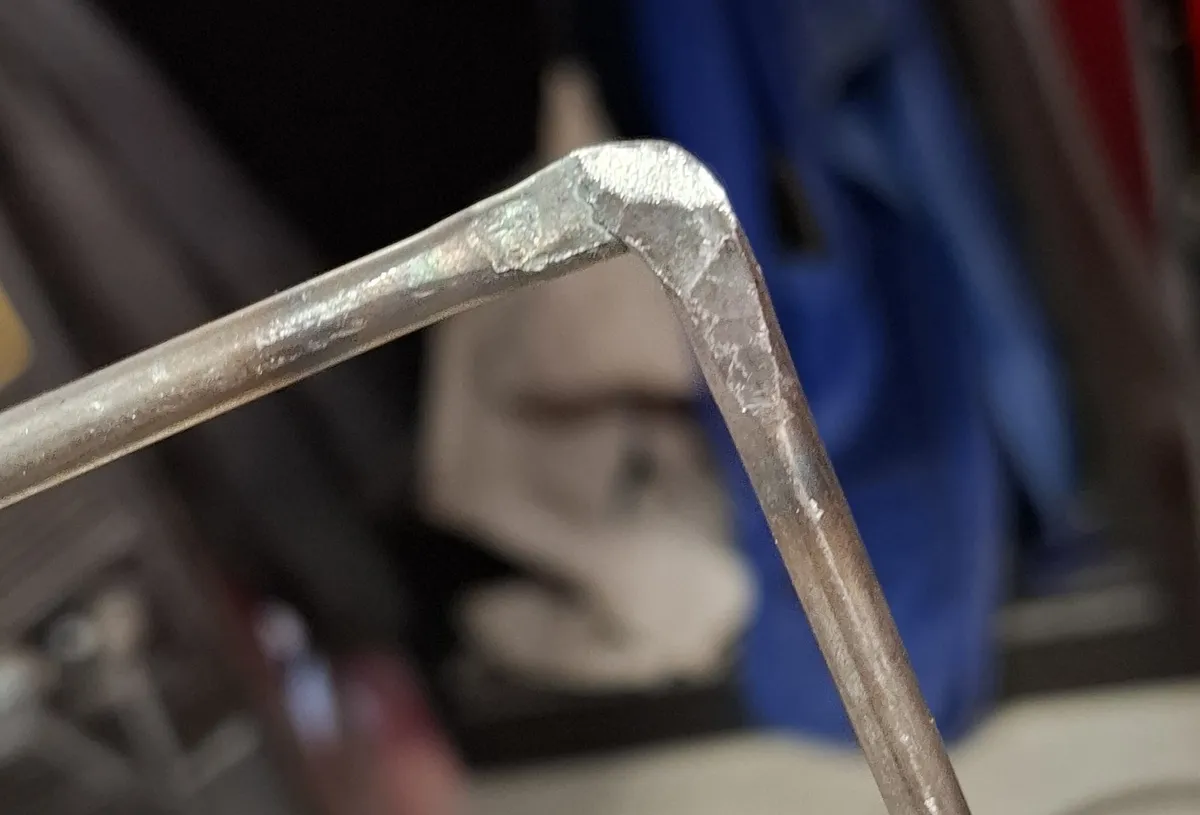 zoom in on the cleaned up edge
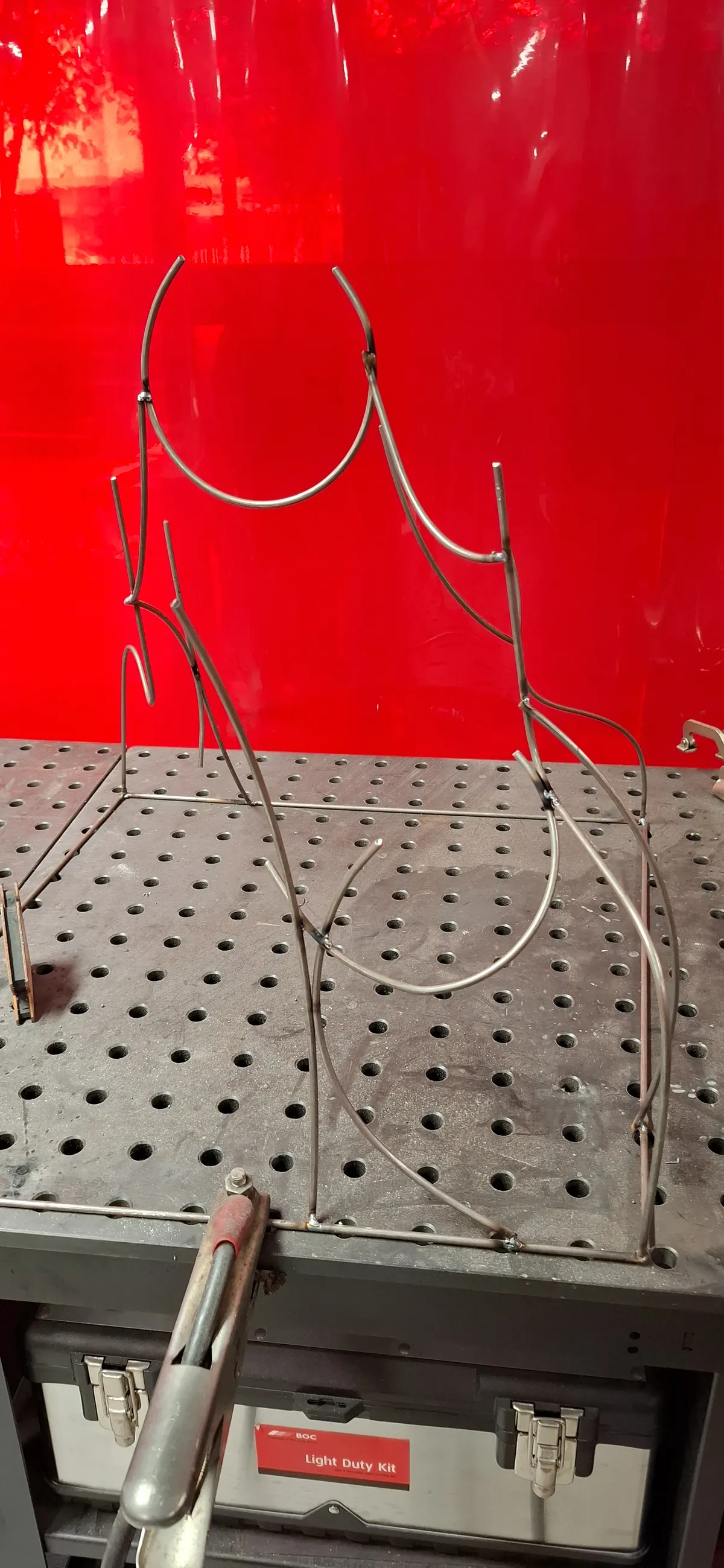 Formation of the Metal fire - just went ham with the stick welder - grabbing a piece and welding it to wherever felt right - I wanted to keep it quite free-form, as fire moves with no rhyme or reason; as long as I followed the basic principle of wanting to always climb up and have an organic flow to it, I think it would work. I've seen a lot of fires, so I really wanted to encapsulate a fire caught in motion.
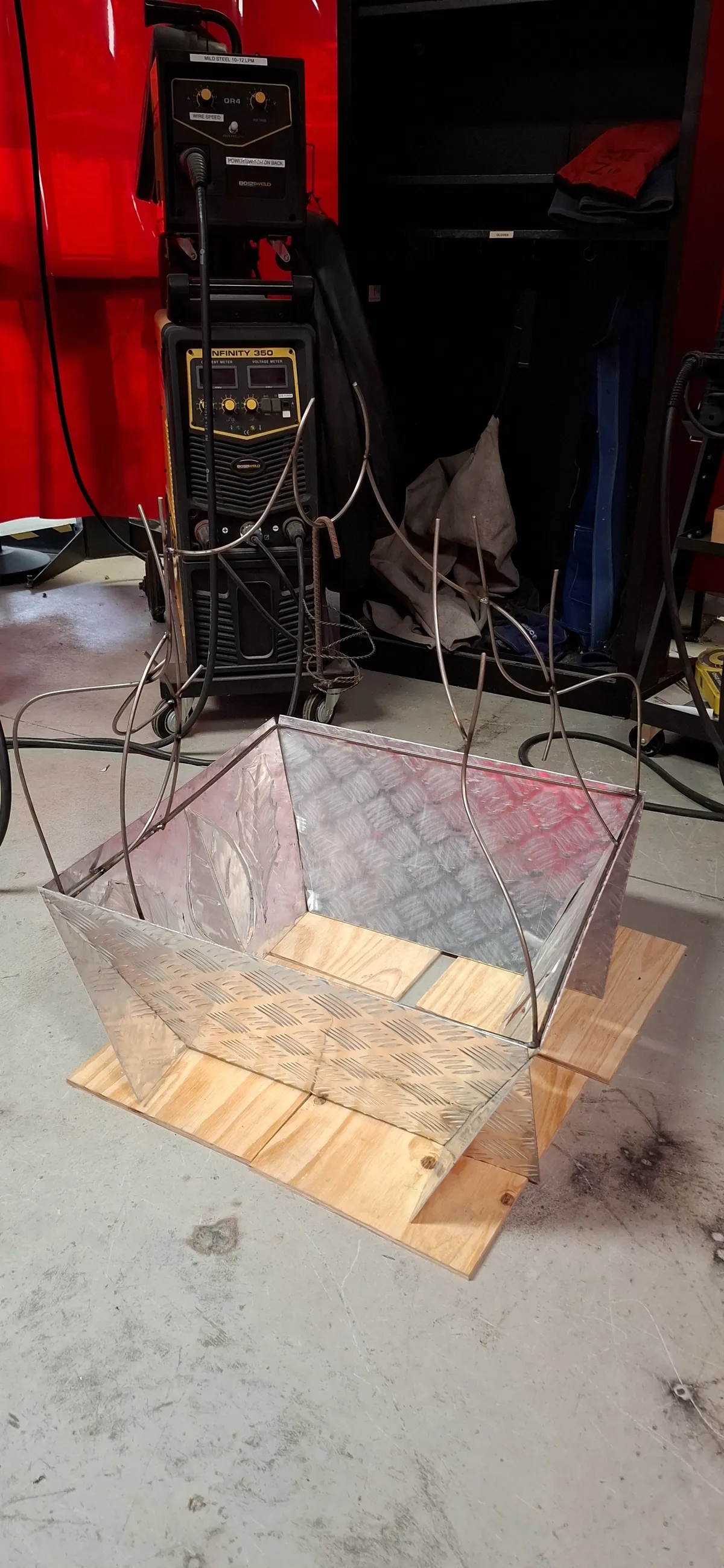 How it looks in the pit so far — need more rods
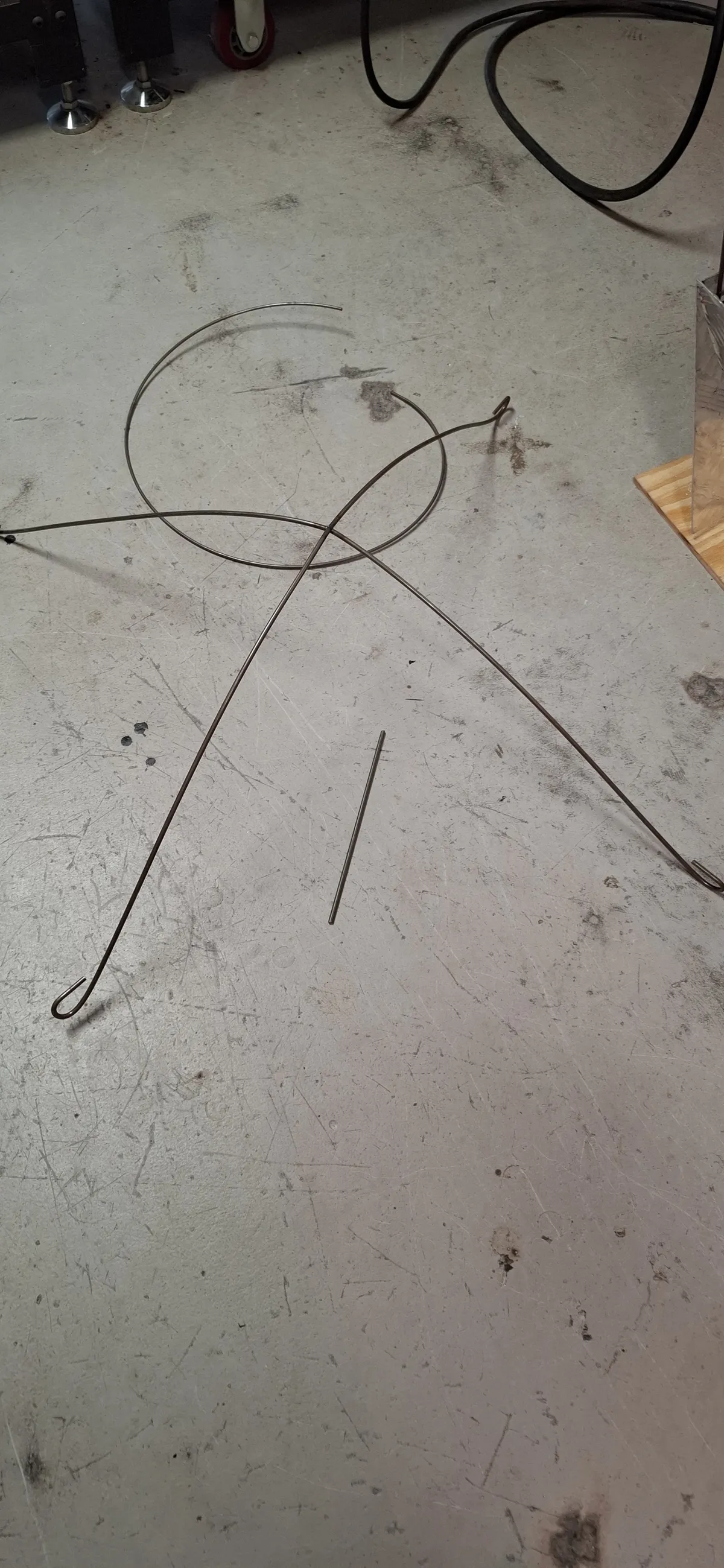 Needed more steel rods — found these in the recycle bin
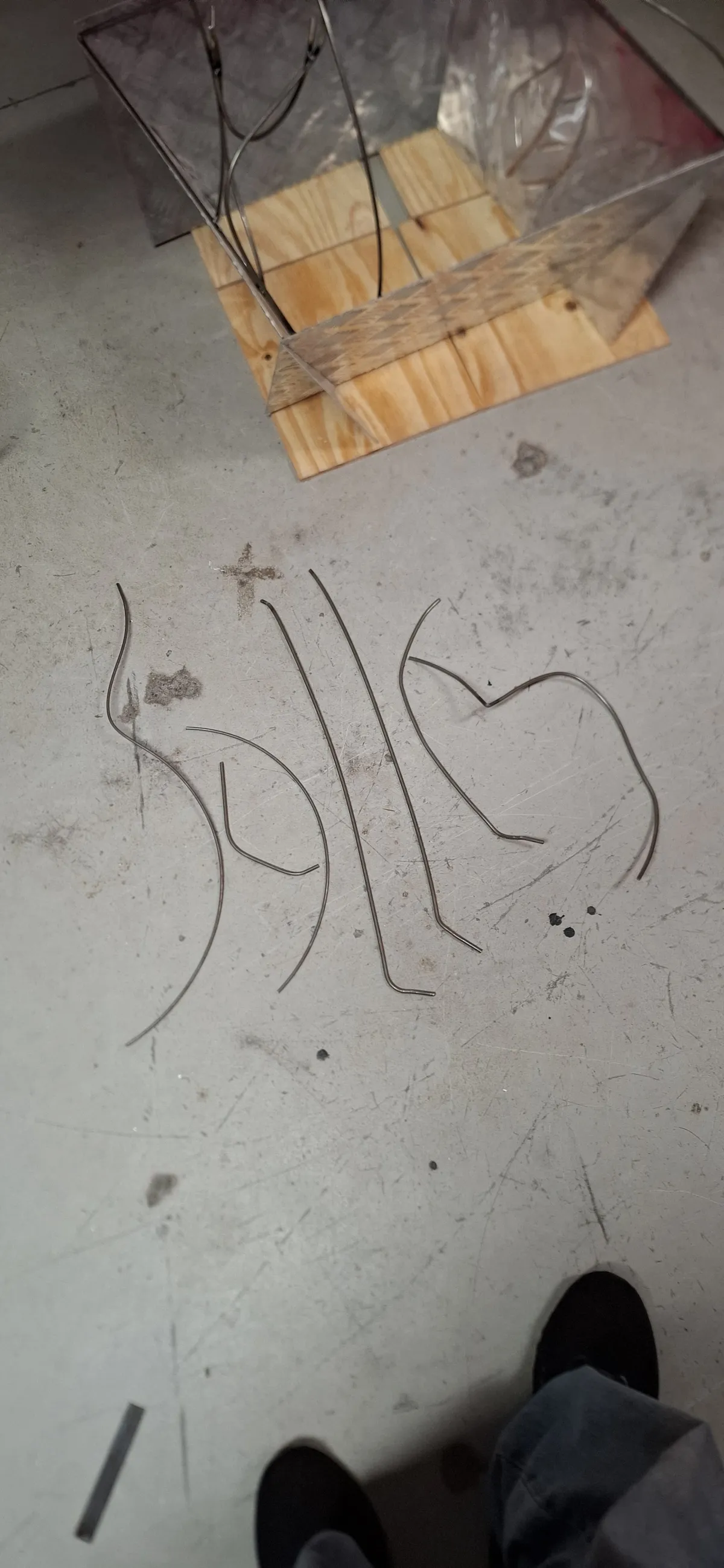 Bent them around and chopped them up; I wanted to really create unique and interesting shapes. I left some straight so I could get really intentional later for the finishing touches.
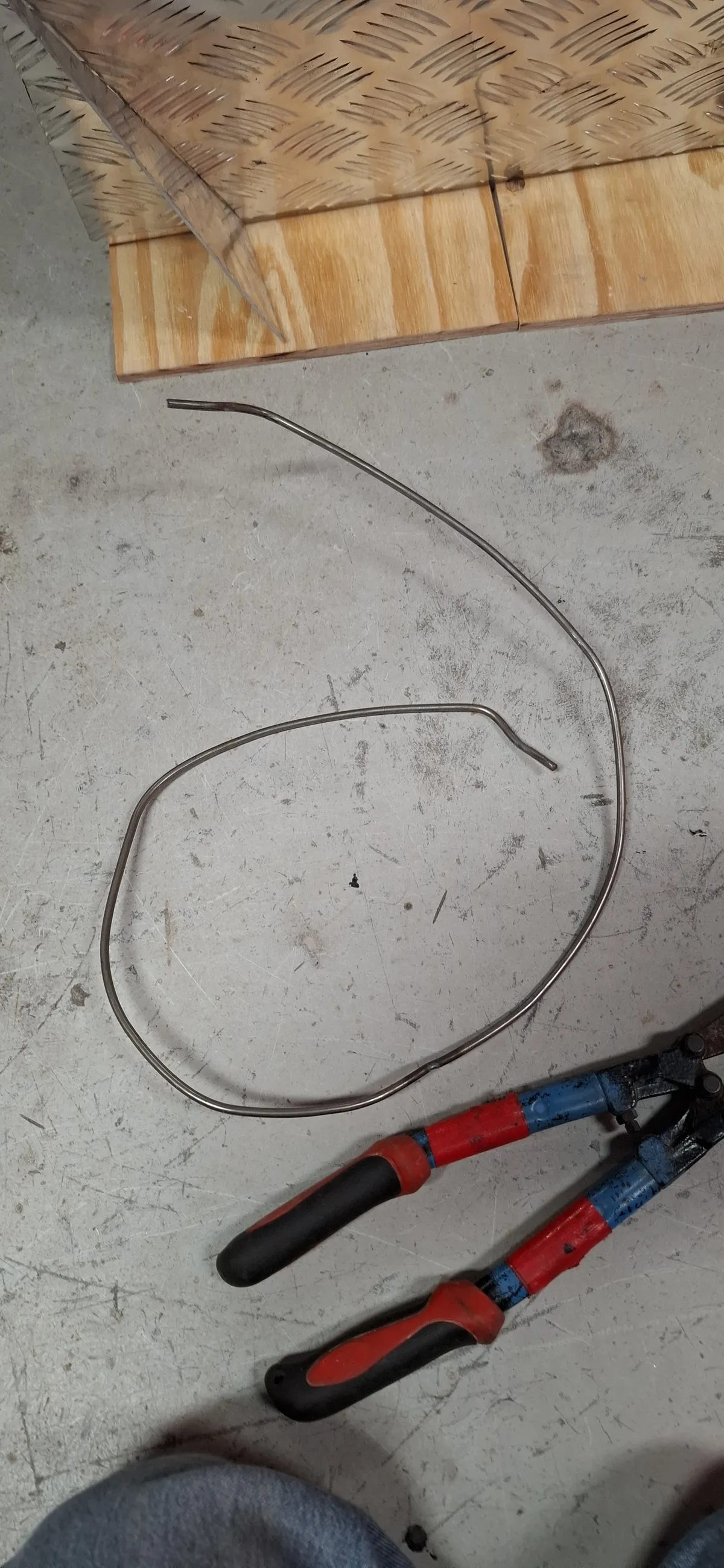 Interesting spiral shape to cut
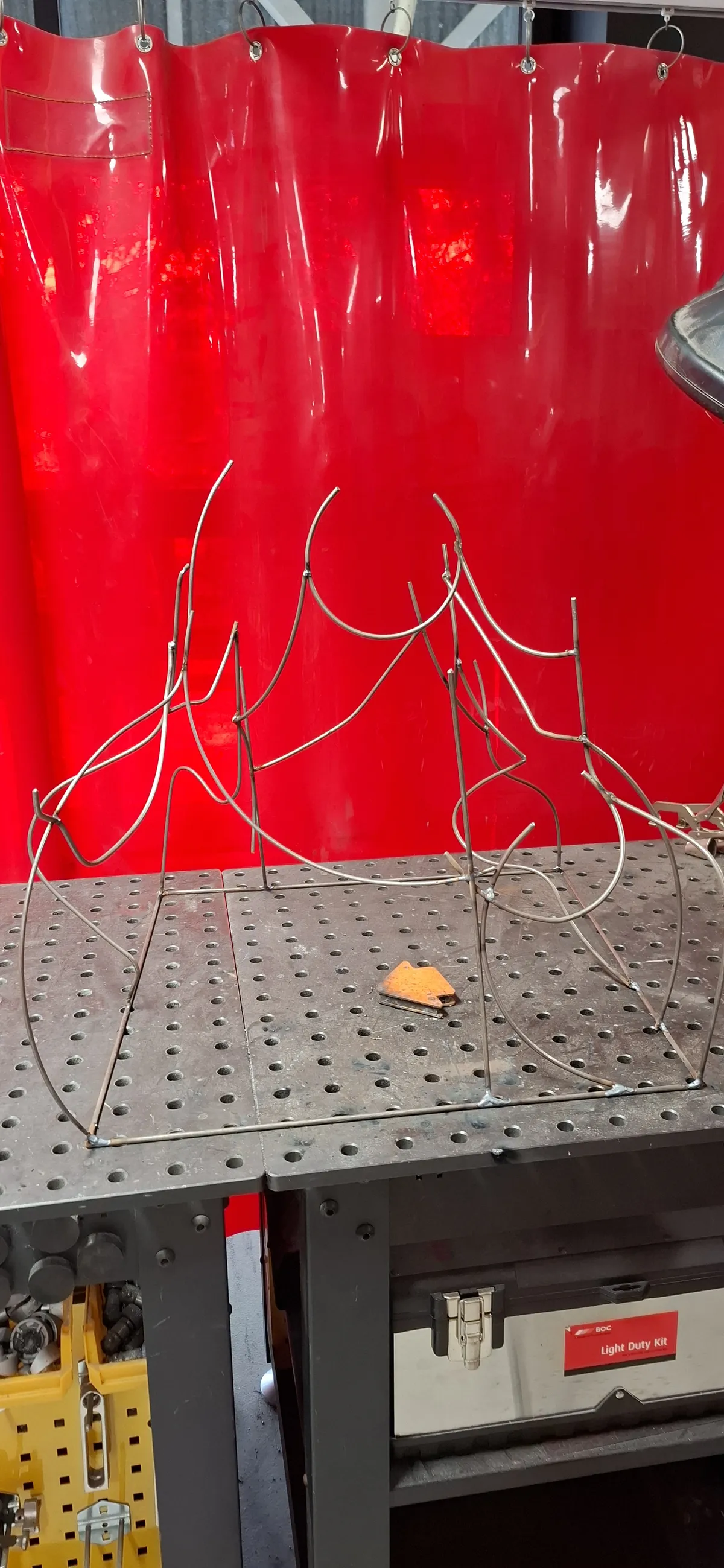 The full fire together
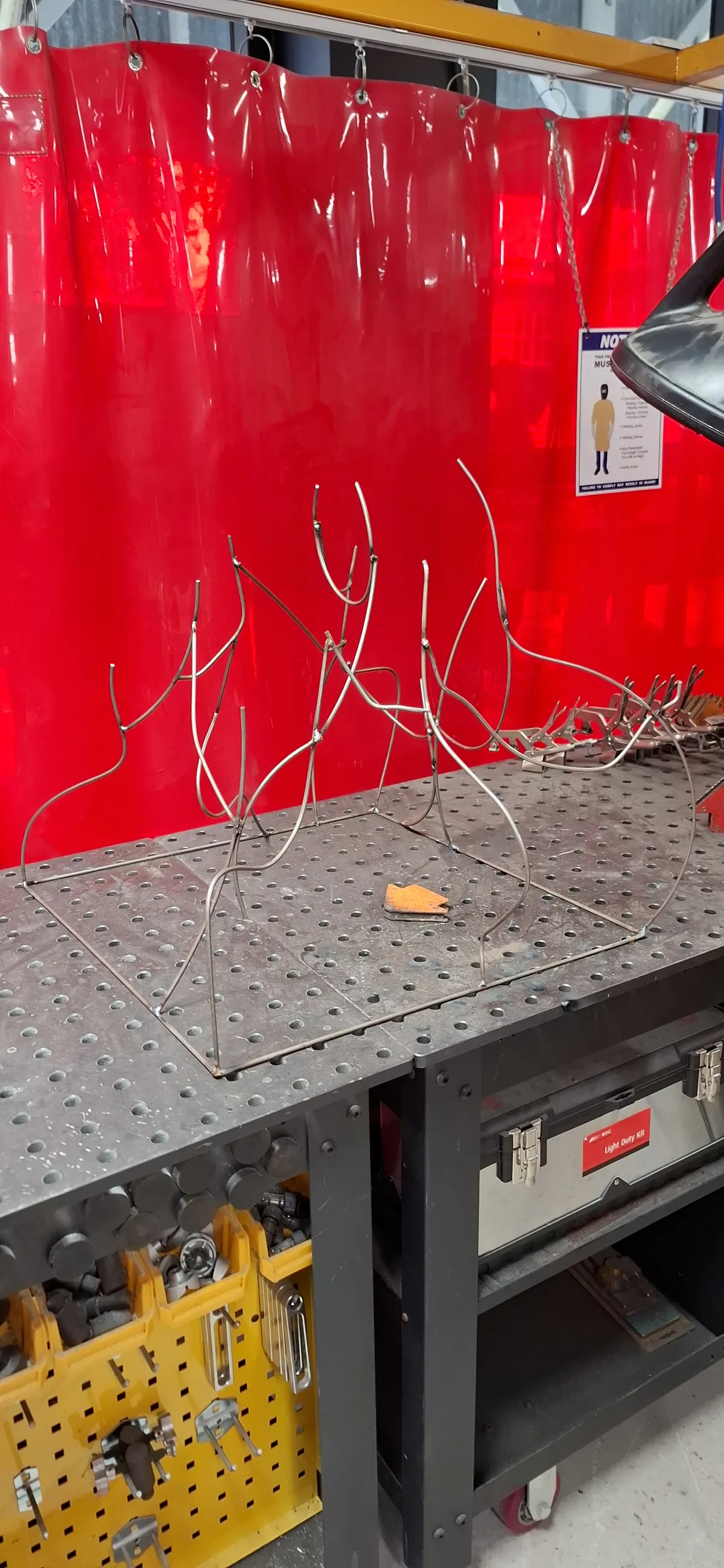 After adding all the extra bits, the full fire.
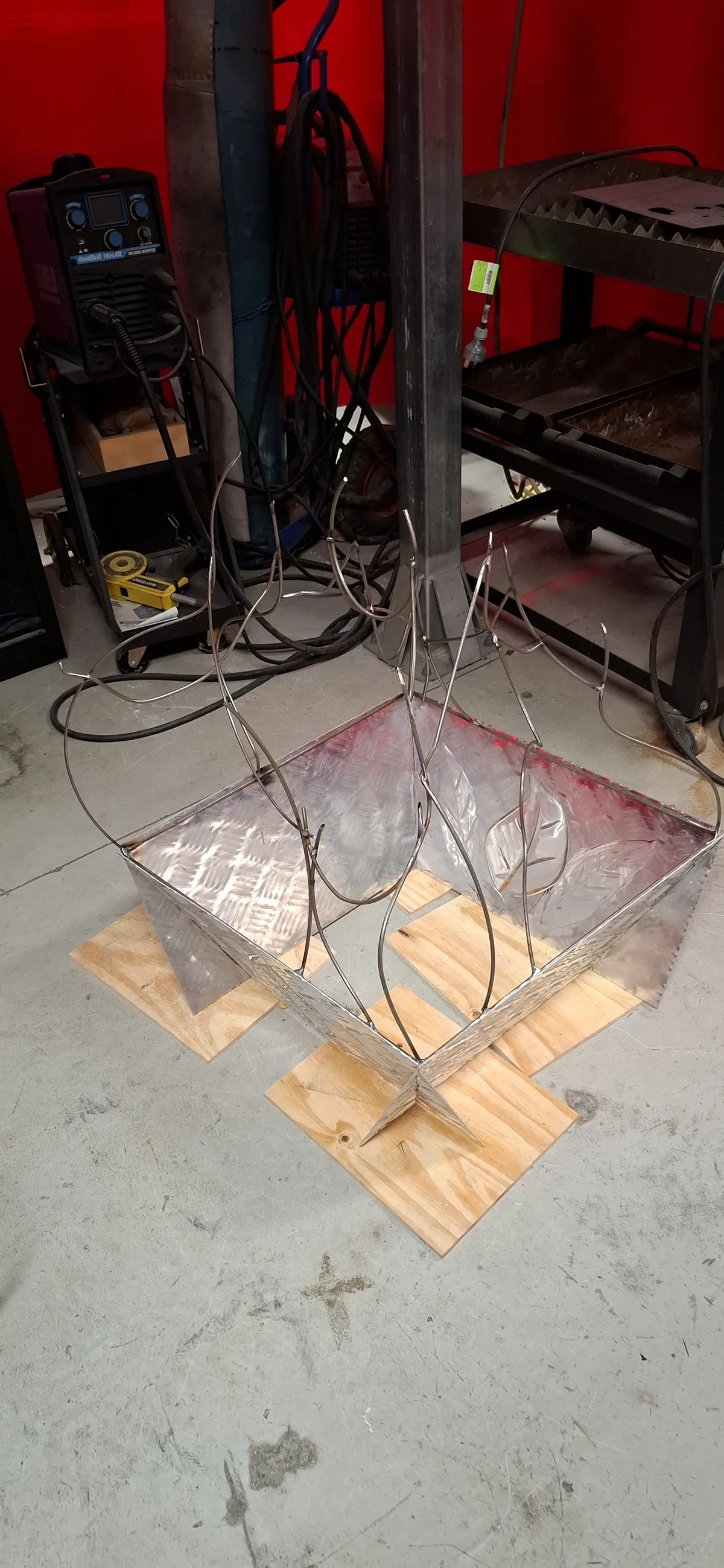 How it looked in the pit, I think it looks alot like a fire, but there the corner on the left stood out to me, fires don't really curve out like that, and it is escaping the pit a little too much, wanted to change that shape, I thought the fire would come more central, and simply cut the two connection points and flip it inverse
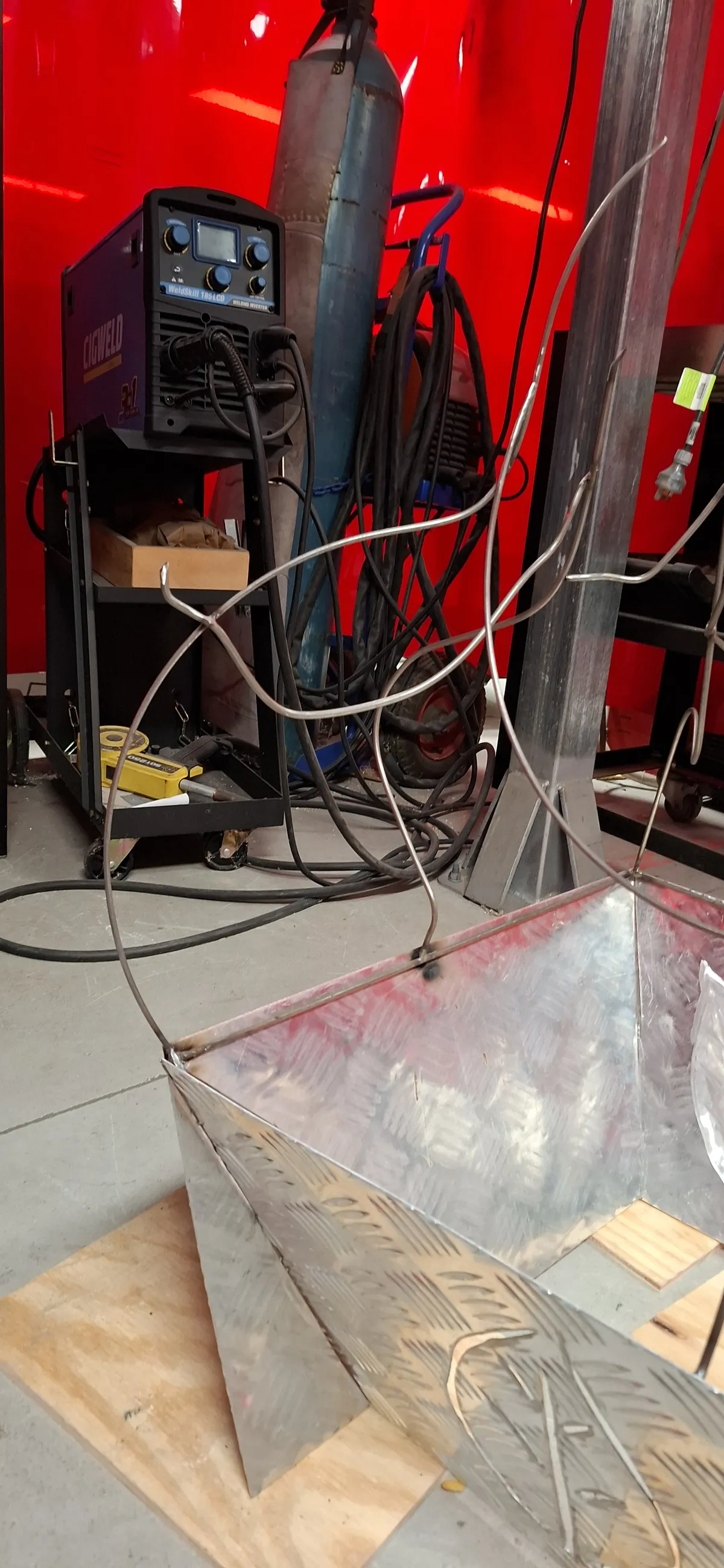 The corner I want to edit
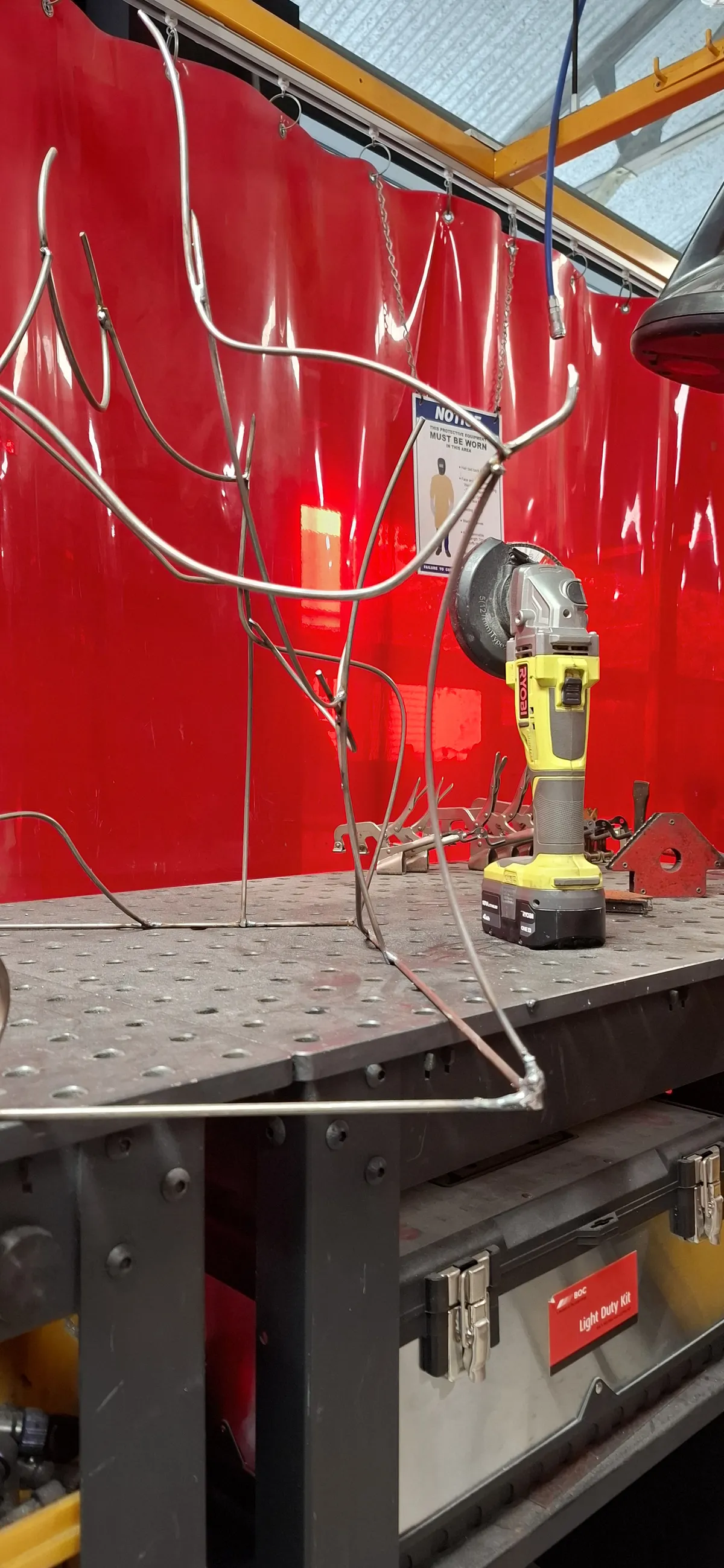 Fixed corner
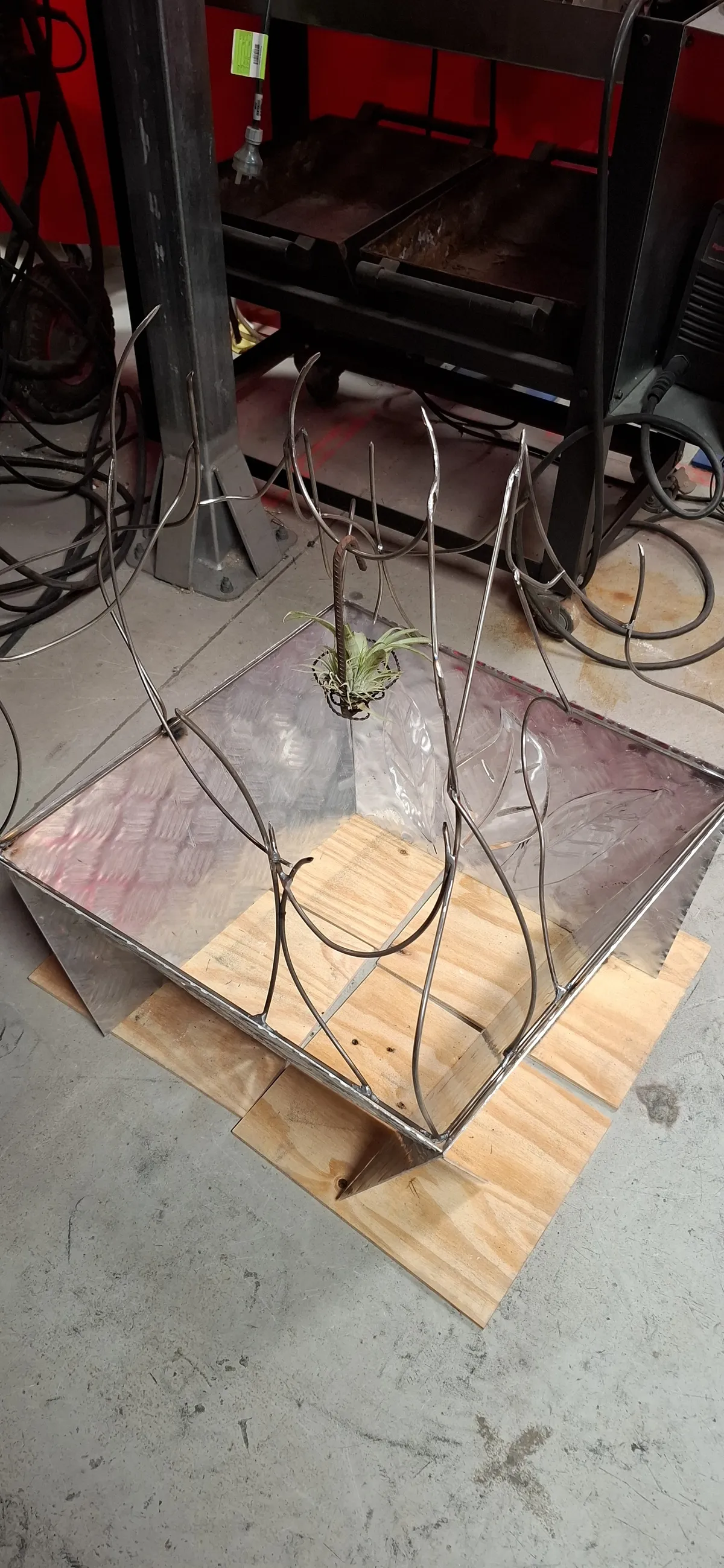 How the plant looks in the fire
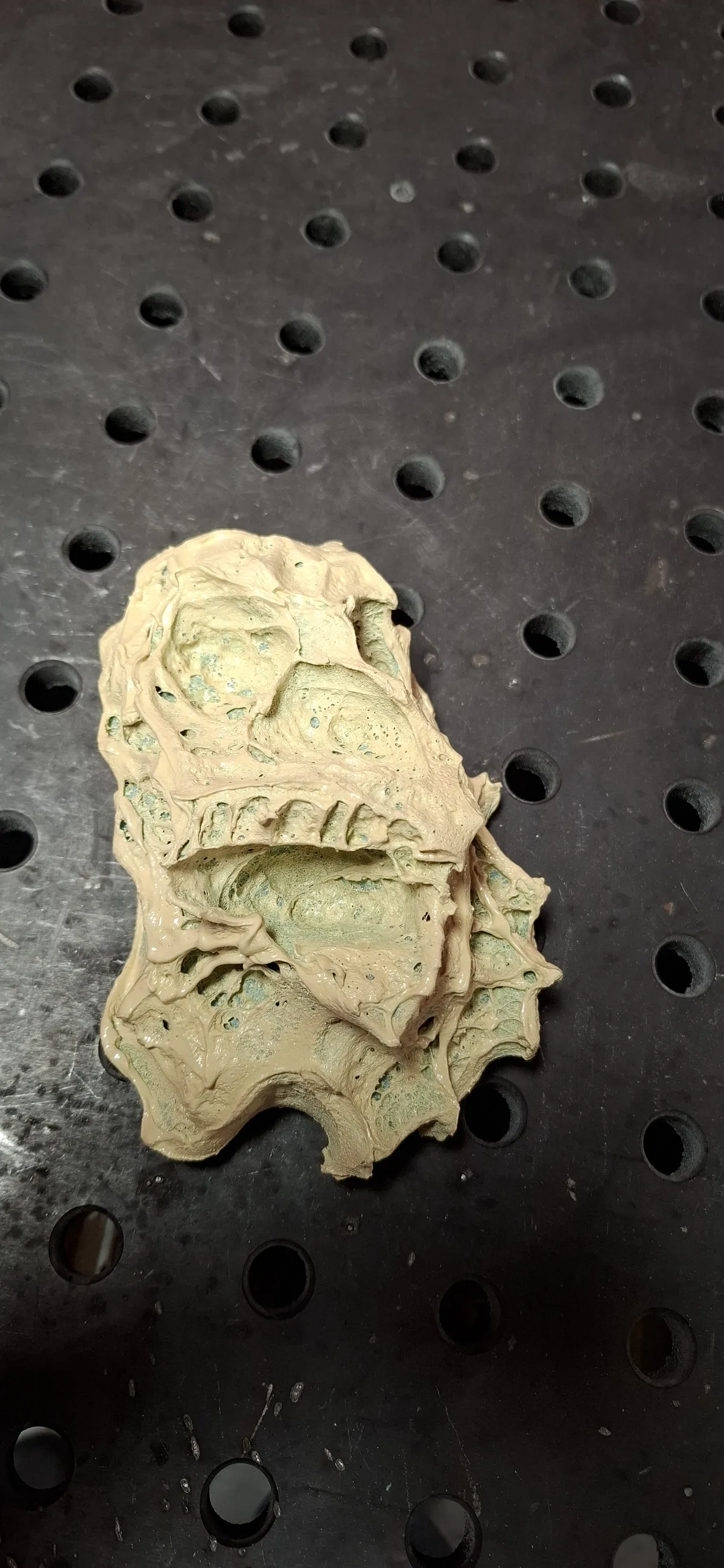 Skull goop spray-painted - I like how the paint interacted with the foam, opening up holes to melt through; I think this adds to the melted look.
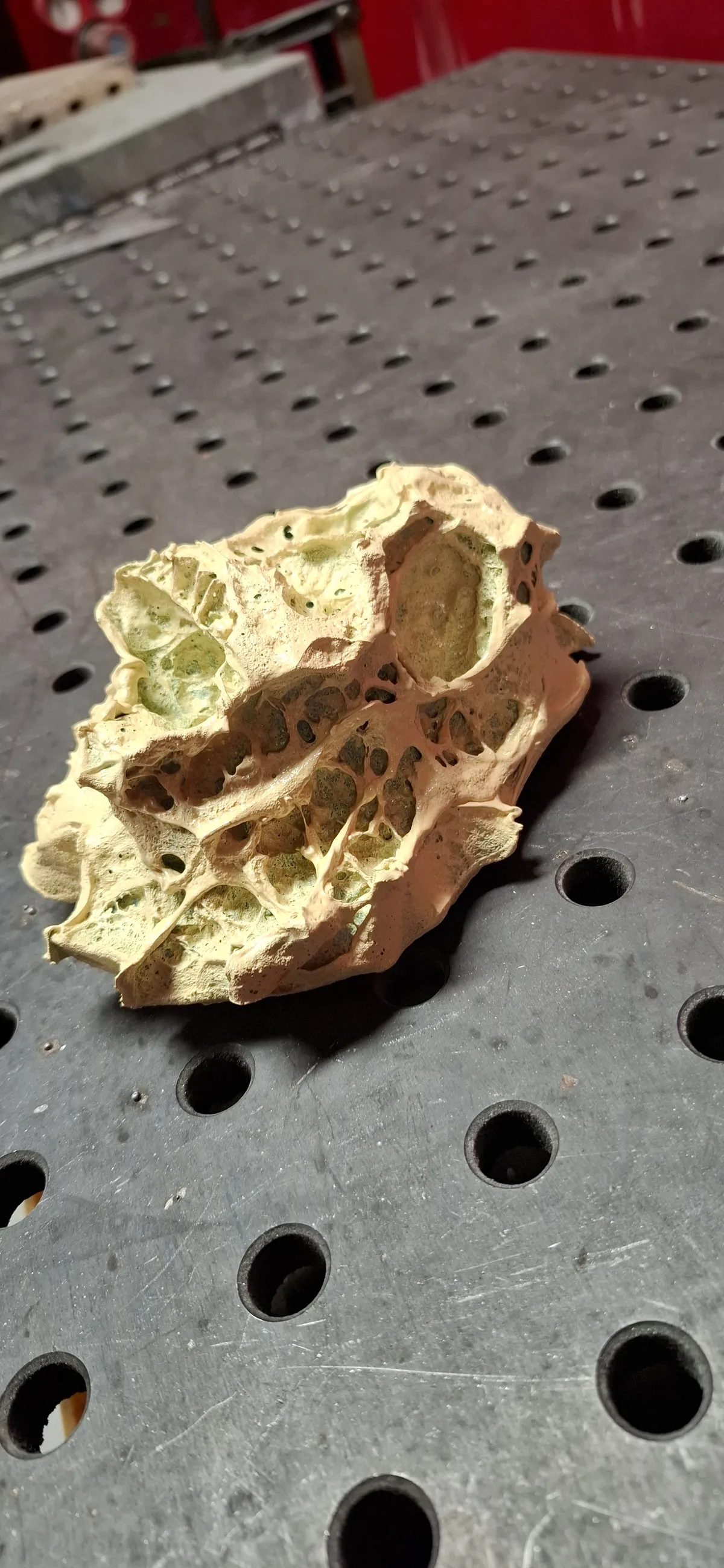 Another angle; now these goops look really fleshy and uncanny
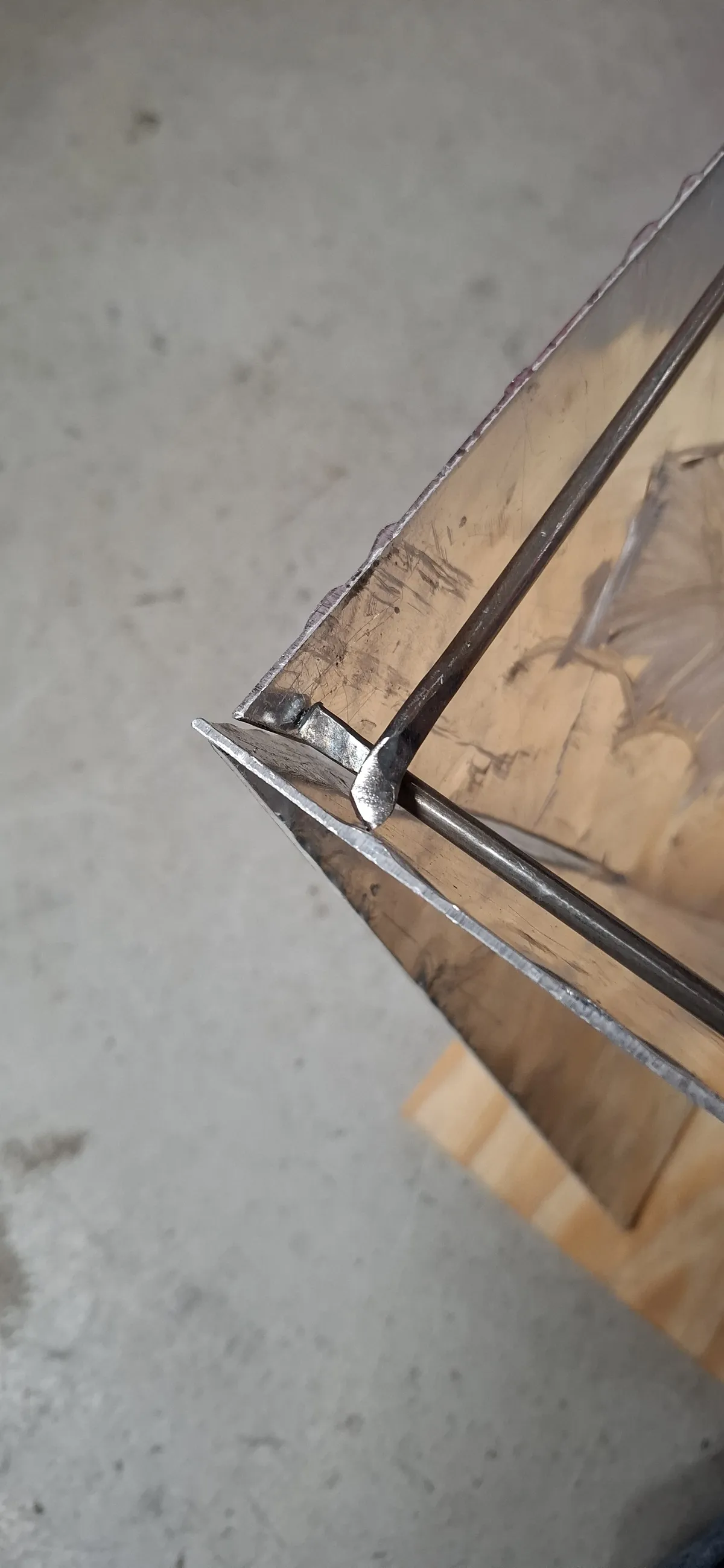
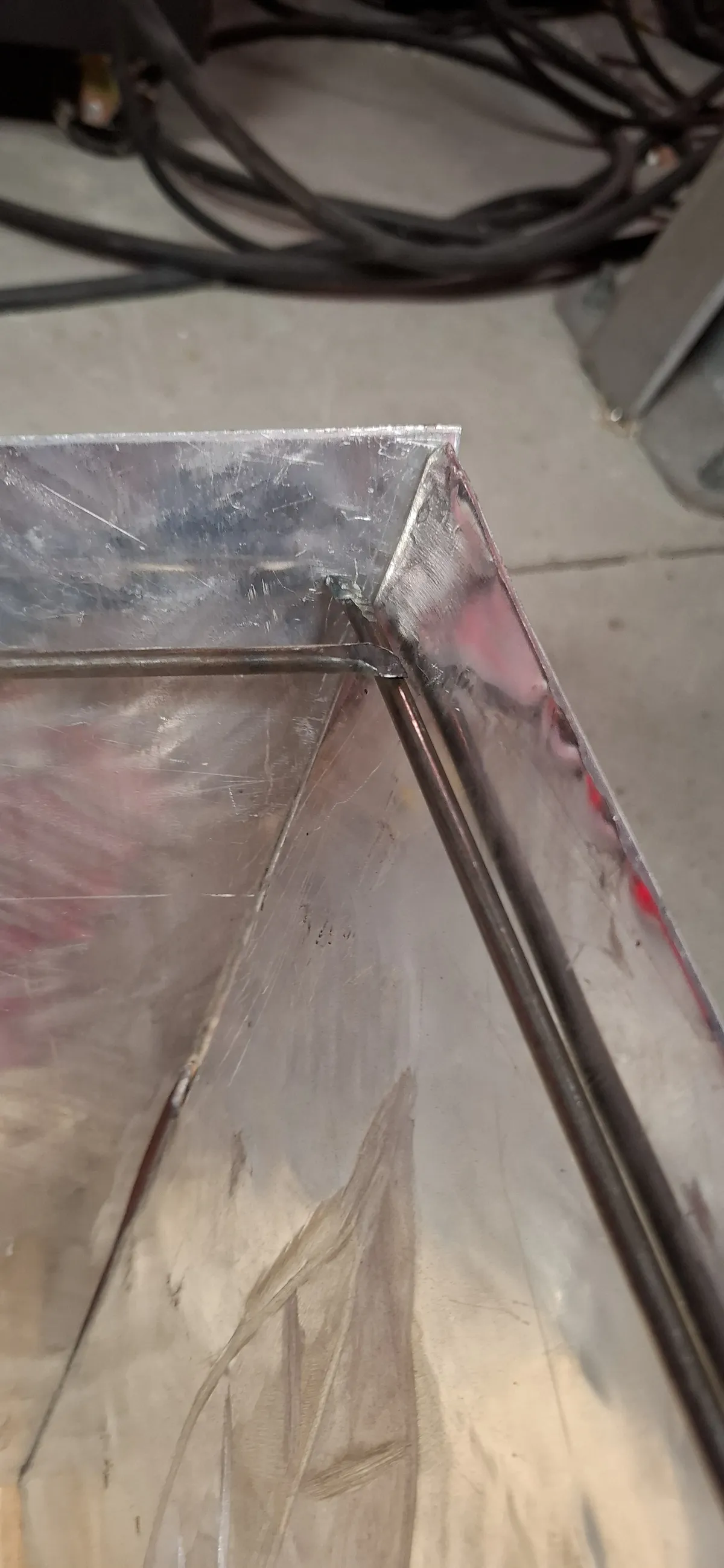
Corner snapped at two corners of the base; need to re-weld. Thought to use this opportunity to take off some length, as it was difficult to place in the pit
^
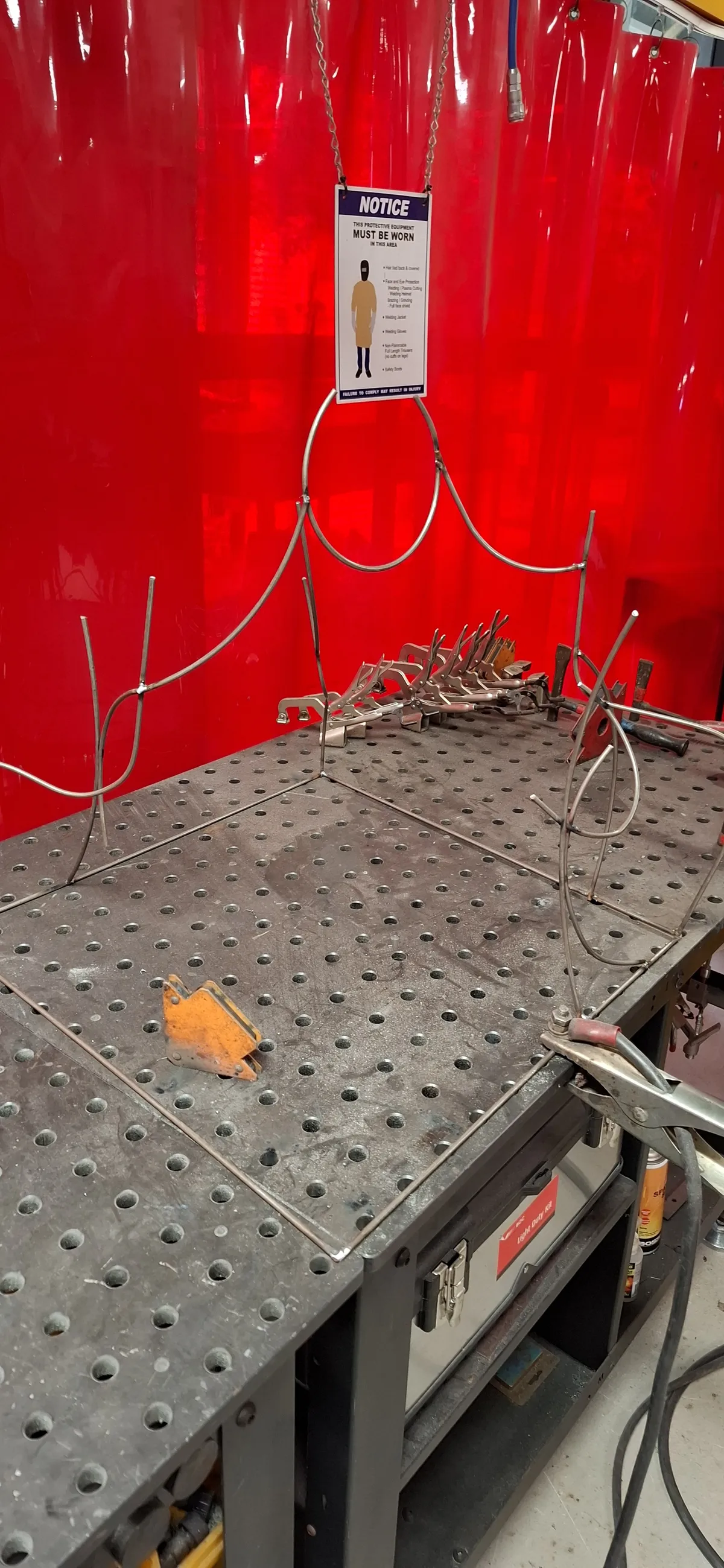 Metal Fire frame coming together
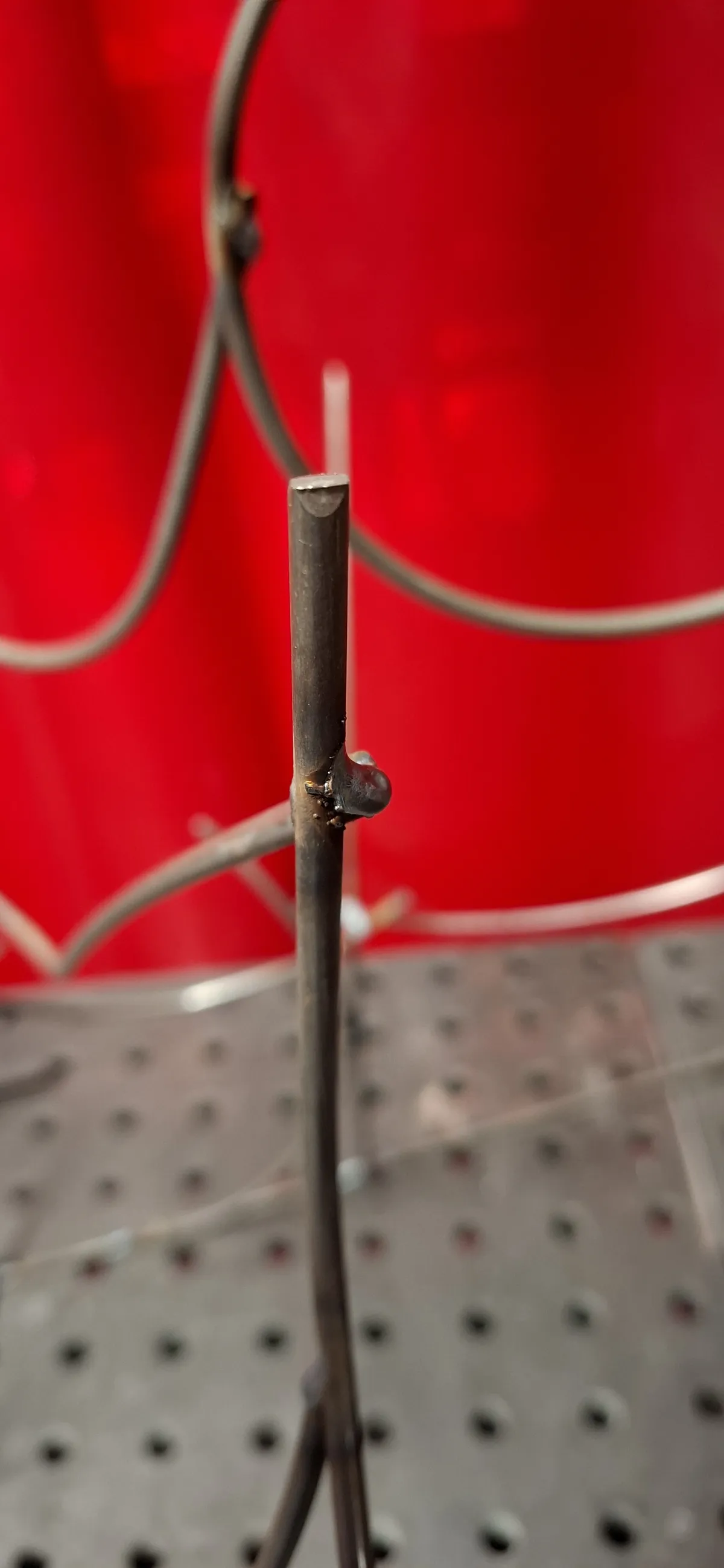 rods before sharpening
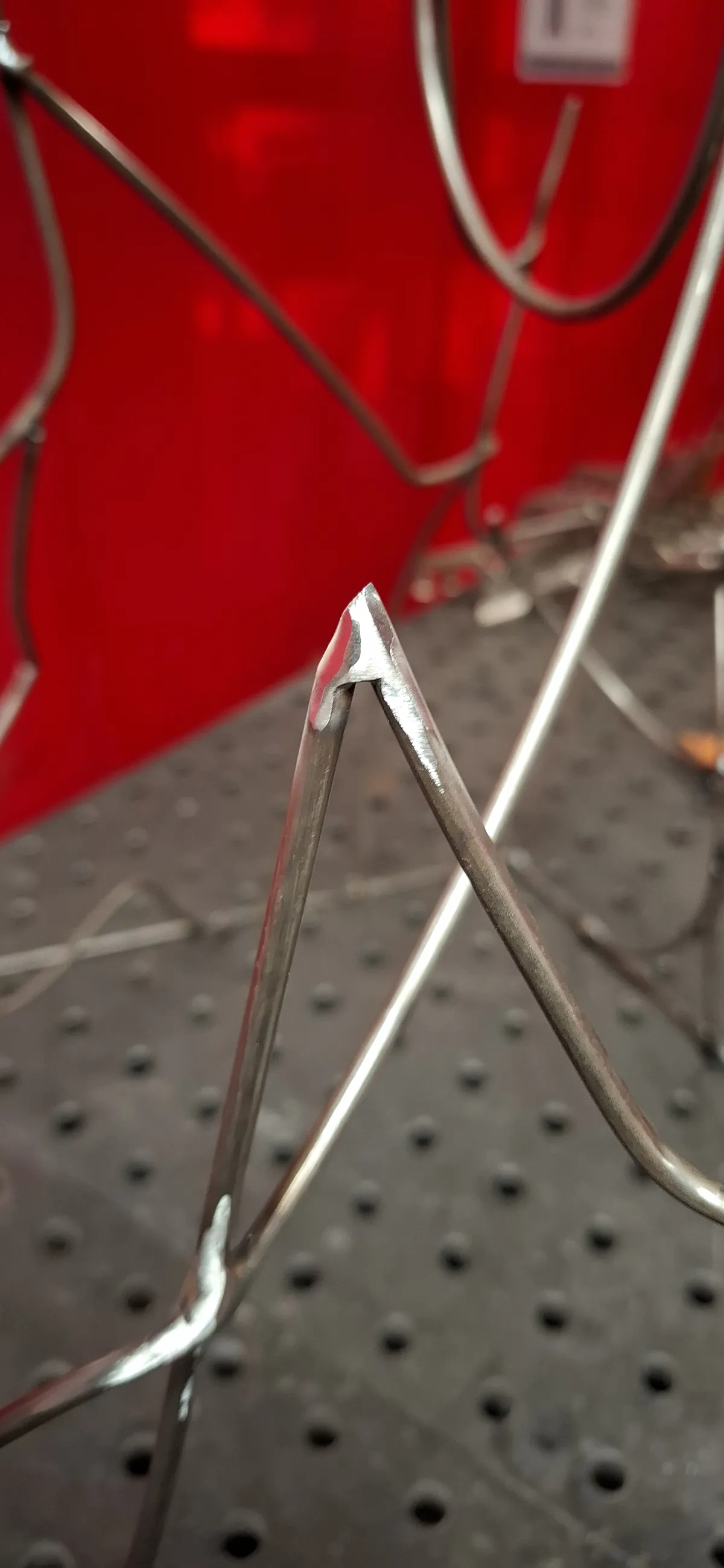 Ground the edges to clean up the welds, and create a point
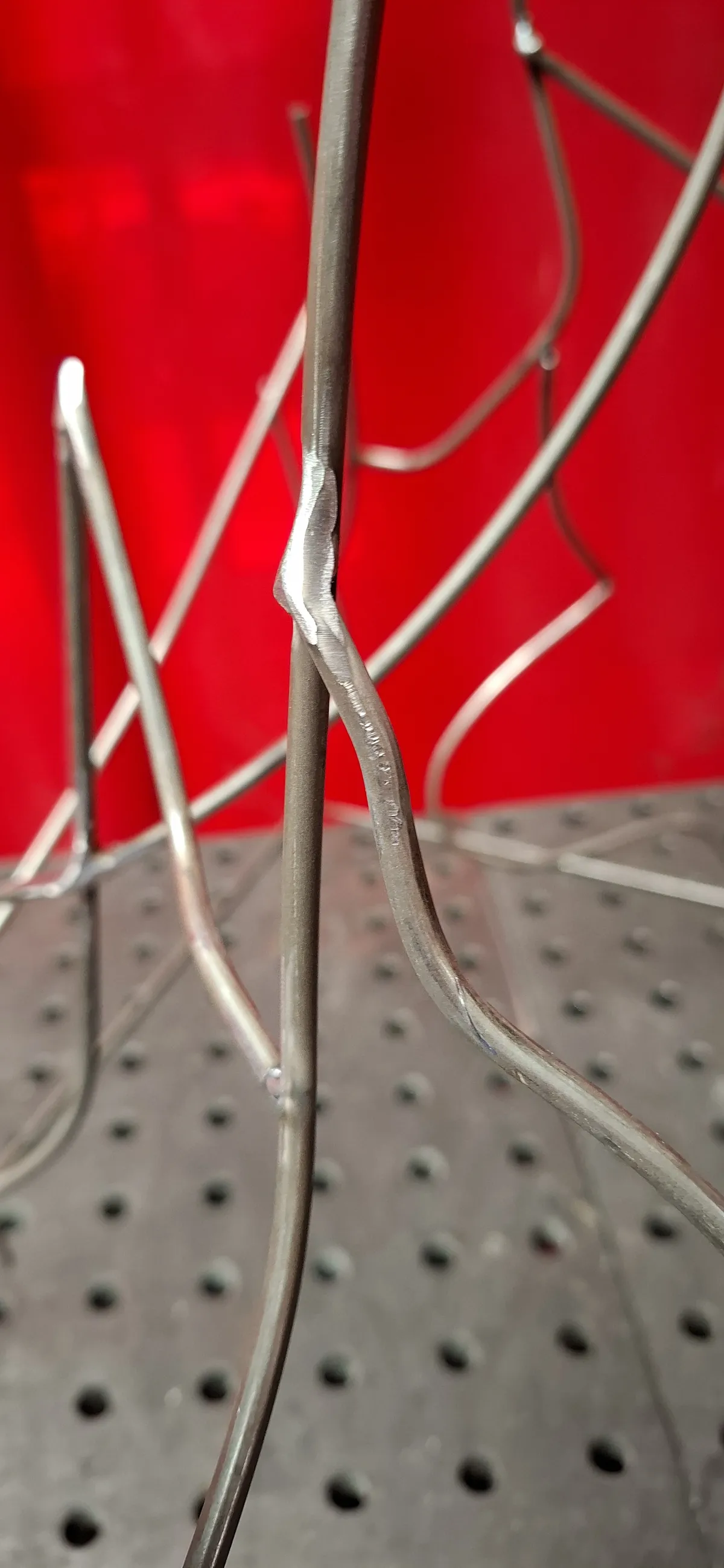 Cleaning up the welding marks and having the individual rods flow together as one.
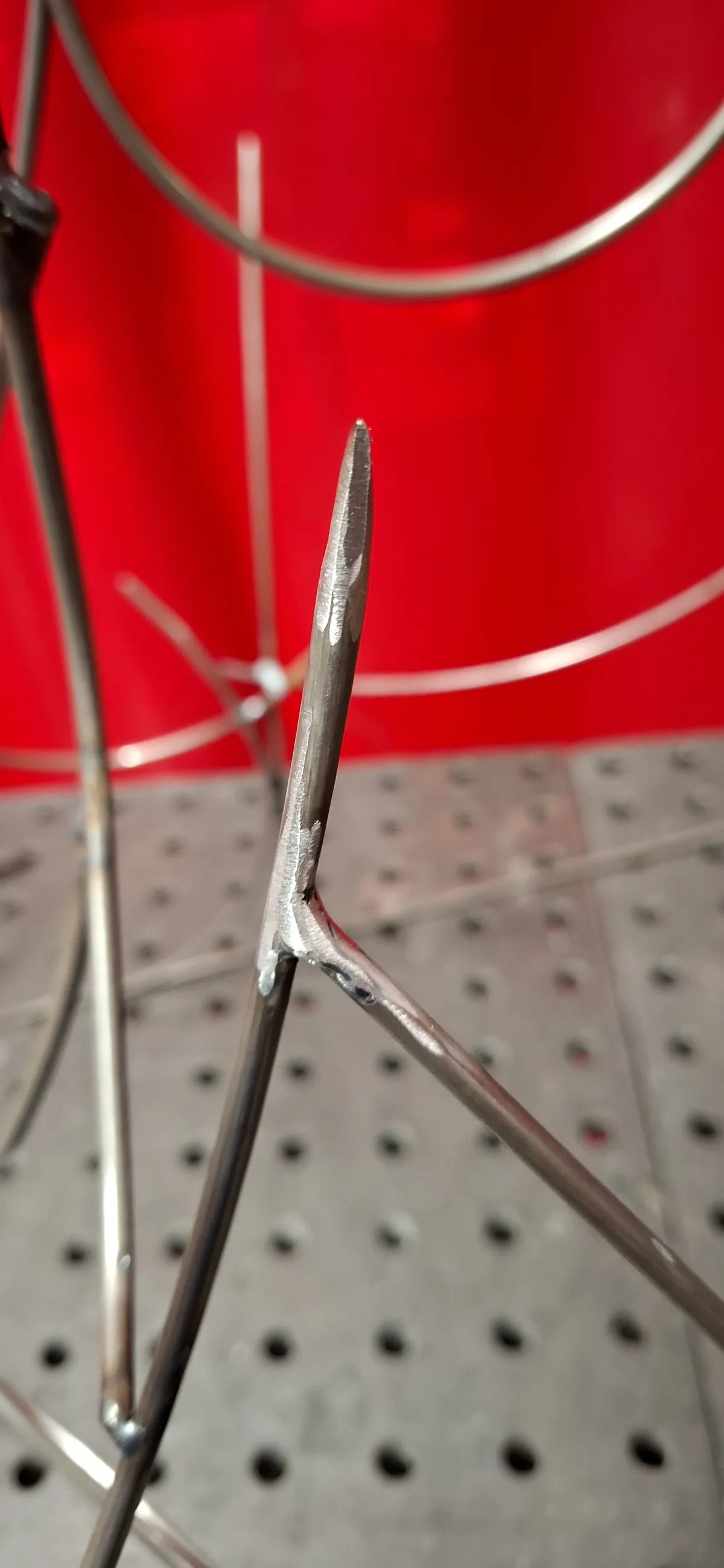 Cleaning welds and points
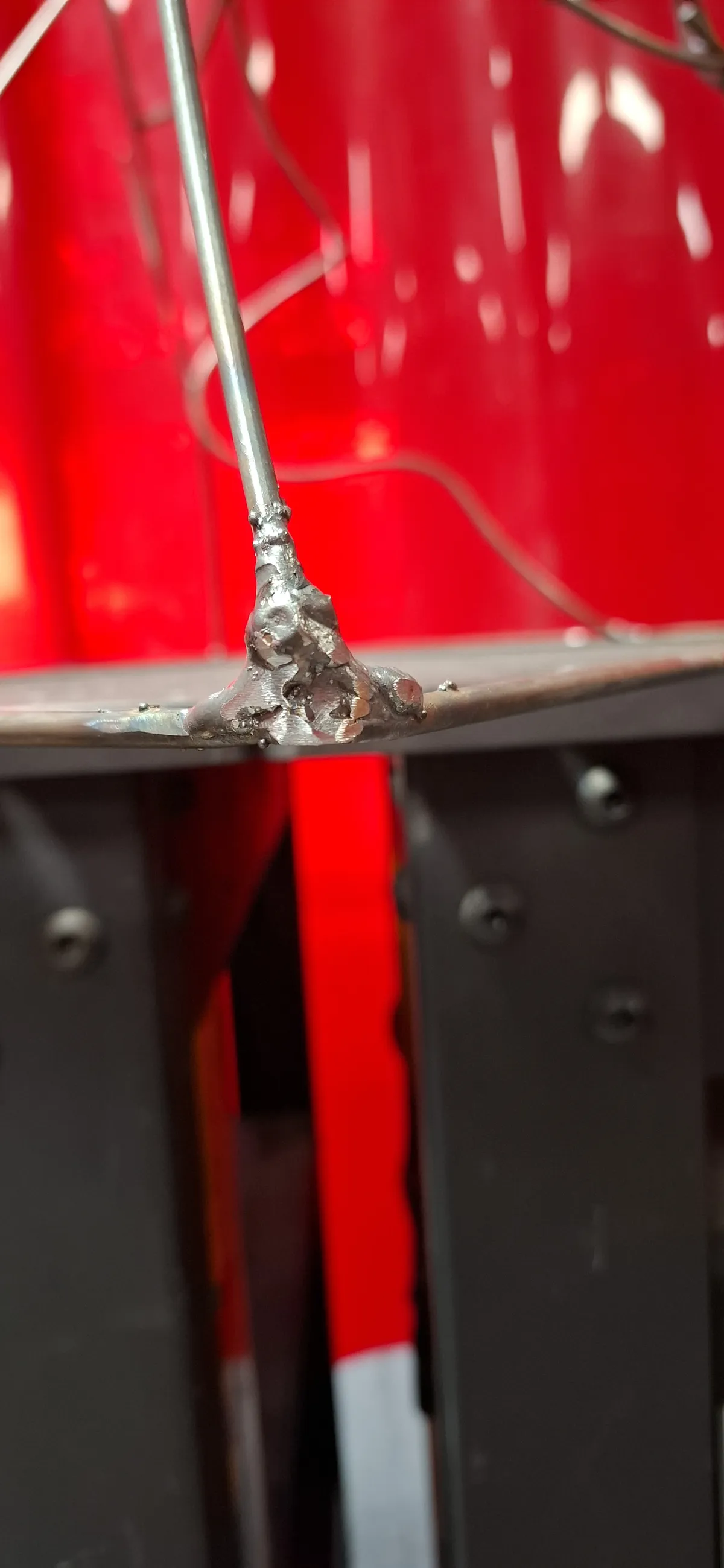 The welding mess of said fix
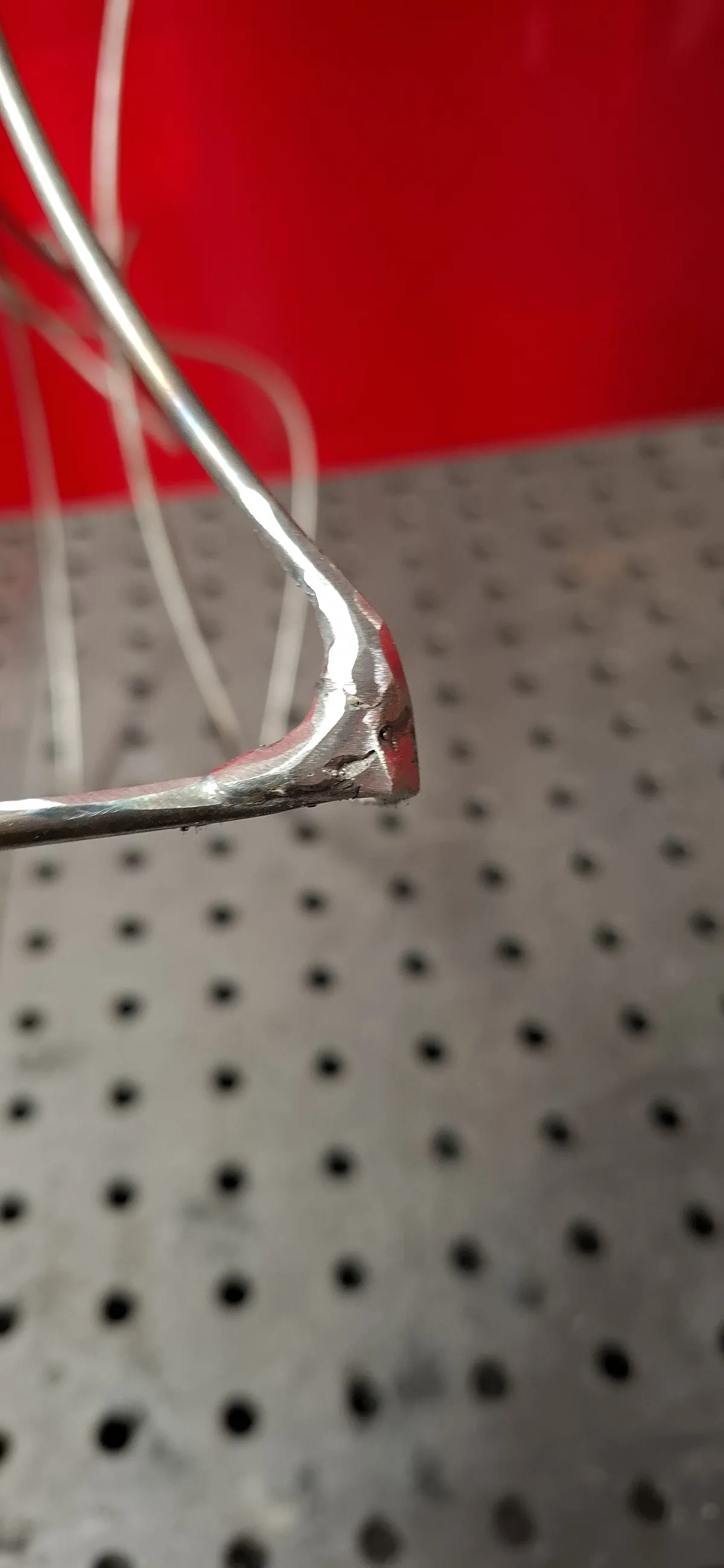 Fixed welding mess
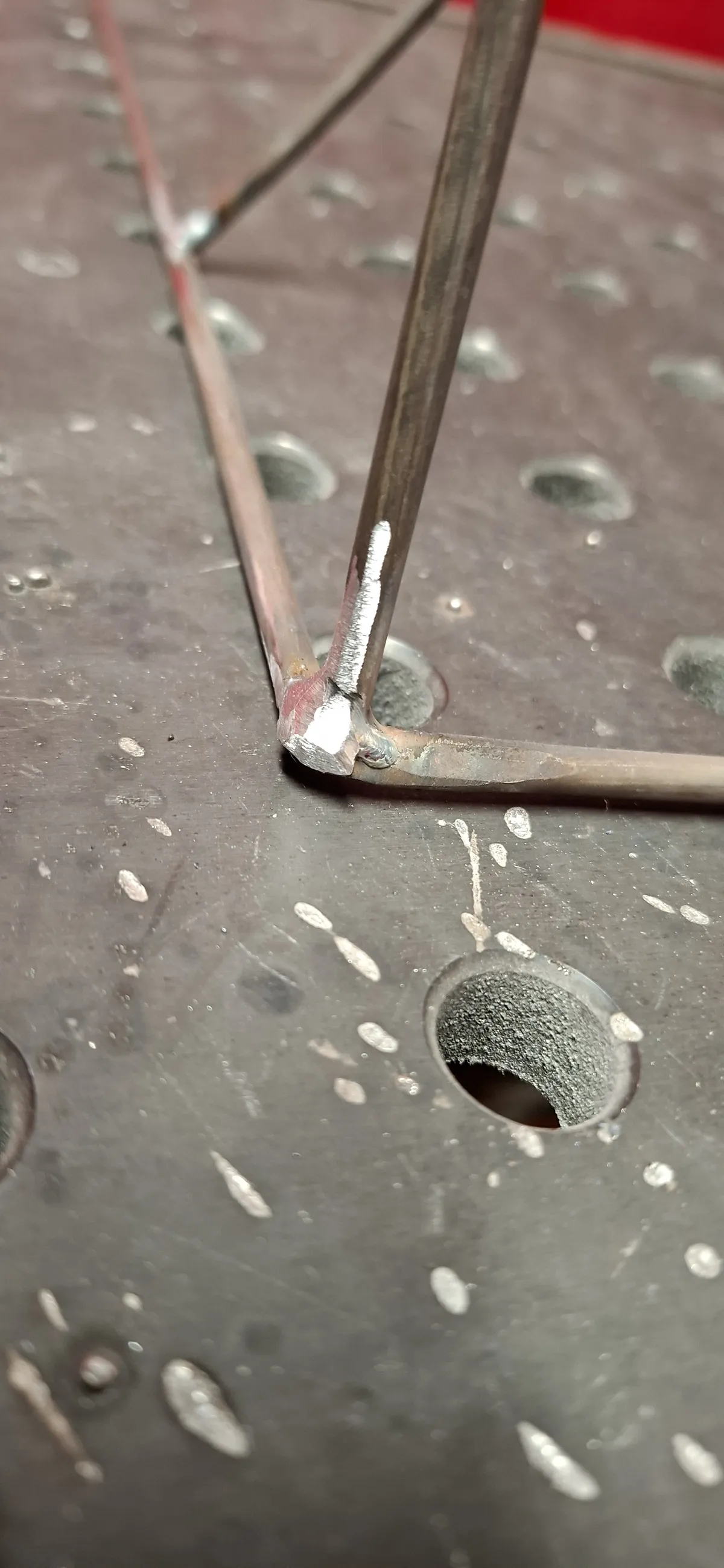 Cleaning up the new corners with the fire rods attached
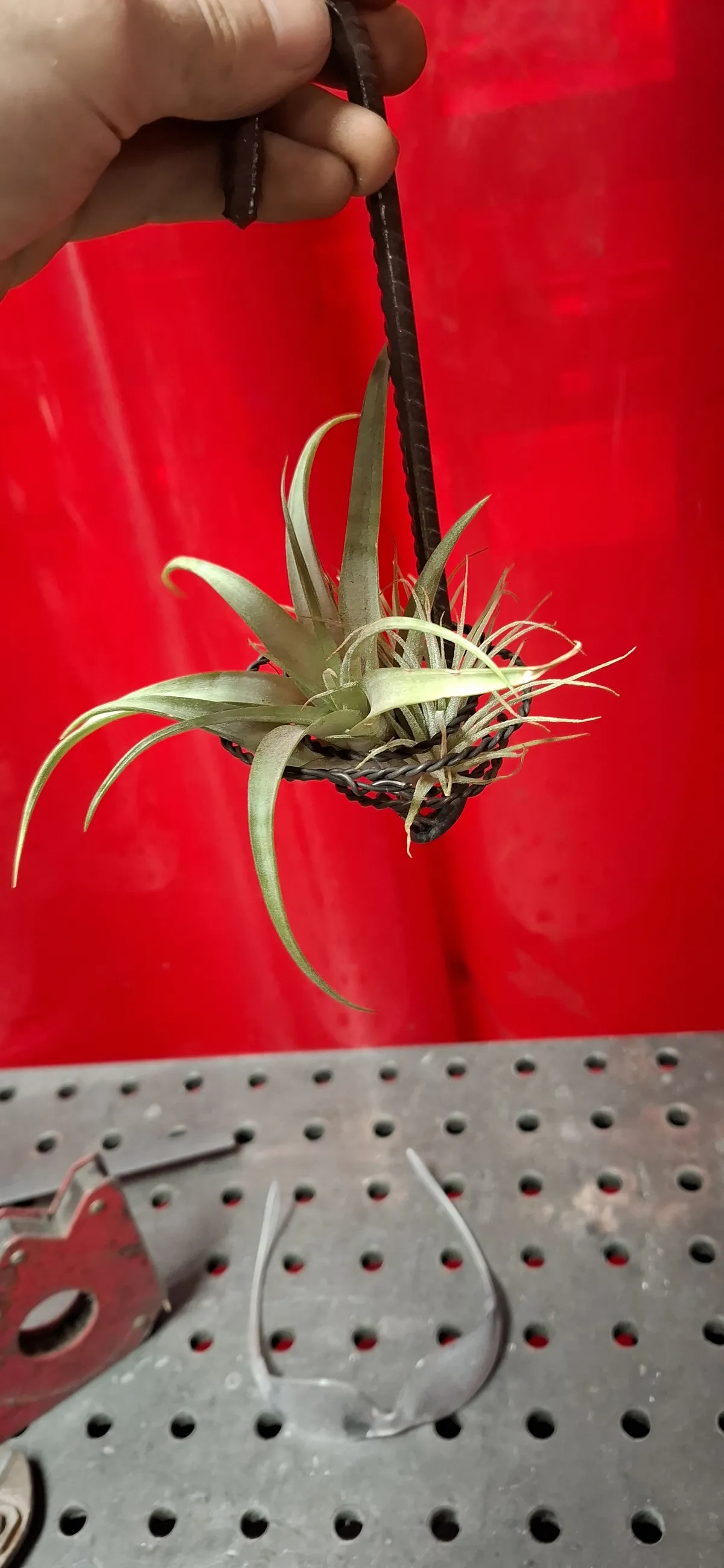 Tweaking the wireframe for the plants to sit in
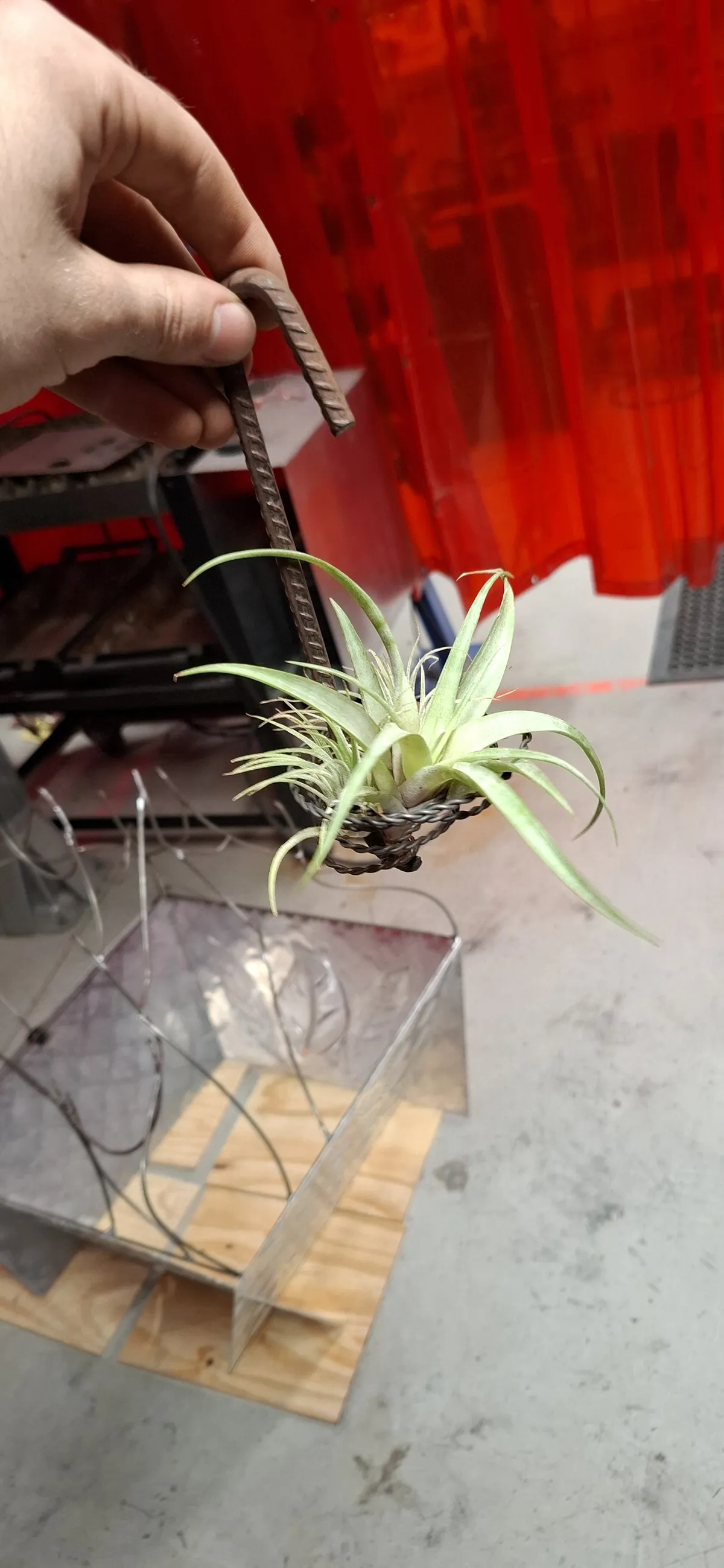 Didn't want the plants to feel trapped, rather protected.
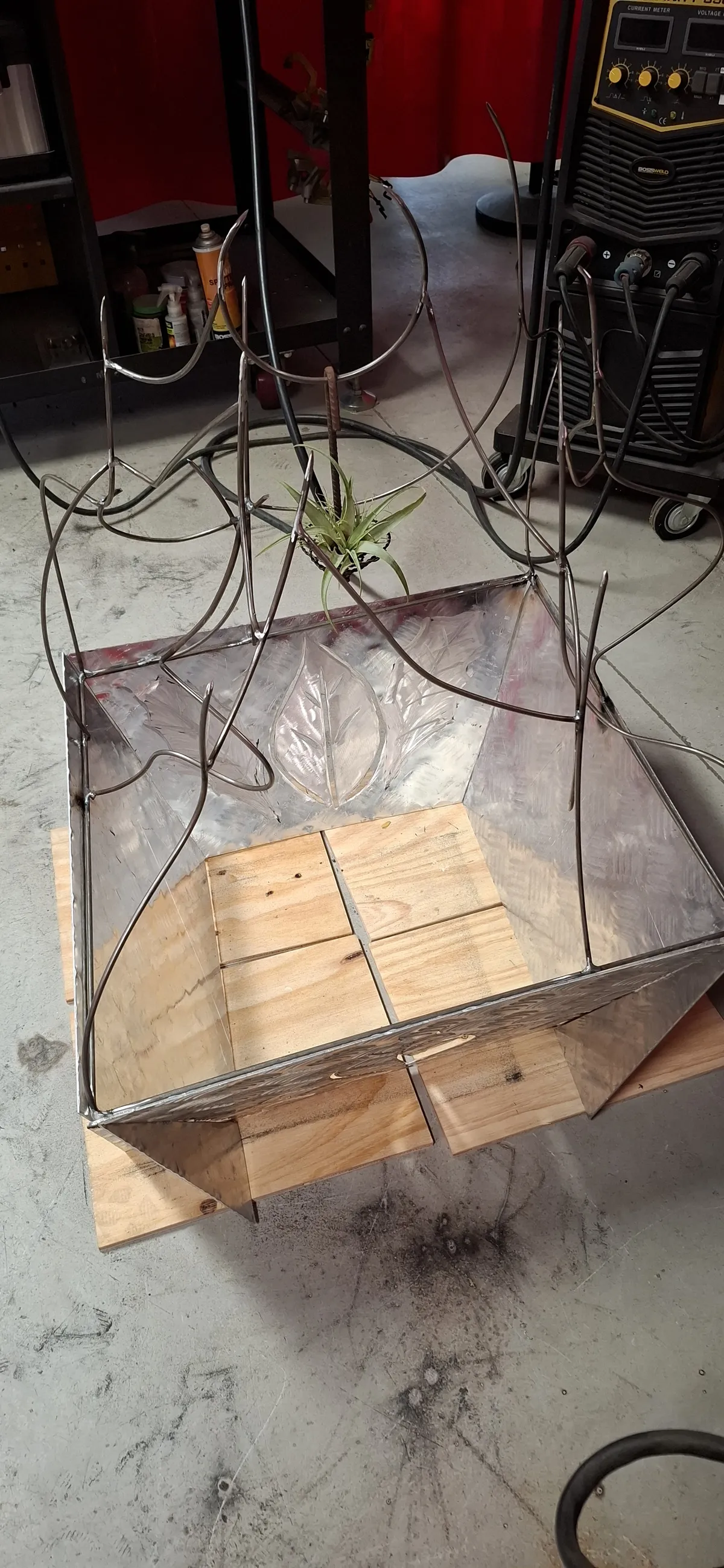 Fire with plant - with plant detailing
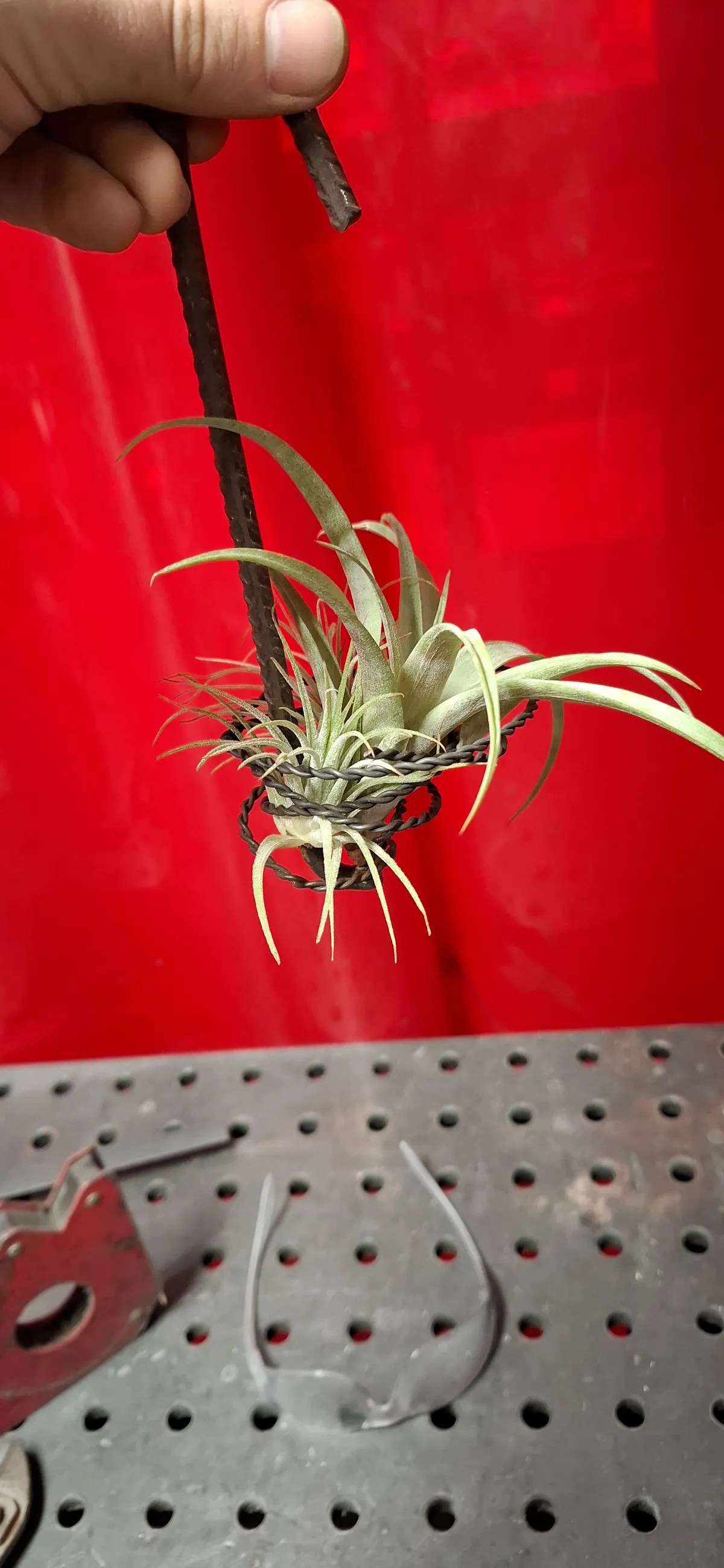 how the plant is fitting in the cathcer/ net, dont like how sad the plant looks with the mones on the side, i wanted to create bept, but I just ended up doing against the natural plant folow and ended up looking sader.
UNCUT - Rational Burnt Out is an experimental contemporary sculpture that creates a commentary on climate change and humanity's relationship to fire. The core of the work is the easily recognisable portable pack-down campfire pit; found inside amongst the coal are a range of half-burnt common household items and miniature human life metallic sculptures giving the essence of life, memory and agony. Atop this, steel rods burst from the pit, resembling the fire that once consumed them. It is spiky, sharp, and dangerous at its tips, but is elegant and organic at its edges. Though most pivotal, suspended in the air is a living organic Tillandsia air plant, surviving among the flame, amongst all this chaos. Pivotally, this plant forms a metaphor for the oxygen the fire needs to survive, yet if the fire grows too big, it ends up destroying the plant and, essentially, its oxygen supply. Creating a physical resemblance to the old proverb “Never bite the hand that feeds you”. Essentially, this parallels the fire to the human race and its relationship to its plant life source, the Earth. Our relationship with our environment is built on greed and control, and we are extracting materials at such a rapid rate that soon the Earth will be uninhabitable for us to live ( study on how long we have left before it’s too late) This then led to the chosen materials in the pit, seemingly rubbish; the burnt materials naturally include forest wood resembling forest fires that lead to habitat loss (our home loss), A mug filled with water, an essential resource, that inevitably put the fire out, food boxes such as Nutra Grain and McCain’s Pizza - our food supply. Nutra Grain gives resemblance to Breakfast — the most important “meal” — priding itself on its energetic nourishment, while McCain’s Pizza fosters this idea of family, sharing, and gathering. Both boxes are cardboard, yet the food inside is wrapped in plastic. Leading to the visible melted plastics: the plastic container lid, used to transport leftover food from restaurants, and a soda water bottle used to transport our water, and the plastic wrapping around the organic flowers meant to showcase their beauty. Additionally hidden is a melted foam block that has been spray-painted and shaped to resemble a human face/skull, pointedly showcasing our downfall through the single-use plastics and stupidity of our essential items being stored in mass-produced materials harmful to our planet. Placed in a gallery space, this piece at a glance reminds audiences of shared experiences around a campfire, then upon further inspection invites the audience to peer through the steel flame and observe and consider these half-burnt materials/objects, and reflect personally on what these objects mean to them, and how the burnt deconstruction of said objects makes them feel, under their lived experience. The piece should serve as a warning to overconsumption, greed, and materialism, reminding us of the risk of climate change and that there is a point of no return. The fire (human) in this piece has been extinguished, yet the Tillandsia plant (Earth) will ultimately live on, regardless. The Earth will still exist with or without us; we are the ones who are making our Earth uninhabitable.
Placed in a gallery space, this piece at a glance reminds audiences of shared experiences around a campfire, then upon further inspection invites the audience to peer through the steel flame and observe and consider these half-burnt materials/objects, and reflect personally on what these objects mean to them, and how the burnt deconstruction of said objects makes them feel, under their lived experience. I would like the piece to be displayed in its own room, as the piece will have a very distinctive smoky smell as you enter the room, instantly connecting the user's experience to fire. Additionally, in that room I would showcase photographs of the raging fire, burning the steel figures. Perhaps even expanding upon the work with an expansive collection of half-burnt objects, such as wood, but also dolls, clothes, and other found objects. This expands the possibility for users to invoke their own personal memory to the work