Cappy Hour
Reduce, Reuse, Recycle
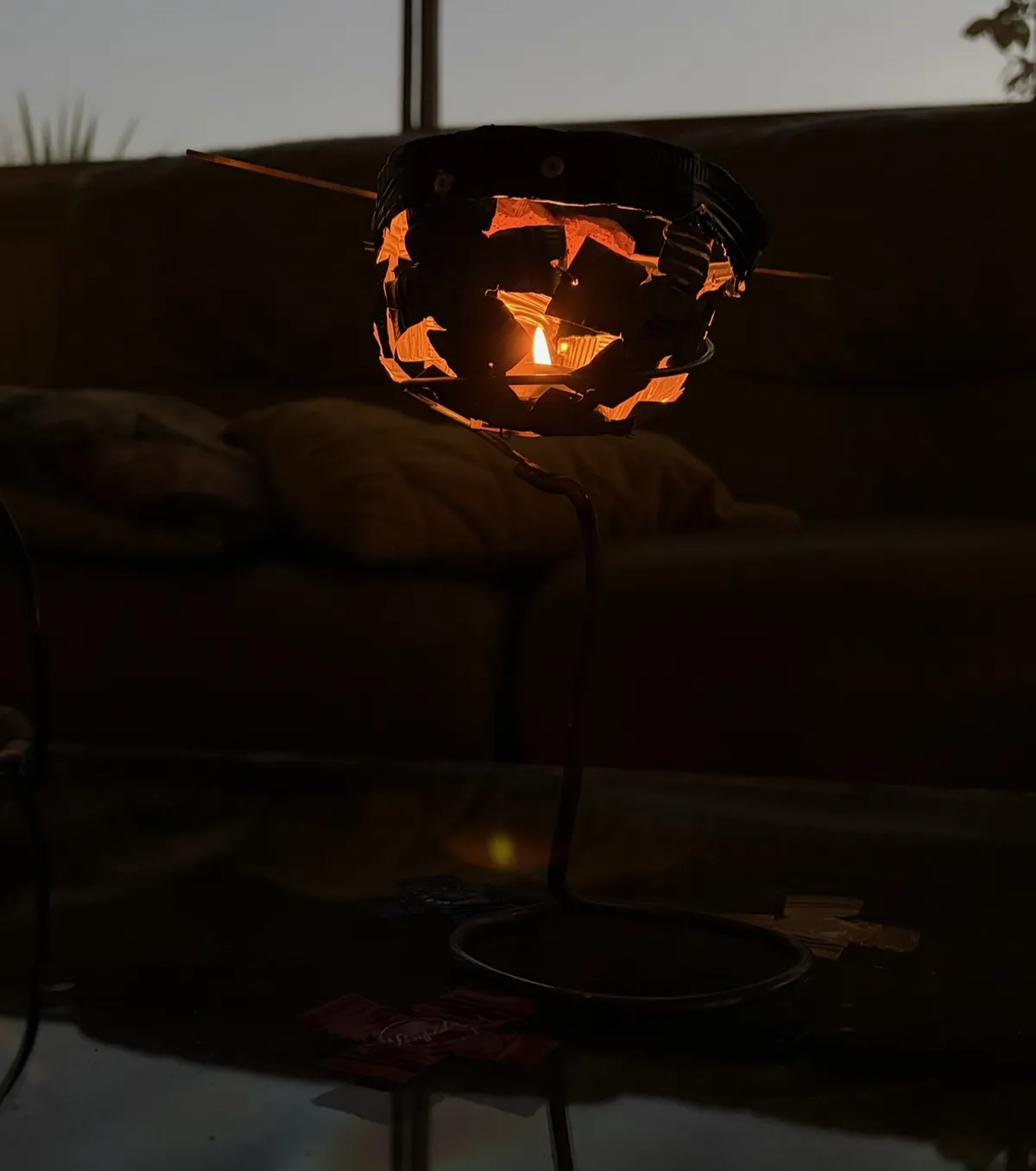
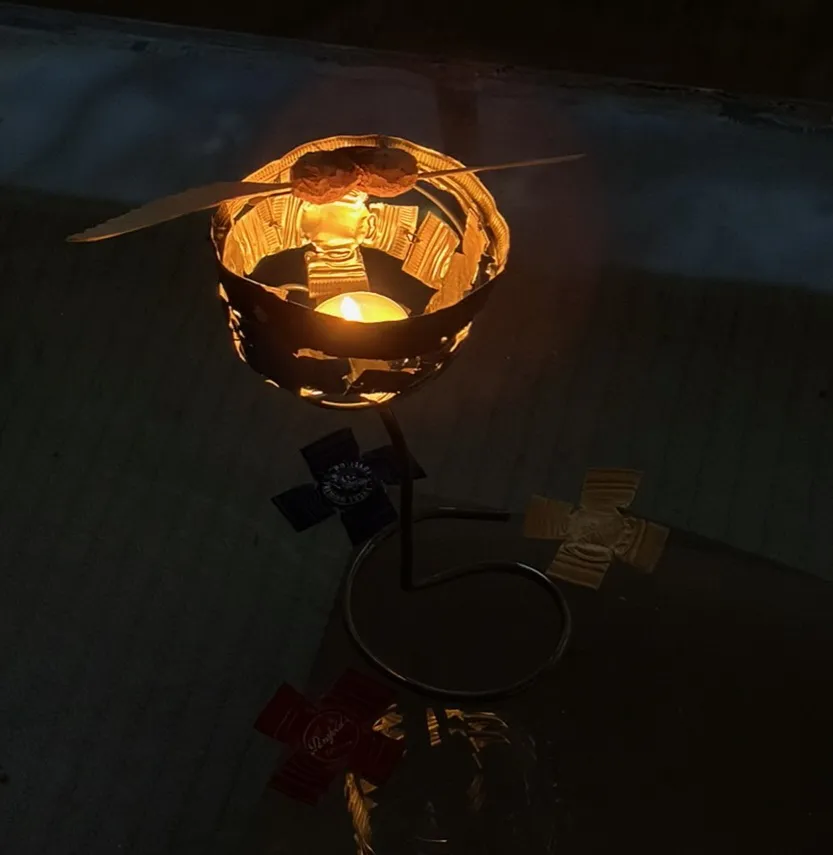
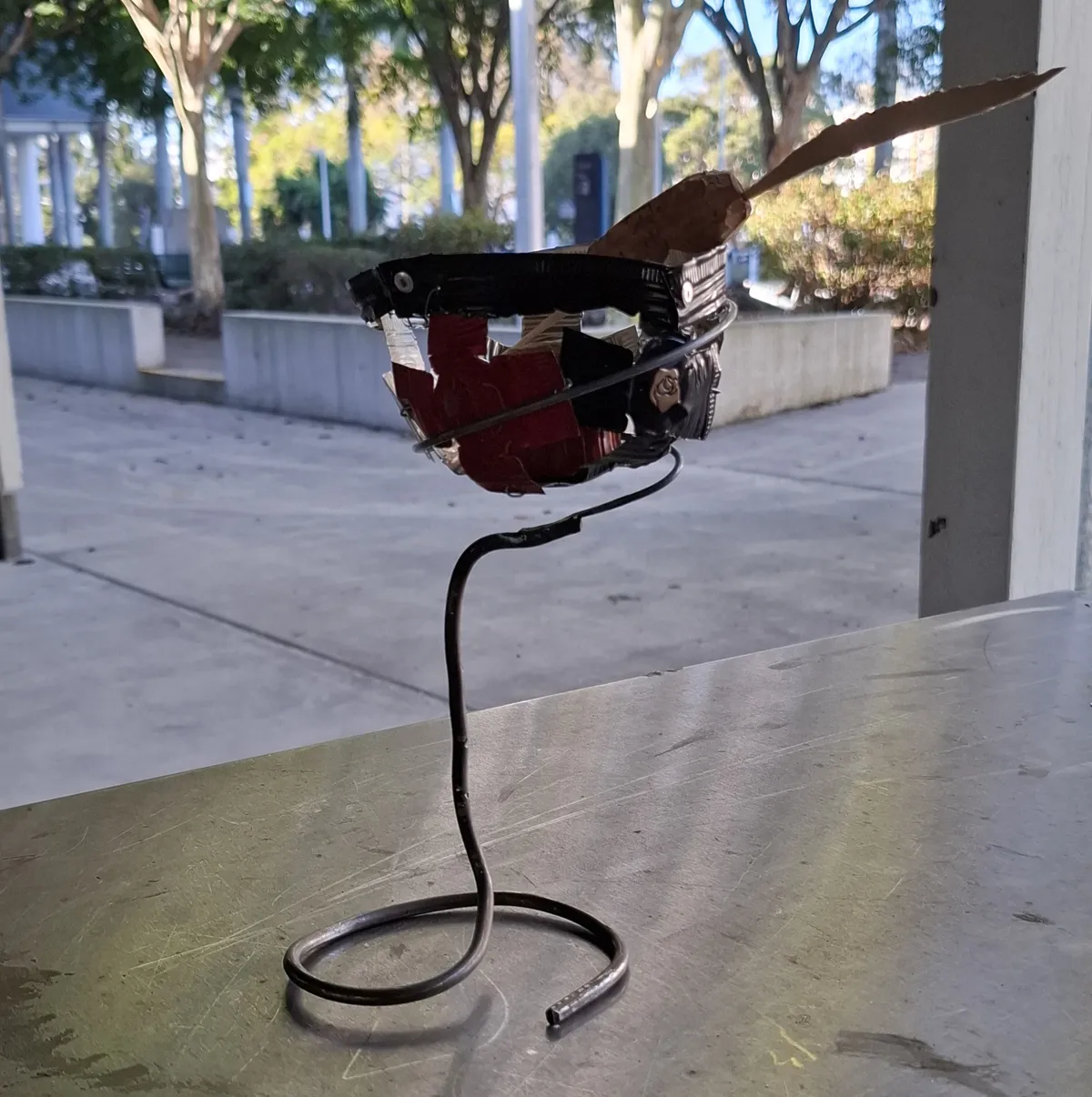
Made from bottle caps used from past Wine and spirit bottles, curated with the memories of past parties, dinners, and events in a shared house from the final 2 years of uni, Cappy Hour gives light to new beginnings and a new start beyond uni. These caps have been cut, reshaped and linked together to form a new goblet, one that can not hold water but rather holds the opposite: fire. Intended to be used as a candle, the gaps leave room for the light to shimmer through and affect the surrounding world in its own way. Highlighted then by the repurposed wooden knife and cork, forming a cocktail skewer and olives, just out of reach of the flame, unharmed in perfect harmony between wood, fire and metal.
This week's task was in concern of our use of materials and the effect it has on our environment. Artists have begun to explore using unconventional art materials, reusing items to upcycle and give the item more life or to downcycle and delay its disposal, though ultimately to recreate art with materials that would be deemed rubbish. Using this information, we were tasked with bringing in our own sourced material, with no explanation of the brief, only the understanding that we would be using said materials to create a work of art.
PICKING THE MATERIAL
This puzzled me for a period of time: what rubbish that I had was significant enough for me to want to create artwork with it. I didn't want to simply create something tacky. As mentioned in my previous blogs, I want to make something that means something to me, something that personally gets me moving and motivated; this material needed to inspire me. Looking around, I stood standing looking at this graveyard of wine and spirit bottles my roommates and I have collected. This was it! Each bottle had a memory, a moment of life that led to another: each glass, each cup, each party. Another event, a casual dinner. I looked across all those bottles, and fond memories arose. Now this "rubbish" was not rubbish to me. I was curious to explore using the glass itself, but thought the danger was not worth the risk. Rather, I was then more captivated by the cap. I could do something with this; each cap has its winemaker's stamp, and they have their own qualities and life within them. This was my material.
 Graveyard - caps taken from these bottles
I was inspired as well by Aurora Robinson, found in the lecture material, who had been working with plastic bottles. An image of the caps appeared with all their slight blue variations; this caught my attention, and I thought it was a cool idea.
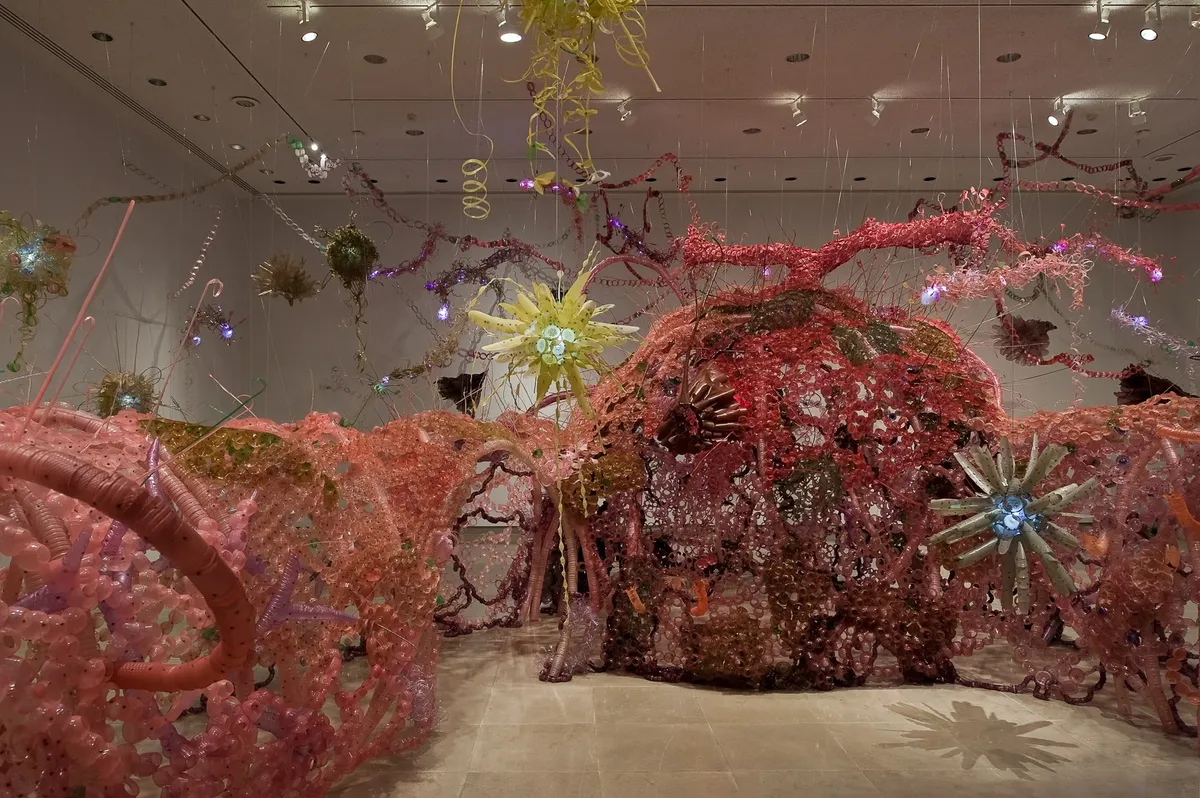 Aurora Robinson - A Great Indoors - 2009
I liked how she would utilise the plastic material found in plastic bottle waste to create something completely new and different. Yet it would entirely mimic her painting art style, transforming her painting into life. It really looked like a continuation of her work, in the exact same style. I would imagine it would be different, but I was completely captivated by how similar the work looked.
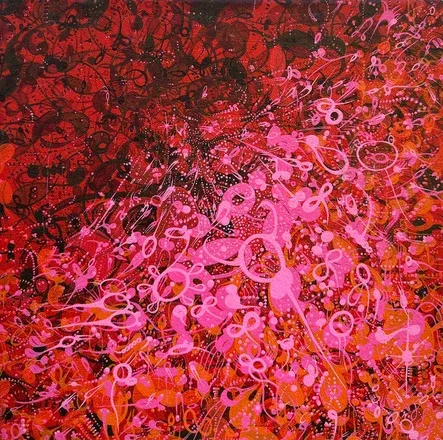
Aurora Robinson - Search and Rescue - 2005
In the reading, I was drawn to the work of Valerie Hegarty's Autumn on the Hudson Valley with Branches (2009-2010). I particularly liked how the artwork seemed like it could have just been found. So intentional and perfect, but also wild and free, it looked as if the artwork was coming alive while breaking down. Exploring themes of decay, transformation and nature reclaiming art. To be showcased in New York City along the highline, already is this strip of nature amongst the concrete jungle, but to have this piece as a window into nature, to then be withering away. This makes me imagine what NYC would look like years into the future without civilisation.
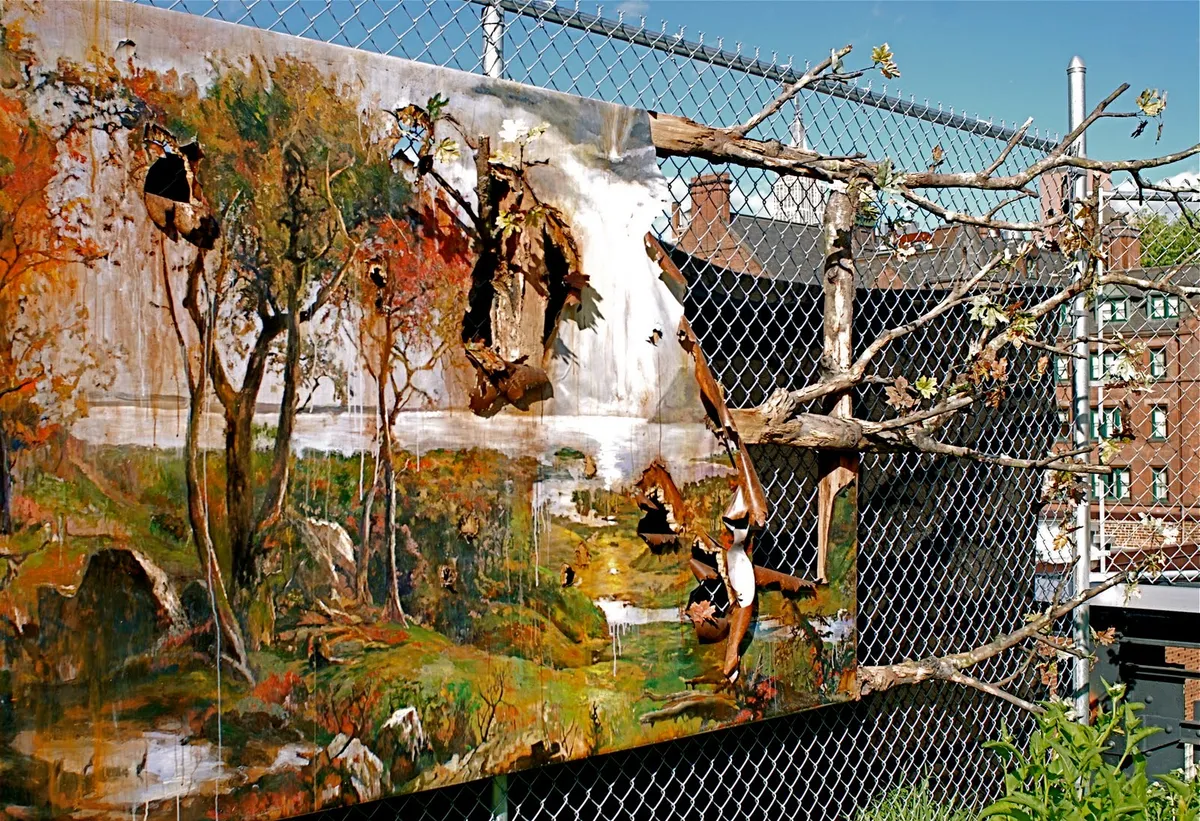 Valerie Hegarty - Autumn on the Hudson Valley with Branches - 2009-2010
Then, coming to class, I was told we needed to combine materials with someone else's. "What?" Though these are just caps, they were the caps linked to memories; I didn't want someone else to repurpose something that was dear to me. Additionally, I already had ideas rearing to go, and when looking around the room, no one else's material seemed to work in the same way mine would; I could not imagine putting them together. However, no one approached me or my caps either, except for one who wanted my best-looking caps and not me. "What do you think you're doing?" I noticed him taking a cork from a dead man's finger bottle. I drank that on the last New Year's Eve with my family before I moved to Brisbane the next year. Fond memories with my brother, with my friends. In an instant, I could not let that go. Reflecting, though, this was the task I found interesting: how I kept such a materialistic value for something considered rubbish; I still have the memory, and the object just reminded me of it. To let it go would feel like I'm dismissing that memory. Just a thought
I ended up partnering with a friend I had made in first year, but had not fully bonded past random interactions. They brought a Woolworths wooden knife, the ones that you can get in the packet with a spork. I didn't know what to do with it, but the challenge was there.
On top of this, we were then told to spin a wheel that would randomly decide how we would approach our creative decision-making. These included:
Focus on Materiality
- Focusing on the material itself and how it has meaning.
Object Recontextualise
- changing the meaning/form of the object.
Found material response
- Just making a response to something found - Finding the interest in the ordinary.
Tranfrom/Down cycle
- into the lesser material, the next step down the chain before it becomes unusable.
Free choice
- you know what that is
We got Focus on Materiality.
Creative Development
Instantly, I questioned the purpose of the cap in a bottle. It's to hold the Liquid in the bottle, as well as preserve the wine from oxygen, and have it last longer without going off. You take the cap off when you want to pour a glass. What if the caps were the glass itself, but it would not be able to hold the liquid, nor would it function very well.... BUT it would look great as a lamp! Fire is the opposite of water, and the light can leak through! I was convinced it would look good, and Heather liked the idea. At first I wanted to create a wine glass, yet I realised that not all the caps are from wine bottles; there are also spirit caps. Well then, what about a martini glass, with a lid that would make it a wine glass? The lid would be on a hinge to make it easier to put the candle in and light! GENIUS! Heather then had the brilliant idea of using her knife as a skewer for the martini glass; paired with a cork, that could appear to be olives! We were on a role and creation began.
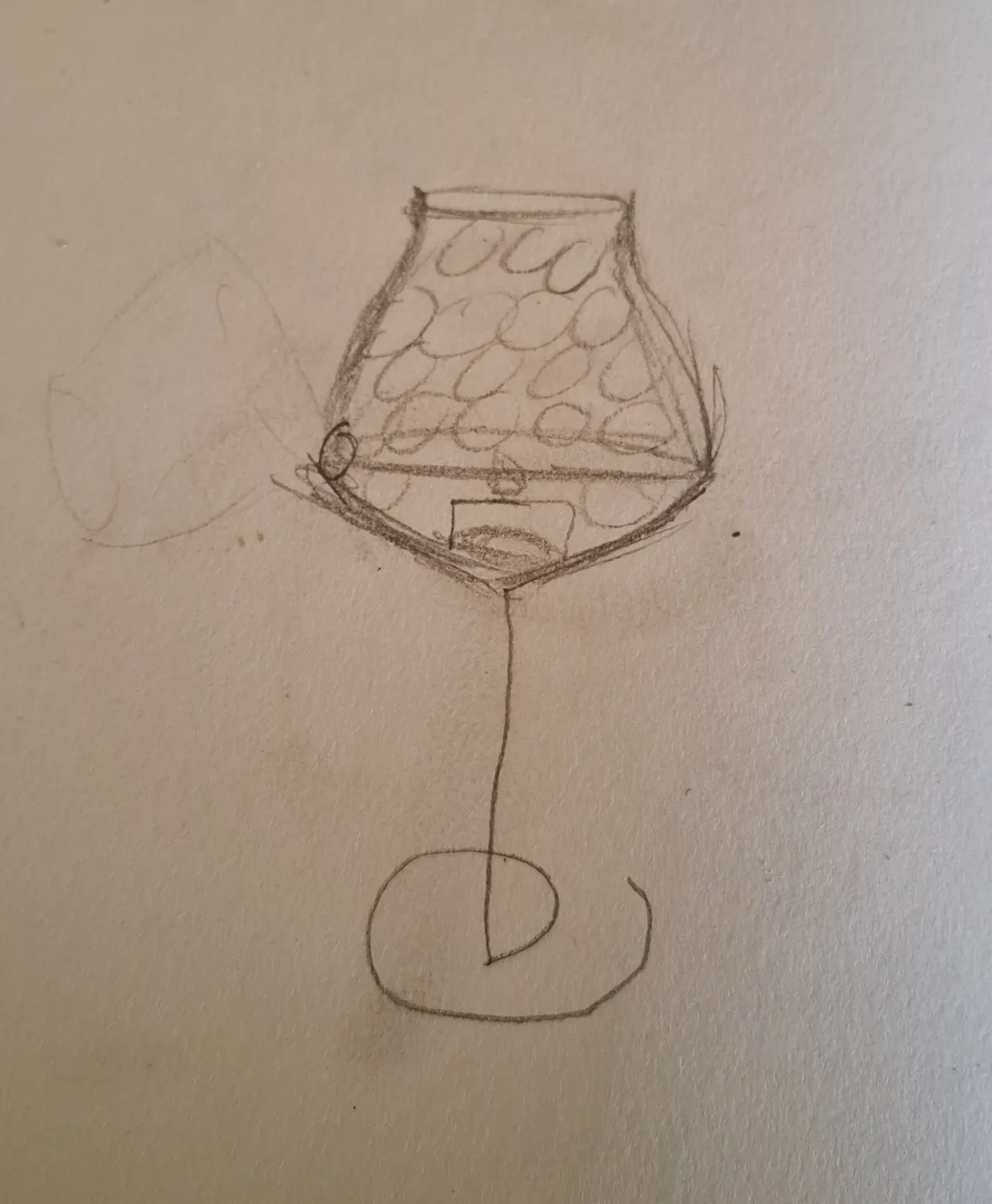
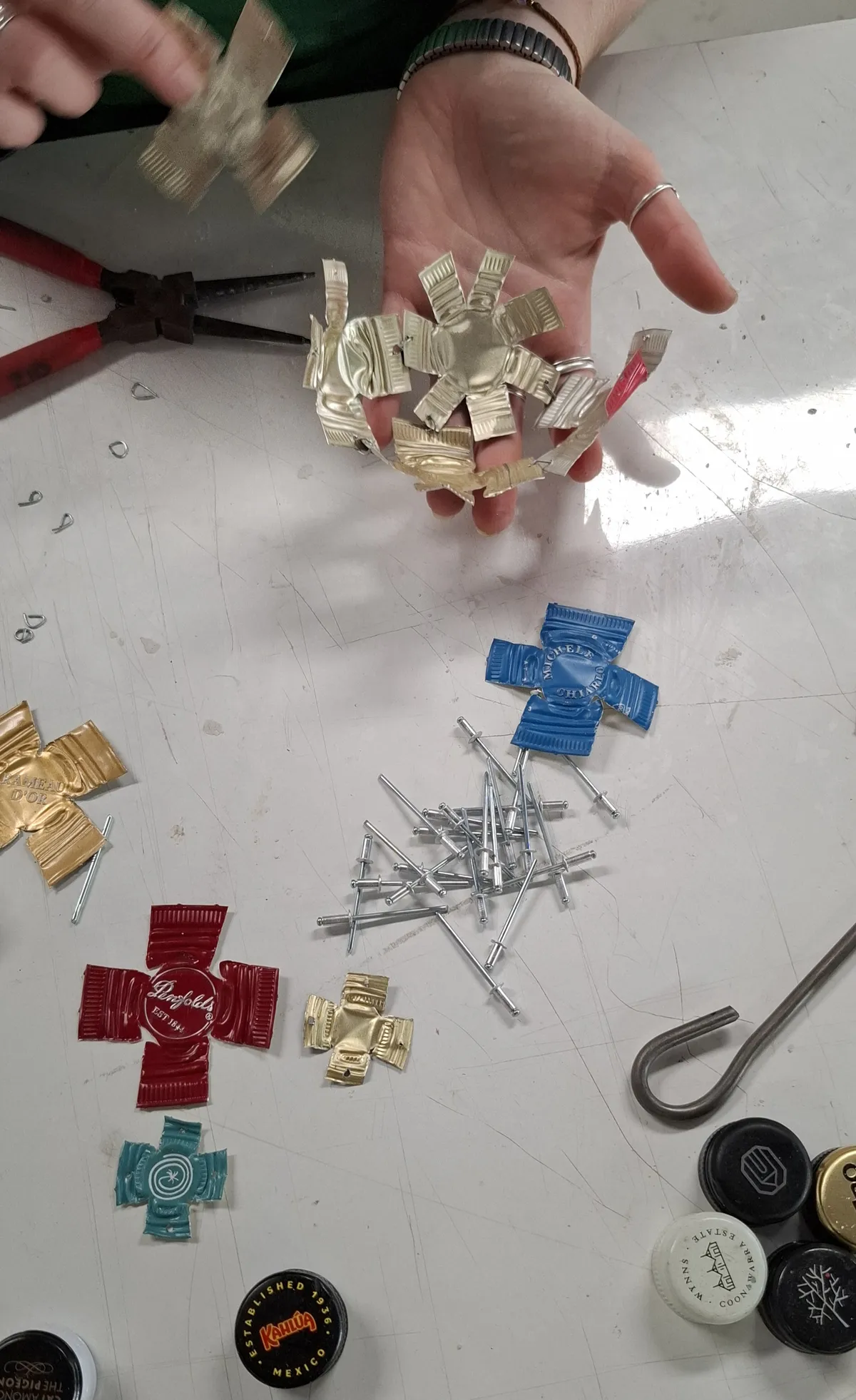
We knew that this was a big task, so we delegated roles. They said that they had worked with rings before, so they could bond them together using a small steel rod. I was to cut up the caps into shapes that could be pieced together. I experimented with size and shape, as well as how to cut it. We found it would be quickest and easiest to make a plus shape; it takes up more room and requires fewer binds.
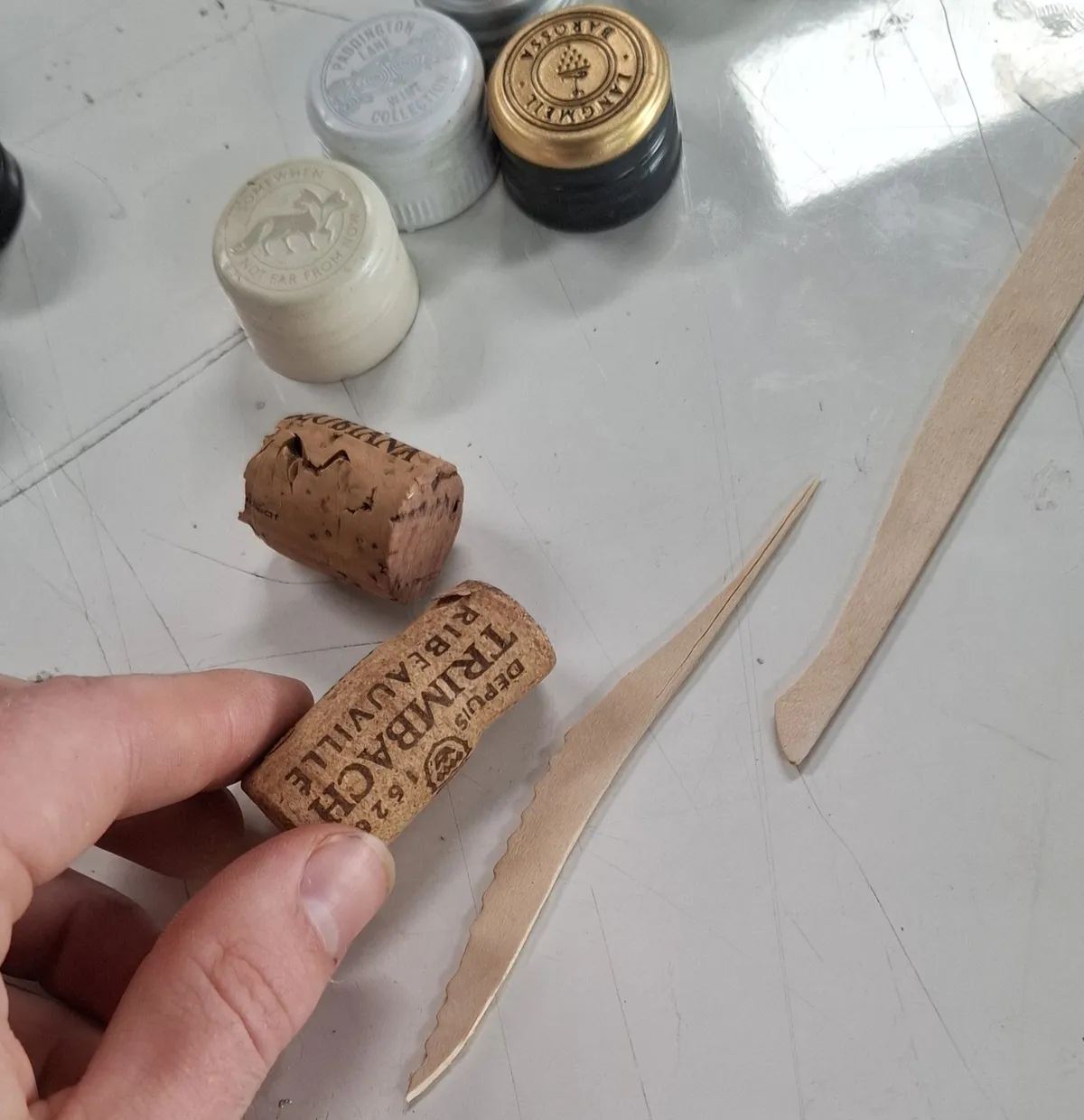
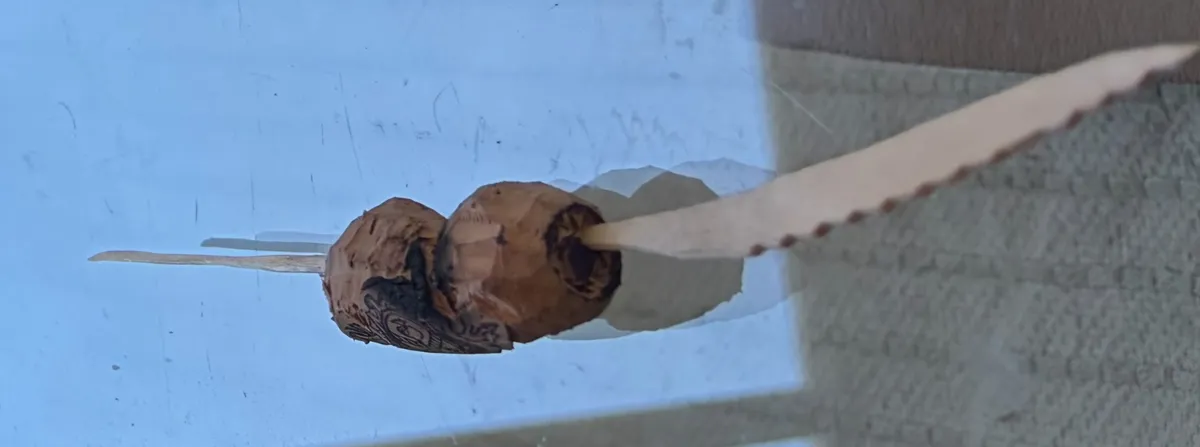
While Heather was binding them together, I went on to carve the cork and make the skewer. I enjoy working with wood, so this was my specialty. I used a box knife to carve away the cork and create 2 olive mounds. I decided to keep the cork logo, one, because the logo was cool and it represents the vineyard, but also because it keeps the focus on the material being a wine cork, and all the other caps got to keep their logo; why not the cork as well. I broke the knife in half to keep the knife quality; I didn't want to just use the wood. I wanted to keep the serrated edge of the wooden knife and use it as a form of feather-like decoration. I carved a sharp point into the points of the knife and stuck an end into both sides of the cork to give the appearance that it goes all the way through.
I then moved on to the stand; we found this steel in the scrap bin to continue with the found/reused objects theme. This wire was extremely thick and was a challenge to bend. I wanted the base to have the elegance that wine glasses have, with the circular curvature of the base that then stems up. I struggled a lot to make this look elegant; the steel was so thick I really had to use a lot of brute force. Trying to have a curve at the bottom, then the straight light-up wand, then a base for the cup proved a challenge. I used the rolling pins, then a clamp, sheer manpower, hammer and anvil. I really put this thing through it, and I really like this somewhat elegant but alive feel it has.
Due to the time limit, we decided not to worry about the lid contraption any more, and from what was a martini glass, it started to look more like a goblet, so we leaned into that. This works better for the material as well, considering goblets are typically metal and not glass; this also kept this wine glass energy with it that I quite like but also at times would remind me of a rose. Day 1 finished and the cup could not properly sit on the stand, and was still quite fragile.
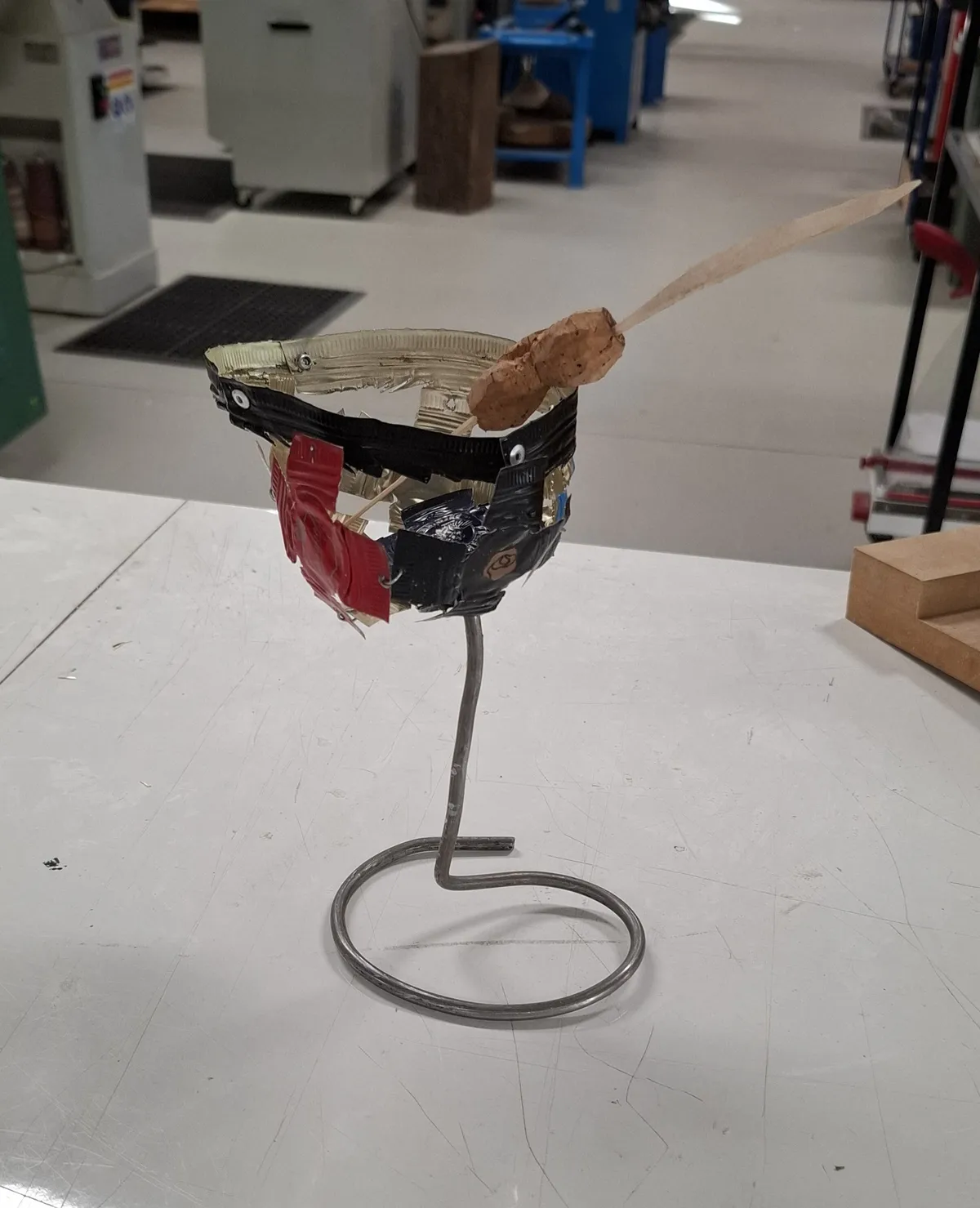
Day 2. Came back in knowing what we needed to work on and how to do it. Initially, there was this idea to have a cross-like shape on the top of the stand and weld the cap cup on. But I wanted to see what it would be like to keep this circular theme going and create a cylindrical base for the cup to sit on that mirrored the base. Using smaller wire this time, this was so much eaiser, Just needed to make sure the proportions were right. I really liked how it flows around the cup, holding it in place. After welding it on, I really liked how it could almost be perceived as one rod in a continuous flow, similar to my week one artwork.
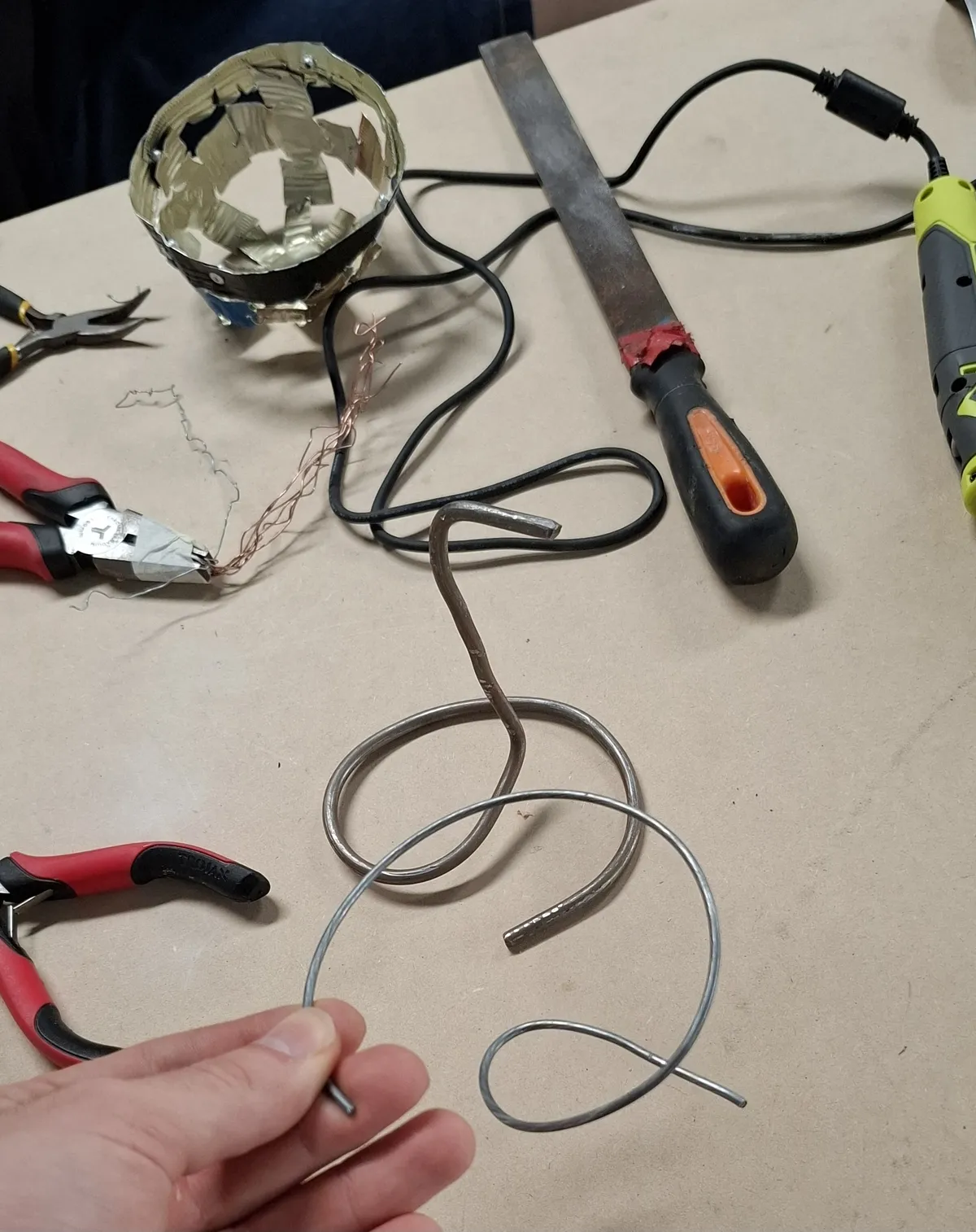
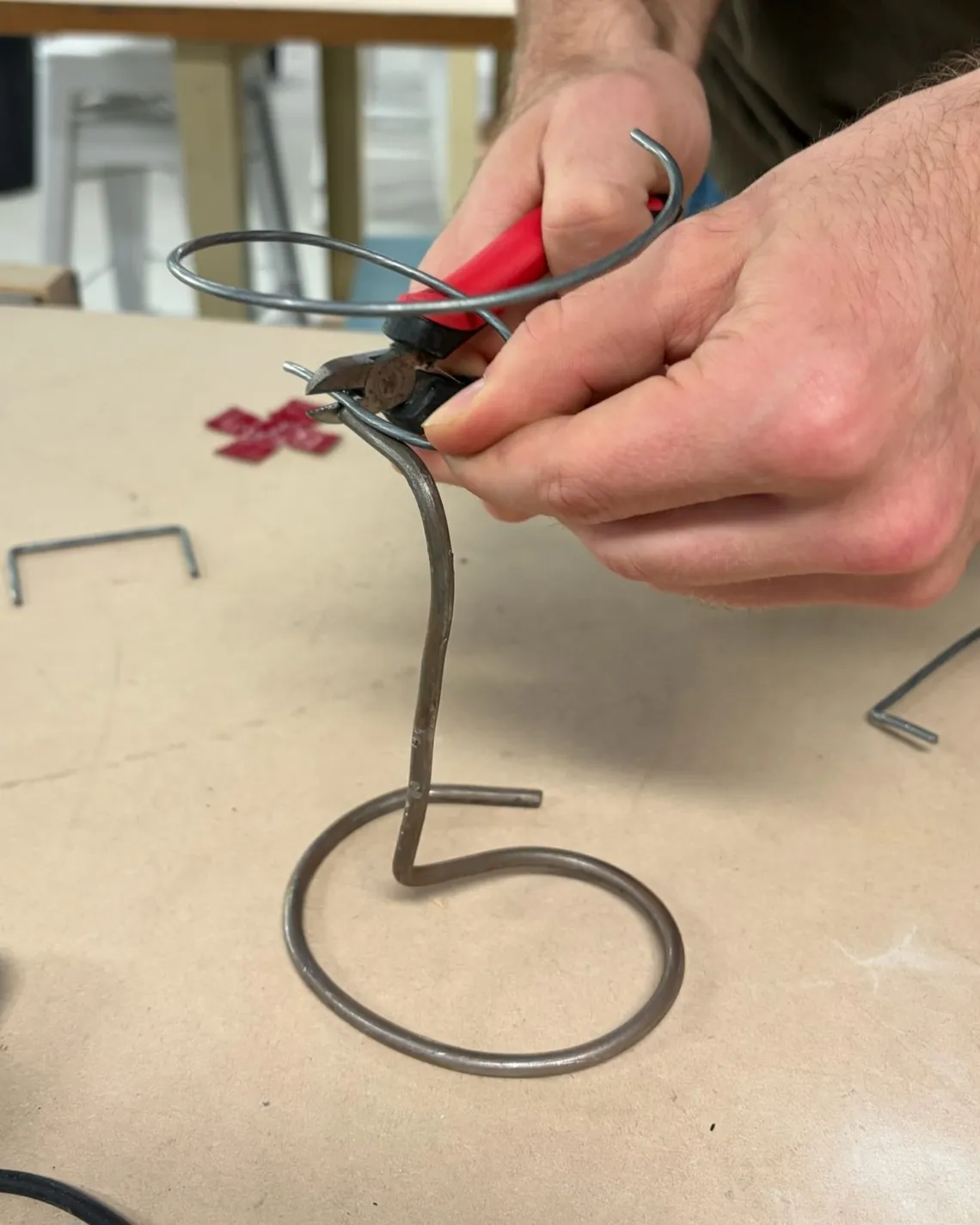
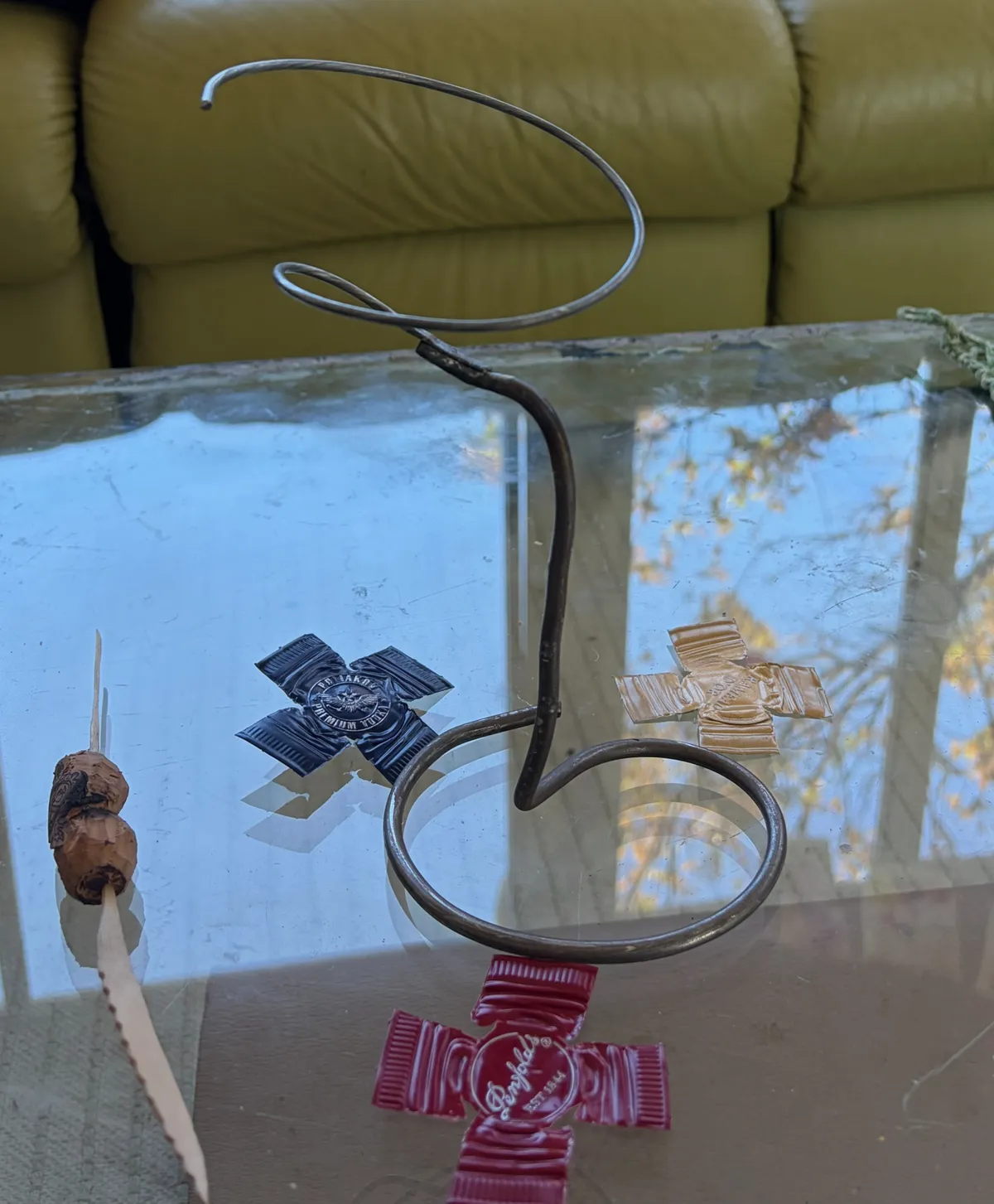
Additionally, it bent the lip slightly, which made the cup not exactly sit on the base. I thought this was insanely cool, as from certain angles it looks like the cup is suspended mid-air.
There were some pieces of caps that I had already cut but weren't used in the cup; as such, to continue with not wanting to throw away the material, I thought it would be cool to add them to the artwork. I really like how it showcases the fact that the cup is made from a collection of caps, and how it almost looks like flowers/ petals that have fallen from the cup. I wonder if this could be used in any other way, but I think it brings exemplafies the artwork and use of material.
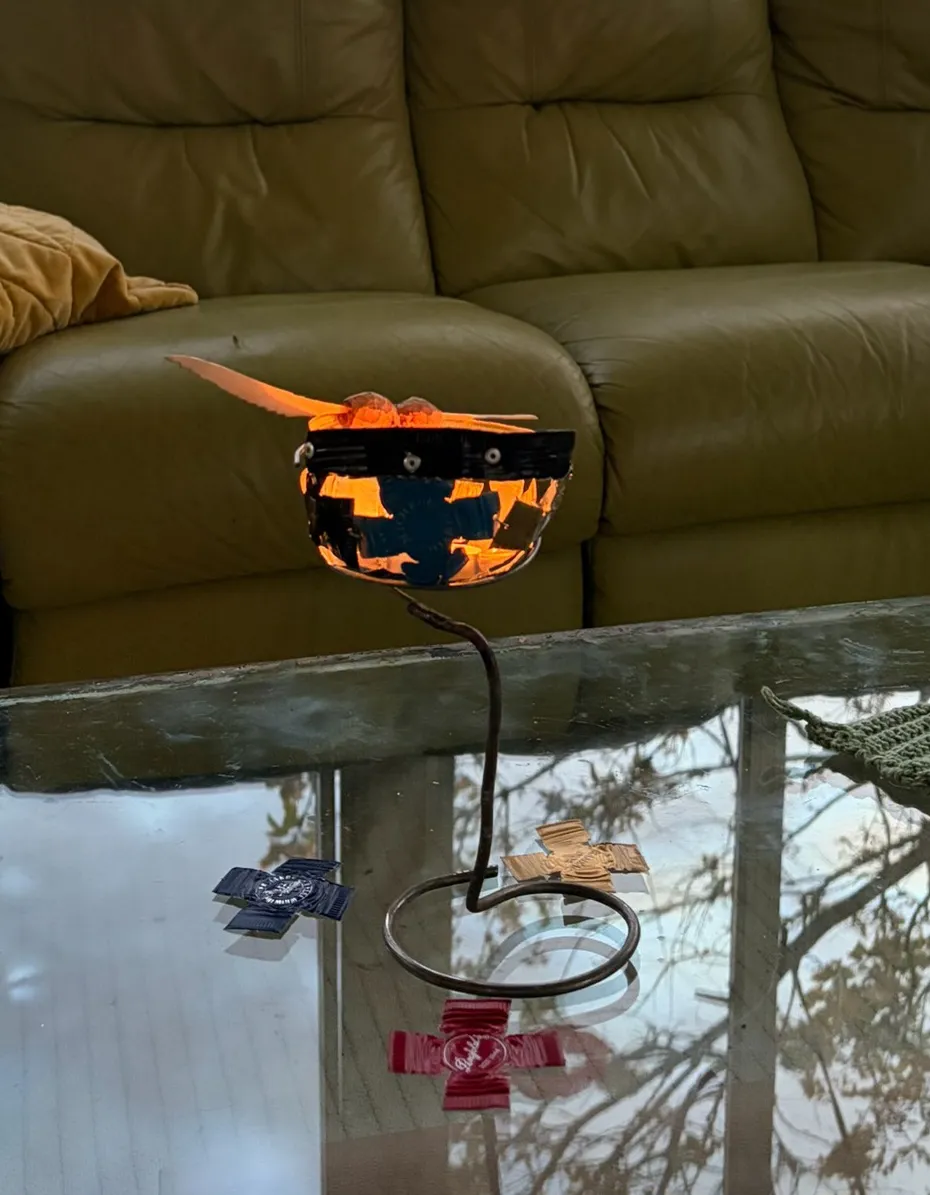
The candlelight really takes Cappy Hour to the next level. Though this is the only recycled object, I think it's lovely; This glowing light emits and refracts between the metal and gives these caps another life, additionally enhancing the overall meaning of the work. Flame has this theme of rebirth, through the Phoenix, and how after bushfires, plants grow back, often healthier. Fire destroys the past and gives life to the new. The caps themselves have a new life, but the memories those caps held will now provide light to new ones.